
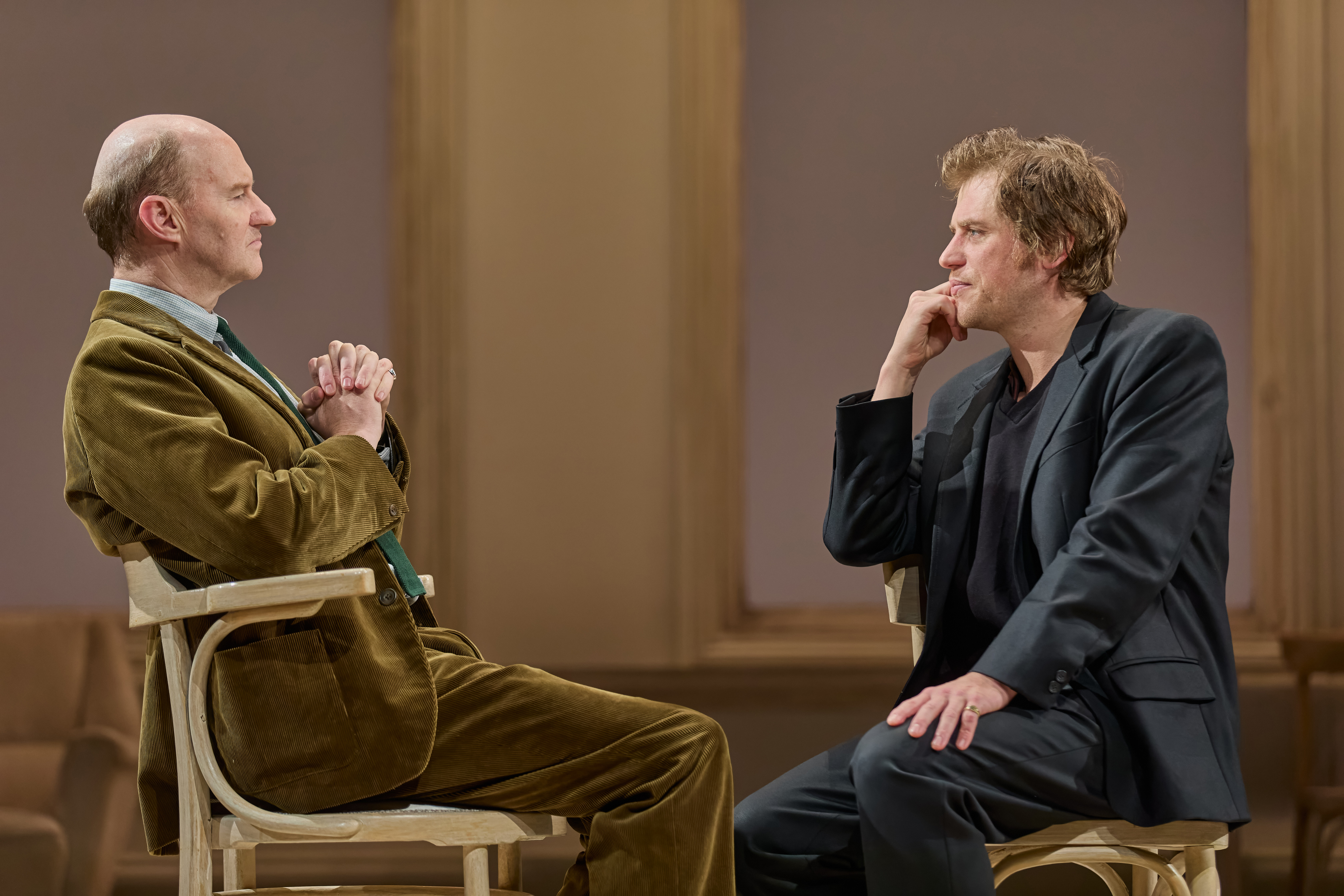
The most successful Hamlet production in Broadway’s history returns to the stage through this blaring depiction of how it all came together. Guillermo Nazara shares his views on the show, to let us know if this forceful battle of talent and egos manages to crack a heart.
There’s no bigger drama in the theatre that the one that happens backstage. Stories of shows and films being even more tragic behind the curtain (or camera) than what we see onstage (or onscreen – this is starting to get exhausting…) are no stranger to the anecdotal repertoire of fun-fact ambassadors. The tale of the harsh director and the blooming promise is probably one of the oldest in the book. But the reverse premise, though not unheard of -and certainly, not unlived either-, is more of a rare gem. Picture one of the finest actors, and later creatives, in history standing next to the most prominent star of the time – a man who owes a great deal of his triumph to that veteran artist, but instead of gratitude, he replies with hostility and ultimately, becomes his enemy.
Shakespeare within Shakespeare. The Motive and The Cue is possibly one of the most fruitful attempts at playing with Bard’s craftsmanship without jeopardizing his genius. Perhaps because instead of tampering with his work, they’ve sublimed it by adding a striking shot of reality to it. Fact meets fiction through this side-by-side tragedy exploring the weaknesses and insecurities of two performing titans, where the respect and admiration they once professed to each other turns into a fiery clash not only of ideas, but also rank and position – and eventually, a fight for survival in the unmerciful jungle of showbusiness.

Written by Jack Thorne, the play deals with the rehearsals of the longest-running production of Hamlet ever done on Broadway. An amiable encounter at first, with Burton reuniting with the man that gave him the final push into worldwide fame, things will take a harsh, unexpected twist as the preparations progress – with what back in the day was friendship quickly turning into sour bitterness. Directed by Sam Mendes, the play brilliantly drags us into the unglamourous universe of theatre making, where vanity and a ravenous thirst for power become the questionable heroes leading all the way through.
Crafted with well-timed pacing and intricate character development, the play brings, to a superb degree, philosophy, insightfulness and emotion to its narrative – effectively constructing a recount where the roles are defined not by their archetypes, but their humanity. There are no bad or good ones in this journey – simply because their quest is not about morality, but a need for understanding. The level of veracity Thorne achieves through his dialogue is genuinely exquisite, never falling into any cliched conceptualizations and drawing out truthfulness and relatability to the roles (even with Burton’s bully attitude -the guy played Wagner for a reason-). As a result, he rarefies his characters by exploiting their flaws – thus, underlining the idea that perfection is founded on a blemished base.

A similar praise is fairly due to the cast, with the whole company playing their parts with satisfying naturalness, but above all, comprehension and generosity towards each other. However, the title duo is, indubitably, the greatest addition to the troupe, with both actors exuding their own special breed of charm through their extremely enjoyable performances – none of them presented as an exact replica of their personages’ mannerisms, but instead capturing the spirit of what they, both in live and within this story, are all about. Mark Gatiss draws out enchantment and elegance as the imposing, yet frail John Gielgud, while Johnny Flynn gives a much compelling rendition as Burton – emanating passion and energy without never going into camp.
A treat to any lover of the classics and, in all honesty, a modern classic itself, The Motive and the Cue lands on the West End with a comparable burst as its counterpart did in 1964. Gripping, meticulous and tremendously inspiring, the piece serves as both comment and lesson on the skills of acting, directing and, all in all, the efforts carried when bringing art to life. Featuring a brilliantly executed set design by Es Devlin and ingeniously scenic lighting by Jon Clark, there’s really no excuses to walk pass its new West End home – even if you’ve already seen it. It may not be brief, but still encompasses the soul of wit.
All pictures credit to Mark Douet.
The Motive and The Cue plays at London’s Noël Coward Theatre until 23 March. Tickets are available on the following link.