
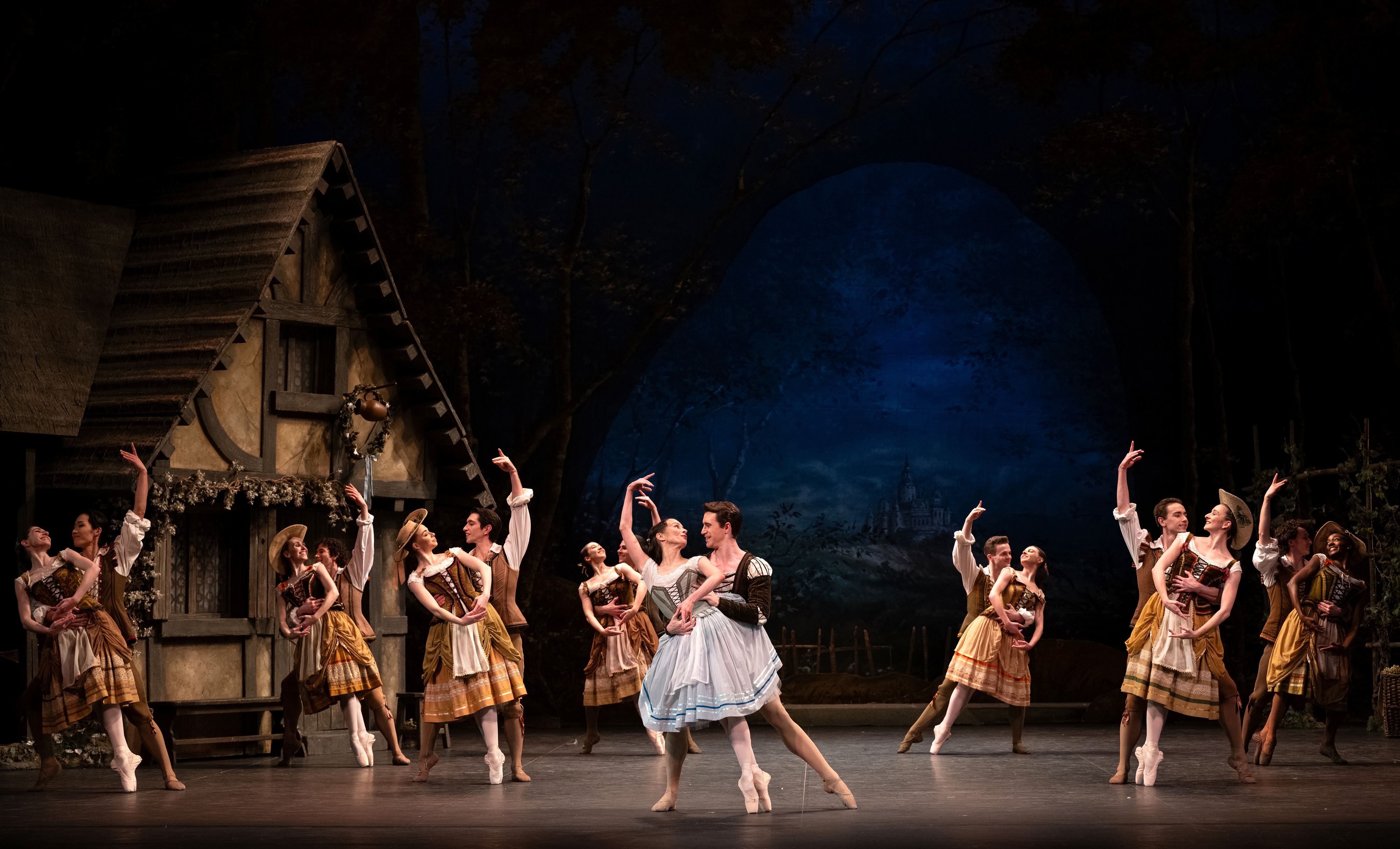
The English National Ballet opens its 2024 season with Adolph Adam’s romantic masterpiece, through a nostalgic old-fashioned production featuring several leads in their debut roles. Guillermo Nazara shares his views on the show, to let us know if this with this heavenly work they’ve actually dug their own grave.
Once upon a dream… It seems like every great classical ballet was inspired by that one little phrase. Childlike wonder and mature genius join their volatile forces to create something so powerful it resists the pass of years – not only generational, but our own personal too. Giselle is, by all means, the kind of work that finds a permanent place in people’s hearts. A lavish, tuneful score accompanies a simple yet charming story of love, loss and enchantment – bringing out both joy and tragedy to the ears, eyes and souls of those who walk into its intangible reign of fantasy.
An instant success since its world premiere in 1841, the material has stayed as a regular in almost every company’s repertoire – with London hosting its first production, arranged by its original choreographer, only a year after its grand opening in Paris. So many versions and reinterpretations have come and gone ever since, exploring the possibilities Adam’s sumptuous composition through more or less faithful approaches to the initial vision. Some of them achieving such popularity, it’s almost as if they’ve become a natural extension to the piece’s idiosyncrasy.

The English National Ballet is well known for its mixture of tradition and innovativeness throughout its offer. From artisanal montages such as last Christmas’s Nutcracker to more daring, experimental proposals like the post-apocalyptic Gothic love story, Creature, the group has given us quite a few exciting options over the past months – several of which, enhancing the artform by creating a full, elevated experience of delicate sentiment and swank illusion.
Last night’s production of Giselle‘s was, in some way, a return to the troupe’s roots – bringing back the 1970s dance design by Mary Skeaping (combined with some movements by 19th-century makers Jean Coralli and Jules Perrot) in a petite yet awe-inspiring take of the French composer’s signature oeuvre. With a suave blend of innocence, beauty and fervor, Skeaping’s concept continues to entice (and at some points, even infatuate) audiences’ minds through its smooth depiction of passion, grief and chimerical reality. Maintaining its allure through conventional yet highly technical choices, the young, naive fervor acting as the driving power for this doomed affair is uplifted thanks to the performance’s general flare and elegance in its style.
Nonetheless, the more luscious side of this blooming amour is still a subject to explore. Most possibly, an intentional overlook (especially if we take into account the moment when it was devised), it’s however difficult to ignore that such a crucial, shining element in the human spirit is, on this occasion, left within the shadows. And though the purpose of this production is regaining the old-school glamour emanating from an English national treasure, one can’t help but wondering if updating some excerpts to a more visceral undertone would, in fact, help its former counterpart glow with more seductive shades.

Whatever the case, it’s only fair to see that the production is fairly enjoyable. With modest yet compelling scenography by David Walker (sets) and David Mohr (lighting), both corps and viewers are submerged into another world of antique pizzazz – dragging us into a realm of magical conceit and bewitching marvel. Its troupe, anyway, contributes to keep the spell unbroken, with the entire company showing higher technical competence than through its latest rendition in The Nutracker. Yet, the almost flawless perfection in their gestures is slightly compromised by an intermittent lack of emotion in some snippets – all of them still laudable, but requiring a bit more of freedom and intenseness to draw out the naturalness the piece longs for. Regardless, an equal praise can be given to Katja Khaniukova in the title role and Aitor Arrieta as Duke Albrecht, both delivering their parts with grace and mutual chemistry, as well as Ivana Bueno and Daniel McCormick as the Peasants pas de deux – regaling us with arguably the most refined passage through their characters’ variation.
A journey through nostalgia and the sweet appeal of youthful, unpretentious candour, Giselle has come back to the West End stage through a triumphant landing. Majestic, elfin and rather moving, the ENB has opened its year with a seamless mosaic of talents exuding beguilement and captivation all throughout. Brilliantly conducted by Gavin Sutherland (displaying exquisite attention to melodic expression and phrasing), the rest of the production could benefit from a few improvements to let rise to the next level, but by no means it is already in a low one. And just like its tragic heroine, it can now rest in peace for a work well done.
All pictures credit to Laurent Liotardo.
Giselle plays at the London Coliseum until 21 January. Tickets are available on the following link.