
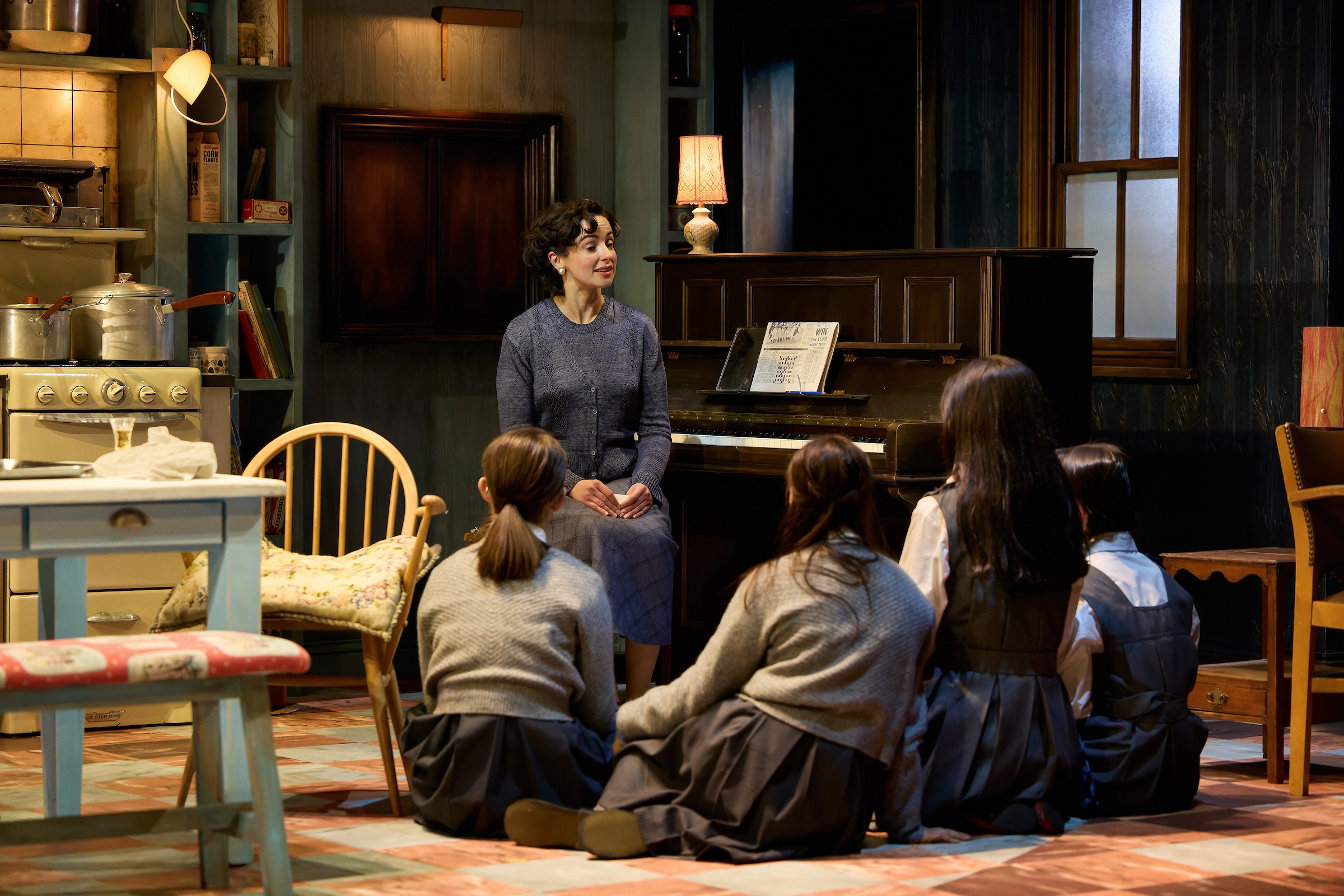
Author Jez Butterworth and director Sam Mendes reunite onstage through the world premiere of Butterworth’s first play in the last seven years. Guillermo Nazara shares his views on the show, to let us know if its tragic plot dealing with a dysfunctional family is actually the weak sister.
How far would you go to make your loved ones’ wishes come true? Would you be willing to sacrifice everything for the sake of one blurred promise? And most importantly, are you making that sacrifice for them or, actually, just for yourself? Accounts about parents destroying their children’s lives “for their own sake” are no strangers to the realm of storytelling – neither to the trauma many adults continue to struggle with nowadays. Folks that try to make up for their past frustrations, often convincing themselves that what they’re doing is the right thing for their kids and that someday they will thank them. And if they just run away for good, that’s just the signs of the spoiled ungrateful kind.
February is marking an exciting season for the West End – particularly their Haymarket district. With three major openings taking place in the matter of two weeks, its offer couldn’t be more hyped when that means starting with what represents Jez Butterworth’s return to theatreland after seven years. Joining forces one more time with another audience darling when it comes to developing complex, introspective pieces, director Sam Mendes. A perfect tandem on the page, the prospects of success seem to be almost guaranteed. But maybe, just maybe, life imitates art once again.

Set in 1970s Blackpool, the plot deals with a group of sisters coming to their birthplace to say their final goodbye to her dying mother. Out of the four, one is missing. The only one who actually moved away from home and made it abroad. At least, that’s what they’ve heard. A deluge of memories and conflicted feelings will soon unravel, as the siblings reflect on their background and what occurred back in the day. Something they’ve been scarred with for their rest of their existence. Her mother fought to turn them into the next big girl band. But the only thing that ever materialized was their shattered ambition.
Parting from a rather grasping and compelling premise, the play excels at bringing out truthfulness to both the story and its characters. Packed with raw sentiments blasting out all through the performance, the script manages to engage through the verity of its writing. Yet, there’s still some important changes to be made for the whole thing to fully work. Though generally well-structured and beating to an increasing rhythm, the first act relies on excessive exposition – spending too much time on setting up the atmosphere instead of allowing the action to flow more organically and, thus, effectively.
On the other hand, though concocting a believable, somehow relatable, resolution for its disheartening tale, the ending seems a bit unconcluded, not providing us with enough elements to make the whole journey satisfying. In addition, there’s not enough surprises to make the plot resonate in its finale – taking us on a journey which, though not safe, still feels slightly predictable, preventing the recount from fully lingering within us when leaving the theatre.

Despite its problems, it’s nonetheless fair to say that the show is, on the whole, quite enjoyable. Apart from its blunt, entertaining dialogue, the biggest praise is also given to the renditions – with the entire cast delivering their parts with exquisite craftsmanship. Bryan Dick makes a memorable appearance in the double comic relief roles of Dennis and Jack Larkin, exuding both presence and charisma through his effortless charm. On the other hand, Leanne Best gives a most impressive, energetic portrayal in the part of the ill-tempered and abusive Gloria. However, the biggest praise is earned by Laura Donelly in the also double role of Veronica and Joan, splitting into two completely different personas – both presented with intoxicating strength and piercing authenticity.
A tale as old as time about the things one could have been but never got to, The Hills of California manages to climb up the mountain with enough flair, but still has a few slopes to flatten up to make the ride smoother. Though penned with consistency and staged with visual brilliance, a few cuts plus the inclusion of more powerful realizations are key to make its narrative not only more engaging but also meaningful – taking us on a voyage that, just as its convoluted personages, can shake us and transform us in some way. The formula is already brewing, but unlike the state its title so poetically emulates, it still needs few more spices to shout out “eureka”.
All pictures credit to Marc Douet.
The Hills of California plays at London’s Harold Pinter Theatre until 15 June. Tickets are available on the following link.