
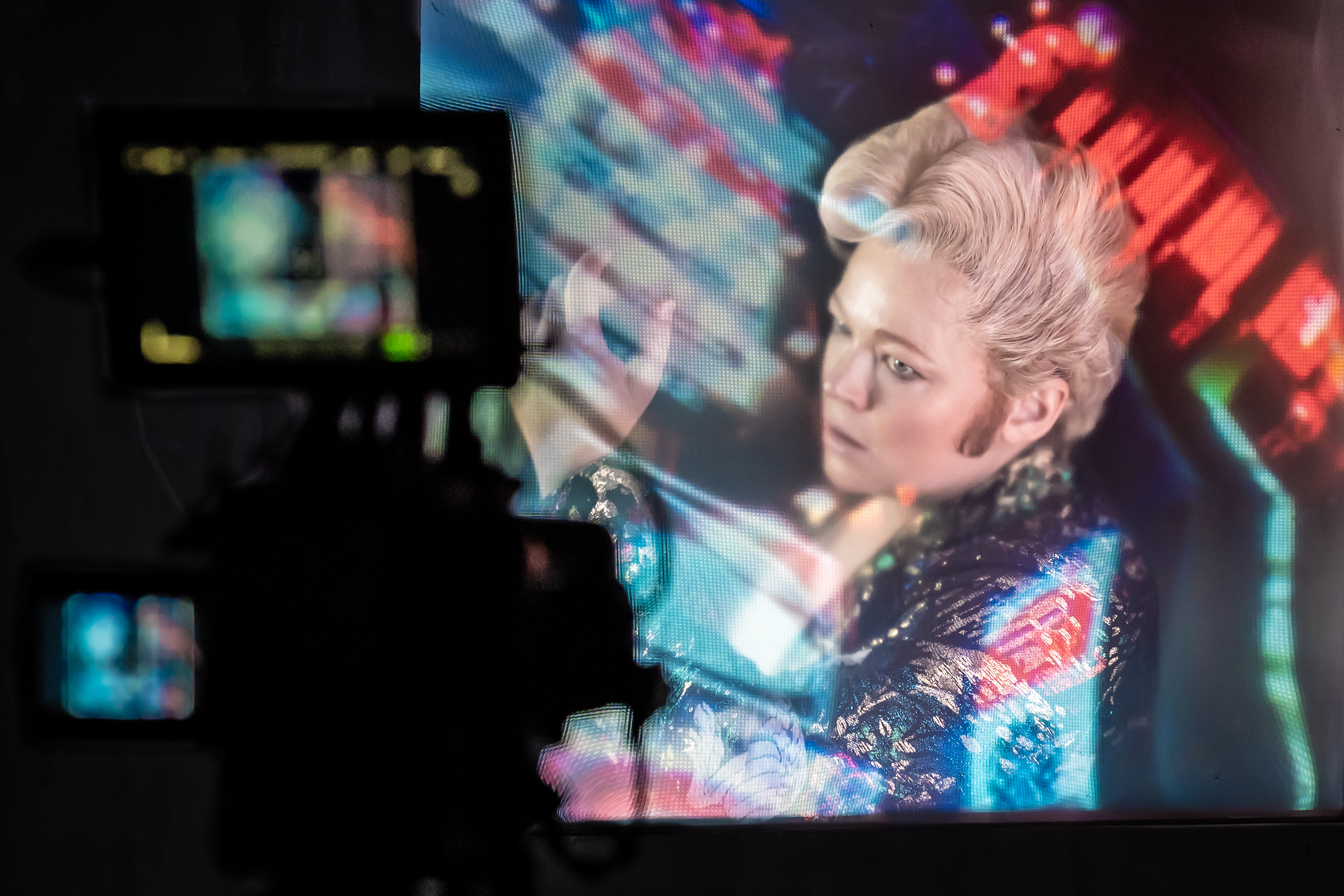
Sarah Snook takes the lead, supporting and ensemble in this new experimental production revisiting Oscar Wilde’s ageless classic. Guillermo Nazara shares his views on the show, to let us know if its ambitious approach may apply to its author’s simple tastes.
Art is quite useless. The most devastating statement about Wilde’s craft prefaces, in some poetic manner, its questionable hero’s fate. But also serves, as perhaps many of the melodious writer’s most popular quotations, as the biggest contradiction for what’s about to unravel. The Picture of Dorian Gray can take many roles: from plain entertainment to a deeply rooted, philosophical comment on the corruption that, both our nature and society altogether, exercise on our inborn (for some) purity. Many positions to fill, except for one: having no more purpose than the articulate beauty of its verbal aesthetics.
When I bumped into the novel a few years ago, I must say I ended up having the greatest Miranda Priestly moment you could ever imagine (I mean, if we’re going to put vanity on parade, let’s bring those who can win the tour -wink-). It was, to say the least, a major disappointment. Too short for the story it was trying to tell. Not a proper introspection on the seemingly complex characters the book attempts to connects us with. To me, it just had a lot of problems. But that, of course, shouldn’t deter me from experiencing another take on a plot that, despite my reservations, I could still find engaging – at least, to tear to pieces on the following morning.
It’s so right to be wrong. And so refreshing. Take the original text and play it almost verbatim onstage and see what happens. It’s not a TikTok challenge – that’s actually the experiment we were put through last night, as Sarah Snook, armed to the teeth with a set of technicians and cameramen, made her entrance amidst a rapturous applause. Lights go down inside the Haymarket’s floridly stylized auditorium as an almost empty stage takes the spotlight. An actress in stark clothes starts to deliver her lines – her many, many lines. All of them taken directly from Wilde’s embellished prose. And in a matter of seconds, the transformation occurs.

It’s fascinating how a simple departure to another media can turn something completely upside down. This has been no exception and, by all means, it’s been for the better. The script works marvelously when read out loud – enthralling us with its intoxicating choice of words, while painting an intricate picture (no pun intended) of its mystical recount. Adapted and directed by Kip Williams, it’s true that this approach may not bring anything new to the table (one-person montages, where the actor plays both the tale’s narrator and all of its characters, are as common as artistic frustration in the critic world), but it doesn’t need to. It functions perfectly as such. And in that mixture of a traditional bardian performance with the use contemporary staging, if there’s not something innovative, at least there’s something unique and memorable.
Combining screens with live filming of Snook’s portrayals, blended with superimposed recordings of her as other personages (she still hasn’t figured out how to carry out a corporeal duality, sadly), the production manages to create a visually imposing carousel of symbolism, emotion and, on some points, also atmosphere. The blending of modern audiovisuals with conventional theatricality (its closest sibling being Jamie Lloyd’s reinterpretation of Webber’s Sunset Boulevard) enhances its already enticing narrative. But unlike Dorian’s unblemished youth, there are however a few flaws to point out.
All of them intentional decisions, the account, as its displayed in this take, gradually transitions from a somehow naive, shallow depiction of Wilde’s lore into a viscerally harrowing portrayal of Gray’s demise. The reason why is easily deductible – it follows the same trail as its protagonist. An understandable pick, one can’t help but feeling, nonetheless, that a part of the book’s essence falls into obscurity when its comic side is heightened – and that’s the eroticism that makes its plot so incredibly seductive. We never get to feel the instinctive pulses that throb between Wilde’s queer-coded lines, while the infatuation the lead goes through (both with his first love and with himself at first) is slightly blurred for the sake of farce. Though fortunately that shifts rather drastically as the performance progresses – making, also, a terrifyingly unapologetic observation on how nowadays superficiality mimics Gray’s excesses.

At the same time, though the staging is generally enticing and, let’s say it, breathtaking in some excerpts, the first third relies too much on the live broadcasts, placing Snook behind the screen so often it can get a bit problematic. It is, in fact, when she comes upfront and those screen become one more element in perfect unison that the true magic happens – as the piece unboxes all of its potential, a trait it honestly has in spades. In addition, the costume design, an exaggeration -though only sometimes- of Victorian attire, feels conflicting at some moments. It’s grand and detailed. But perhaps too colourful for the style this story needs.
In any case, those issues pose no threat whatsoever to what, to all extents, is a more than accomplished performance. Sarah Snook boasts remarkable skills as both actress and raconteur – delivering her parts with such exquisite energy, charisma and determination it’s genuinely impossible to disconnect from this almost 2-hours straightforward whirlpool of moral tribulation. Her transformation from character to character is quite impeccable. And her ability to move from register is nothing but laudable. We were told that she was the motive to come see the show. To be fair, it seems like more than a motive.
A splendid exercise of both acting and narrative craftsmanship, The Picture of Dorian Gray excels through a rhythmic, absorbing and, in some way, modernized recount on Wilde’s 19th-century critique on the dangers of conceit. It’s true that the approach could have been more crude, and the palpable darkness that lures beneath the text is yet to fully pierce through. But that does not prevent from making of it a tremendously enjoyable night that’s guaranteed to prompt a few talks on the way home. The original Dorian was worth looking at because of his looks. This one is worth discovering because of its strength.
All pictures credit to Marc Brenner.
The Picture of Dorian Gray plays at London’s Theatre Royal Haymarket until 11 May. Tickets are available on the following link.