
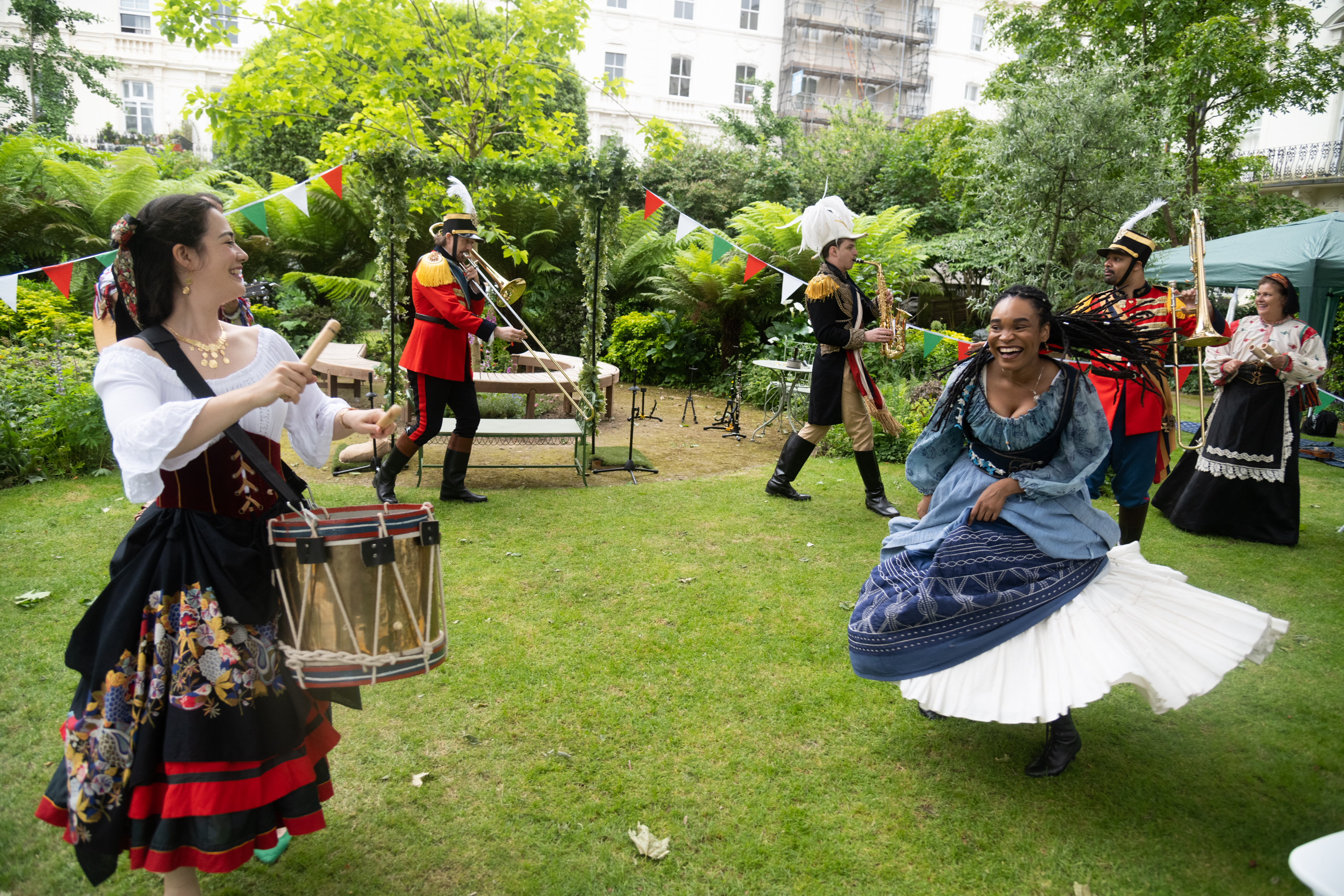
Shakespeare in the Squares returns one more year, bringing back one of the Bard’s comedy classics as they transform London parks into open-air theatres. Guillermo Nazara shares his views on the show, to let us know if this new version of the love–setback piece has set up a succesful comeback.
There are just as many things you can do when you’re trying to reinterpret a work of art. And when it comes to Shakespeare, God knows I’ve probably experienced them all – he also knows about other stuff I’ve experienced, but he’d better stay quiet about it… That is why there’s hardly any surprises left when it comes to new versions of the Bard’s creations. Either if it’s a modernised high-tech approach starring Nichole Scherzinger (oh, no, wait – she didn’t do that… I wonder where that mistake came from…) or a more traditional view, chances are you’ve already seen it before. And if we’re talking about open-air theatre featuring period staging, we might as well as take it as an opportunity to stroll down memory lane.
But now that we’re getting ourselves into Total Recall World (I should have pitched that to Universal long ago…), perhaps we should also remember Will’s (we’re besties) words on the subject: “everything that has taken place in the past is a preparation for the opportunities to come.” And, may I say, never before have I felt more reassured about somebody’s wisdom being proven in such a refreshing manner.

This summer, the sun will once again illuminate the stage (though bear in mind we live in Britain) that dozens of London’s community parks have been transformed into. Shakespeare in the Squares returns this year, bringing back its unrepeatable pizzazz and regaling us one more time with an extraordinary rendition of another of the master’s comedies (they did Romeo and Juliet back in the day too, but I’ve always found whining adolescents quite hysterical).
Plunging into a universe made of shiny white Victorian crescents and unfurnished nature, the instant rizz of another era pierces through with astonishing grip. It’s not a medieval festival, though. Nobody’s wearing any fancy costumes (well, I am, but I just like looking dapper). And there’s not much of a sneak peek to take around, except for short glimpses you get at the actors holding their anticipation as they quietly get changed under a tent.
The set is also quite simple: a small gazebo in the centre covered with some moss, and connected to two suspension cords forming an arch, where a few French (later Italian) banderoles hang from. And yet, you can already feel it: regardless of what you think after the performance, either you love it or hate it, you know that you’re in for something that’s not quite like the rest.

The expectations are met (and in many ways, exceeded) as the show commences. Directed by Sioned Jones, the montage preserves (in quite a faithful manner) the essence of the material while adding a few extra spices. Opening with a couple of musical numbers before the action unravels, the production manages to deliver a superbly entertaining, compelling and, all in all, extremely enjoyable ride through the problematic love affairs among royals and peasants (there’s a new game for you *wink, wink*). It’s grounded, amusing and witty. It’s absolutely uproarious and silly. But it’s also incredibly sensitive and crafted with remarkable sagacity. In other words, it’s Shakespeare in every angle.
A joined effort of pristine accomplishment, the biggest praise goes, undoubtedly, to its most sensational company, boasting astonishing rapport and flair – and flaunting stunning dexterity in their craftsmanship as Shakespearian actors. Among them, the most memorable appearances come from Fiona Bruce as the Countess and Widow, bringing marvellous naturalness in both roles while executing them with subtlety and elegance (even when using a farmer’s accent -my plus one’s notes, not mine-). On the other hand, Lee Orange makes a lasting impression as Lafew and Lord Dumaine through his magnetic portrayals, while Jack Ward draws out his inborn comedy bone through his over-the-top (yet, accurate) depiction of Bertram. However, the highest praise goes to Toby Gordon as Parolles, demonstrating splendid skills that make of him an utter showman, oozing electrifying stamina and complete control of his character in what, in the end, results in a genuine scene-stealer who, nonetheless, is able to share his galvanism with the rest of the company.

You may have watched the play before. You may have gone to a similar production of this play before. Yet, those are no reasons not to come see what, in all fairness, is a theatrical jaunt you’re not bound to forget. Their undeniable talent (the cast will also serve as the live orchestra at the same time) and the palpable commitment that’s been put into it make of it one of the best offers the summer season is giving away. With only a couple of tweaks to be made (the opening number should combine both songs altogether and evenly transition into the action without an applause pause), this montage serves as evidence of how much can be done with ever so little. That is, of course, regarding physical assets; as for quality, they’ve gone over budget.
All’s Well That Ends Well plays until 12 July. Tickets and locations are available on the following link.
One response to “Review of ‘All’s Well That Ends Well’: “And it did!””
So 4 out of 5? Yours, Adam http://www.redspearllc.comwww.eisenhowertheplay.comwww.emergingartiststheatre.orgwww.alltherage.live