
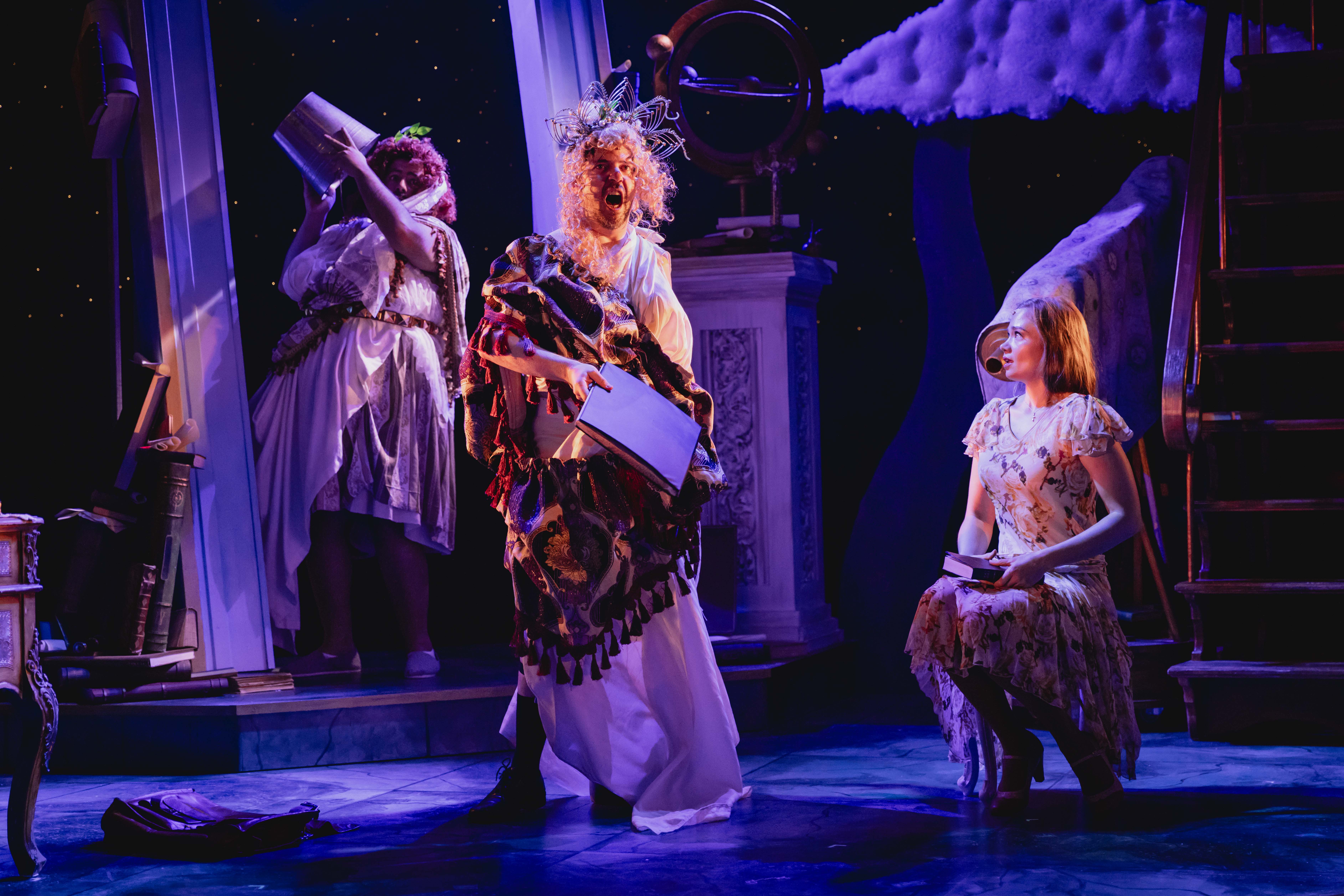
The Charing Cross Theatre hosts the London premiere of this new operatic musical, setting new lyrics and storylines to Giovanni Paisello’s music. Guillermo Nazara shares his views on the show, to let us know if this magic-themed re-writing of classical repertoire ended up putting a spell on him.
Prestidigitator: “a type of illusionist characterised for the rapid use of their hands.” Derived from presto, meaning “fast”; and digit, “finger”: “quick fingers.” Great – now my lovers will know how to call me if they forget my name… Settle down – that was a perfectly appropriate remark. After all, this show isn’t about wording. It’s not about erudition either – it really, really isn’t. It’s about LOVE! And surely you’re aware that, when it comes to such a feeling, it changes everything! Don’t worry – we’re not going down that road again (basically, because you just can’t go any lower than that… trust me, seeing is believing).
Fortunately enough, the Charing Cross Theatre has brought something more tasteful and entertaining than a musicalized tribute to incestuous romance. Enter The Fabulist, a new show following the sorrowful quest of a young magician (regardless of how much he despises the term), whose heart has fallen for a beautiful wench of noble status. Despite her father’s inflexible opposition, as well as her uncle’s persecution towards anything remotely suspicious of witchcraft, no adversity will be strong enough to break their bond – as their passion will be sufficient guarantee to put anything else at risk, as long as they can stay together.

A tale as ancient as the approach it goes for, the piece features old-fashioned operatic elements primarily in its score, but also scattered around its narrative. Repurposing part of Giovanni Paisiello’s repertoire, this 17-hundreds-stylized work follows many dramatic rules from the classical period – counting on numbers that overstate the personage’s situation and views, rather than helping them evolve, and presenting an easy-to-grasp plot which, in spite of a few twists and turns, relies on the fair simplicity of a low-brow buffa.
Proving understanding and knowledge as for the craftsmanship of the era, the musical manages to pay an enchanting homage to the early stages of the genre – applying several devices which were usual in the time with astounding precision. However, the lack of awareness regarding its evolution over the centuries compromises its effectiveness with today’s audiences – unable to create a balance with the contemporary tools that would allow it to entice the modern viewer.

Feeling slightly cluttered with themes that contribute next to nothing throughout the recount, the pacing is also severely affected by its rather unpolished structure – moving way too fast for the spectator to even have the chance to reflect and, finally, connect with either the characters or their journey. Instead, we’re just taken through not too smooth a ride, which, however amusing it may be, fails to seduce and, ultimately, invite us into its universe.
On the other hand, despite the effort of reimagining olden lyrics still being artistically acknowledgable, James P. Farwell’s endeavours as a librettist struggle to convey any proper emotion. With many of the punchlines appearing quite predictable in the dialogue excerpts, the main problem, nonetheless, stems from the missing prosody in his verses, with too many lines sounding profusely shoehorned into the melody – featuring a rhyming scheme that overwhelmingly consists solely of couplets, and an absent endeavour for a better honed concoction that feels more phonetically aesthetic.

In any case, the production is still salvaged, to some level, by its rather praiseworthy company. Yet, though all of them exude extraordinary rapport and comedic timing, and some flaunt outstanding vocals, several roles seem to have been either miscast or given the wrong repertoire: while some performers boast incredible coloratura technique, some others are obviously lacking that training – making some of their renditions look mildly unrefined and, eventually, unfulfilling.
Founded on a superbly interesting idea that could have led to an exceptional result, The Fabulist erects a wondrous atmosphere paving the way to a rather bewitching experience, but gets too caught up in its own fantasy to ever make it a reality. Still a work in progress, the piece could be rescued if provided with the right tweaks and twerks – all of them, to be applied to its very core. It has an enchanting essence, but it should set up more ground before building any castles in the air.
All pictures credit to Mark Senior.
The Fabulist plays at London’s Charing Cross Theatre until 21 September. Tickets are available on the following link.
Help us continue our work
We count on your support to keep bringing the greatest quality in theatre-related content, from interviews with the biggest names in the industry to reviews of every show in town and beyond.
We appreciate every donation to maintain our high pace and standards and continue to grow.
Thank you for believing in us!
***************************************************
One response to “Review of ‘The Fabulist’: “A tricky business””
so 3 out of 5? 2 out of 5
? Yours, Adam http://www.redspearllc.com adamweinstock.productionswww.eisenhowertheplay.comemergingartiststheatre.org