
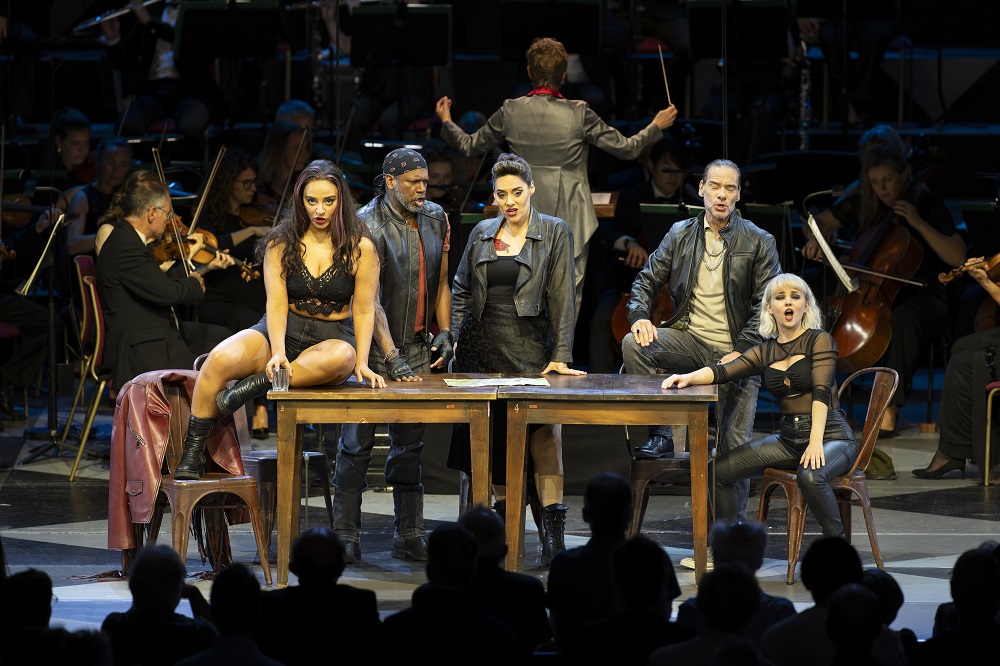
The Glydebourne Festival production travels to the Royal Albert Hall for one night only, bringing the fervorous allure of Bizet’s score through a new, up-to-date vision. Guillermo Nazara shares his views on the show, to let us know if this modernized take on the late Romantic masterpiece still manages to live up to its myth.
Legend says that, during the opera’s original run, soprano Célestine Galli-Marié rushed off the scene as a thrush of panic emerged on her face. As people backstage realised, they asked her what happened. “I’ve seen it on the cards”, she gasped. “It’s the Maestro – he’s dead”. And as they would later find out, composer Georges Bizet had taken his last breath at the time the work that would posthumously grant him immortality experienced its greatest failure.
The controversial figure of Carmen and her far-from-ideal love affairs have been both subject of praise and disdain by the morality standards of now and yesterday. For some, the epitome of a liberated woman. For others, an example of the toxicity of the romantic love ideals. And, in consensus, a tale of people flaunting as many flaws as they have virtues – the 19th century lore continues to resonate through its universal display of the human condition in its most visceral form.

Featuring a lavish score founded on the traditionally ariose Italian sapor, with sprinkles of French melodiousness and, inevitably, the glamourised Spanish piquoancy, the piece has made its way into the hearts of opera enthusiasts and sceptics alike thanks to its almost endless list of classical top hits. Its sharp libretto, conveying a most insightful look into the passions that both fuel and poison our soul, only adds up to the emotional power of the material – blending the roughness of its volatile plot with the candid playfulness of Bizet’s themes.
A tale of universal grasp that, despite society’s moral changes, still overcomes the pass of time, Glydebourne’s approach underlines the eternity of its themes through its modernized staging – presenting its characters with an updated look that fairly depicts, with striking accuracy, the reality of current urban tribes, bringing further proximity with the viewer by reminding us of our cyclical nature beyond culture or era.
Beautifully put together through Adam Torrance’s dynamic blocking, cleverly exploiting the space’s possibilities, the sumptuosness and, admittedly, impeccable singing of the rendition is gracefully matched by its flawless, electrifying choreography – evenly supported by its skillfully conducted orchestra. Under the soaring movements of Anja Bihlmaier’s baton, the London Phillarmonic Orchestra paid a most compelling homage to Bizet’s work through a performance exuding tenderness and delight – bringing out the most delicate side of its motifs, though, regrettably, sometimes forgetting the ardent undertone that throb behind.

Regardless of those minor impediments, the montage is, in many ways, an absolute success. With a company that boasts tremendous rapport, as well as remarkable verity in their portrayals (something that we’re not so used to in opera interpretations), their aforementioned vocals are just the final asset in this ace-studded deck. Among them, Janai Brugger makes a most memorable appearance as Micaëla, bringing out the personage’s harrowing frailty through the tuneful robustness of her vocals. On the other hand, Evan LeRoy Johnson succeeds in his take on Don José, enhancing the menacing vigour of the part through a blazing sentiment-driven performance. However, the highest praise goes to Rihab Chaieb as Carmen, giving an extremely captivating representation that, apart from her generally flawless chanting, oozes the same insidiously beguiling aura that defines the character’s essence.
L’amour est un oisseau rebelle… And just as the tricksy words from Carmen’s signature people-pleaser comment, Glydebourne’s version has avoided its taming – allowing its instinctual zest to pour through, and despite still leaving a bit of room for further zeal, its intoxicating marrow will feel more than sufficient for what, in the end, is a performance of performances of a work of works. Tu crois le tenor, il t’evite. Tu crois l’eviter, il te tent!
The 2024 BBC Proms run at London’s Royal Albert Hall until 14 September. Tickets are available on the following link.
Help us continue our work
We count on your support to keep bringing the greatest quality in theatre-related content, from interviews with the biggest names in the industry to reviews of every show in town and beyond.
We appreciate every donation to maintain our high pace and standards and continue to grow.
Thank you for believing in us!
***************************************************
One response to “Review of BBC Proms ‘Carmen’: “Destin d’amour””
completely agree. It was absolutely outstanding- the time flew by even though we were standing and the singing was just sublime. The most entertaining performance of any opera I’ve ever seen. Sorry the reviewer couldn’t add that last star. Def. 5* from us.