
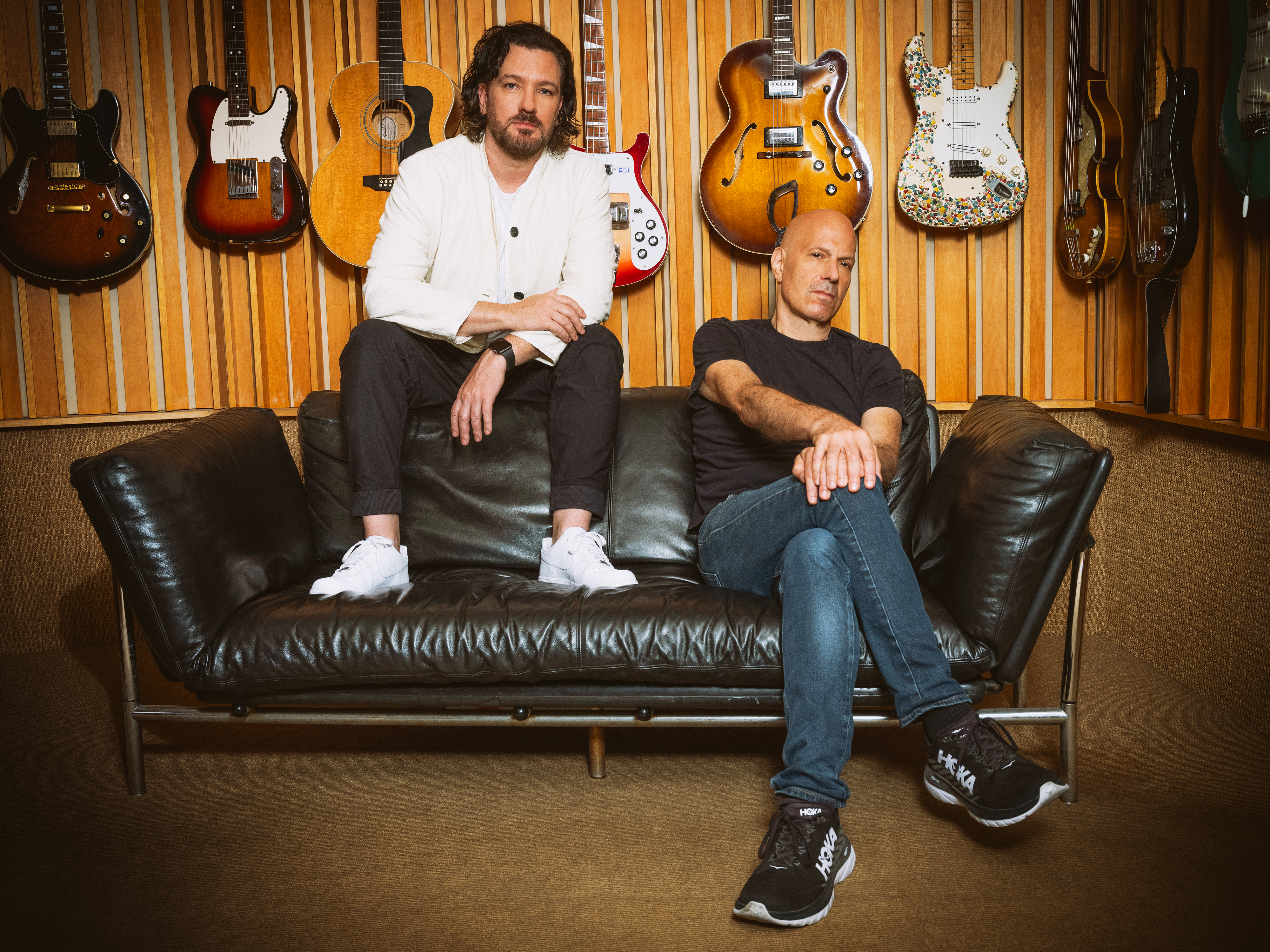
The world-renowned songwriters join forces one more time, through this upcoming concept piece resurrecting Mary Shelley’s signature work through a revised, modern-life approach. Guillermo Nazara chats with the duo, to learn all the facts about the development of this musical theatre remake, as well as the prospects of their creature.
What prompted you to adapt Frankenstein into a musical theatre concept album?
JCC: It all started with the idea of writing a musical in the first place, actually! There was a previous theme that got scrapped, and we were trying to figure out what we wanted to work on next in this gap space.
JH: I brought my mother’s play, which is a very cool version of an already great classic – which also made it easier to take it into the hour-and-a-half format. The take is very interesting, as it’s devised as if Dr. Frankenstein and his creature are having a conversation for the most part. For the most part, it’s like a two-hander musical, and we thought that was very exciting material to work on.
JCC: When we got halfway into the music, people encouraged us to put it out – everyone seemed so excited about it. Putting it into perspective, that’s been the case with so many other iconic musicals, like Jesus Christ Superstar.
JH: Doing a concept album is also one of our greatest strengths. I’ve done theatre but I’ve taken a long pop holiday from it. So it’s really awesome to be back! It puts you in the place and the sound of it, probably better than other people in a similar situation.
Similar to Jesus Christ Superstar, as you mentioned, this piece also offers a contemporary approach to a classic tale. It seems like AI will be one of the modern topics you’ll be exploring through your vision…
JCC: In a broad approach, yes – because that’s what society is dealing with at the moment. I was very impressed that, when she wrote the novel, Mary Shelley was raising this debate about humanity and technology more than 200 years ago. We are still doing that! Of course, there’s immense reward in technology – we’re able to communicate through it. But we are also dealing with miscommunication that takes place because of it. We’ve kept in the back of your minds through our approach: the responsibility of humanity and technology interfacing. The fact that Dr. Frankenstein can create life can be very dangerous if not done responsibly.
JH: I think that the message is that no amount of technology can save us from being human. Ultimately, it doesn’t change anything. You may live longer, you may have a happier life. But none of these things are going to prevent you from going through the same problems.

What has the development process been like, from both a narrative and musical perspective?
JH: We were lucky enough to have my mother’s script as a guide. The very first thing we wrote was a song titled How You Sleep. It all started by writing an initial tune. If it was good enough, we would continue. But we absolutely loved what we created. From then on, we kept going through the script to find which bits were important, and we could musicalize. It was about finding what could be said more with song than text could ever say. I’ve also created some sketches for more orchestrated, visual scenes too. It will be very spectacular – but in our minds, so far!
JCC: During the creative process, we ended up going to the Playwright Centre, where his mum was a founder. We played some of the music we were working on alongside a group of actors reading the original text. That’s when we realize that we needed to make some changes, and that artistic licenses were required. From then, we started playing with its architecture. At first, we were following the journey that she was taking us on. But after hearing it, we decided to modernize it – putting our stamp on it.
JH: We’ve also been writing a book all throughout. It will not be the final one, but it’s helped us put things into perspective.
Are there any prospects of bringing it to the stage any time soon?
JH: Definitely! Our plan is to do a theatrical concert within the next 6 months – hopefully, in London! That will allow us to see how it works to bring it to a full production lately. Although, so far, people seem to love it!
Have you found any particular challenges throughout the creative process?
JCC: We’re always very excited for something new – and something like this is going to constantly evolve, which could be called a challenge. This album, for example, is not the finalized music – it’s a big first step. But every time we listen to it, there’s new ideas that come to mind. We know that this process is going to be all about adapting into the space and to the actors – we need to play to their strengths when we are piecing this together.
JH: And regardless of how much of a challenge that may be, it’s also very liberating to be able to make those changes. No matter the difficulties, it’s always a lot of fun for us.
If you had to give me one single reason to listen to this album, or come see the show when it’s finally on, which one would it be?
JH: Because of how relevant its themes are. The music is also really good! And it’s a very different spin on any other Frankestein version you’ve ever seen.
Thumbnail picture credit to Michael W. Abbot.
Help us continue our work
We count on your support to keep bringing the greatest quality in theatre-related content, from interviews with the biggest names in the industry to reviews of every show in town and beyond.
We appreciate every donation to maintain our high pace and standards and continue to grow.
Thank you for believing in us!
***************************************************