
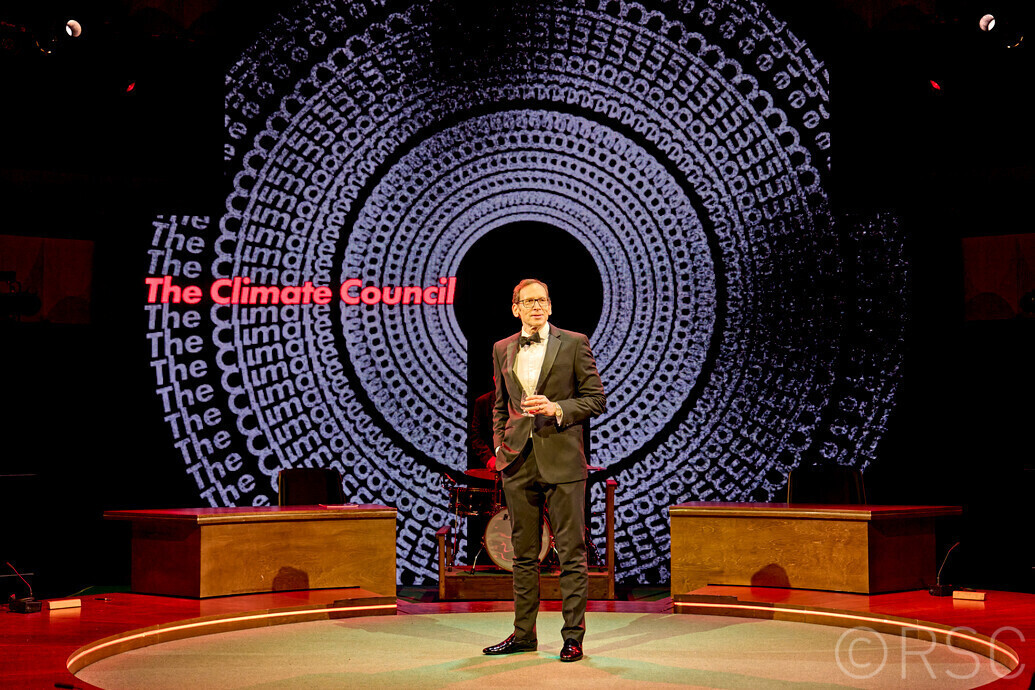
The Soho Place hosts the West End transfer of this new play by the RSC, dealing with one of the most eminent political acts in the history of environmentalism. Guillermo Nazara shares his views on the show, to let us know if its depiction of the fight against climate change left him feeling under the weather.
It’s a world where the dog eats the dog… It doesn’t matter if those words were uttered by a chanting opportunist as he wandered the Paris sewers pick-pocketing the corpses of the perished revolutionaries. The truth of Victor Hugo’s epic novel (later turned into the RSC musical) keeps resonating in the company’s latest play. We usually pride ourselves in filling our mouth with righteousness – but in reality, it’s often interest that takes over stand in our decisions.
In a time when climate change has become the basis of the most heated arguments (no pun intended), a play dealing with possibly the best-known, course-defining agreement in the history of environmentalism seems to arrive at an almost perfect cadence.
Global warming supporter or not (of the concept, not the crisis), the prospects of a political drama depicting the dark manoeuvres behind a seemingly well-intentioned treaty are admittedly high. They have (or at least, they are expected to) the philosophy and pathos any significant piece of art should both flaunt and rely on – providing tools instead of guidelines for audiences to make their own mind.

Kyoto is intelligent enough to understand that notion – and even more clever to twist it in its own advantage. It takes sides with unapologetic blatancy – and still is able to make of its villainous protagonist a likable figure you wind up giving some credit.
Centered around the obscure tactics devised by American oil lobbyist Don Pearlman (their goal goes without saying), authors Joe Murphy and Joe Robertson have shaped a very different image of the traditional antagonist we’re supposed to hate. Because, actually, we can’t help but like him – and no matter how rooted your ecologist ideals may be, the feelings we develop for him are surprisingly similar to the ones we had for Anthony Perkins hiding Janet Leigh’s dead body in Alfred Hitchock’s cinematic masterpiece: we want him to get away with it.
It’s an admirable achievement that’s also admittedly the most solid element in its narrative. Not only does its bring complexity to its characters, it makes them look truthful and, ultimately, human – just like the emotions we profess towards them as we dive deeper into their conflicting morality. They’re not necessarily terrible people, even though they do terrible things. And even if by the end you think they are, you will still shed a tear for their plight.

The intricacy of its personages is not completely matched by the play’s storytelling skills, however. All in all, it’s gripping – you’re hooked and entertained all through the plot. Yet, the pacing is slightly off at some moments. Its overused jokes already struggle to cause much effect in their first installment, while a few excessively long scenes halt the rhythm with very little justification – hurdling the flow for a more upbeat cadence as this recount needs.
The staging is not indifferent to that problem either. Presented in a thrust stage themed after a round conference table, the montage succeeds in immersing the viewer into the political atmosphere that forms the basis of its setting. But there’s not much else than it can do. With an approach that looks too figurative, the design struggles to bring much of the dynamism and versatility the play requires – feeling too static and unable to take us anywhere else than the convention centre; which, far from making its visuals cohesiveness, gives us a minor sense of sloppiness in its execution.

Regardless, the show is at all times blessed with some really exceptional renditions. Among them, Ferdy Roberts makes a most memorable appearance in his double-role portrayal of UK and Houghton – once again, boasting the magnetic presence and onstage confidence that’s defined his act in every previous piece I’ve seen of him. In addition, Jena Augen also earns a mention though her heartfelt interpretation of the devout wife, Shirley. Yet, the highest praise goes, unmistakably, to Stephen Kunken as Don Pearlman – reinforcing the strengths of the script with a remarkably powerful performance filled with absolute flair and deftness.
Hardly ever do politics save the world. In my cases, art can find itself on the same boat. The difference, though, is that the latter often leads, at least, to a more interesting and fruitful debate. With a haunting storyline covering one of the most prominent actions in environmentalism history, Kyoto brings a breath of fresh air through its poignant, intriguing and rather stimulating exploration of the clashes between greater good and personal gain.
With down-to-earth principles, engaging topics and compelling personages, the piece is likely to strike oil with its audiences – leaving a minor carbon footprint in their minds that will continue to reverberate for the upcoming days, and maybe weeks. It may be barking the wrong tree at some very isolated moments, but eventually, its craftsmanship explodes like an unstoppable force of nature.
Help us continue our work
We count on your support to keep bringing the greatest quality in theatre-related content, from interviews with the biggest names in the industry to reviews of every show in town and beyond.
We appreciate every donation to maintain our high pace and standards and continue to grow.
Thank you for believing in us!
***************************************************
All pictures credit to Manuel Harlan.
Kyoto plays at London’s Soho Place until 3 May. Tickets are available on the following link.