
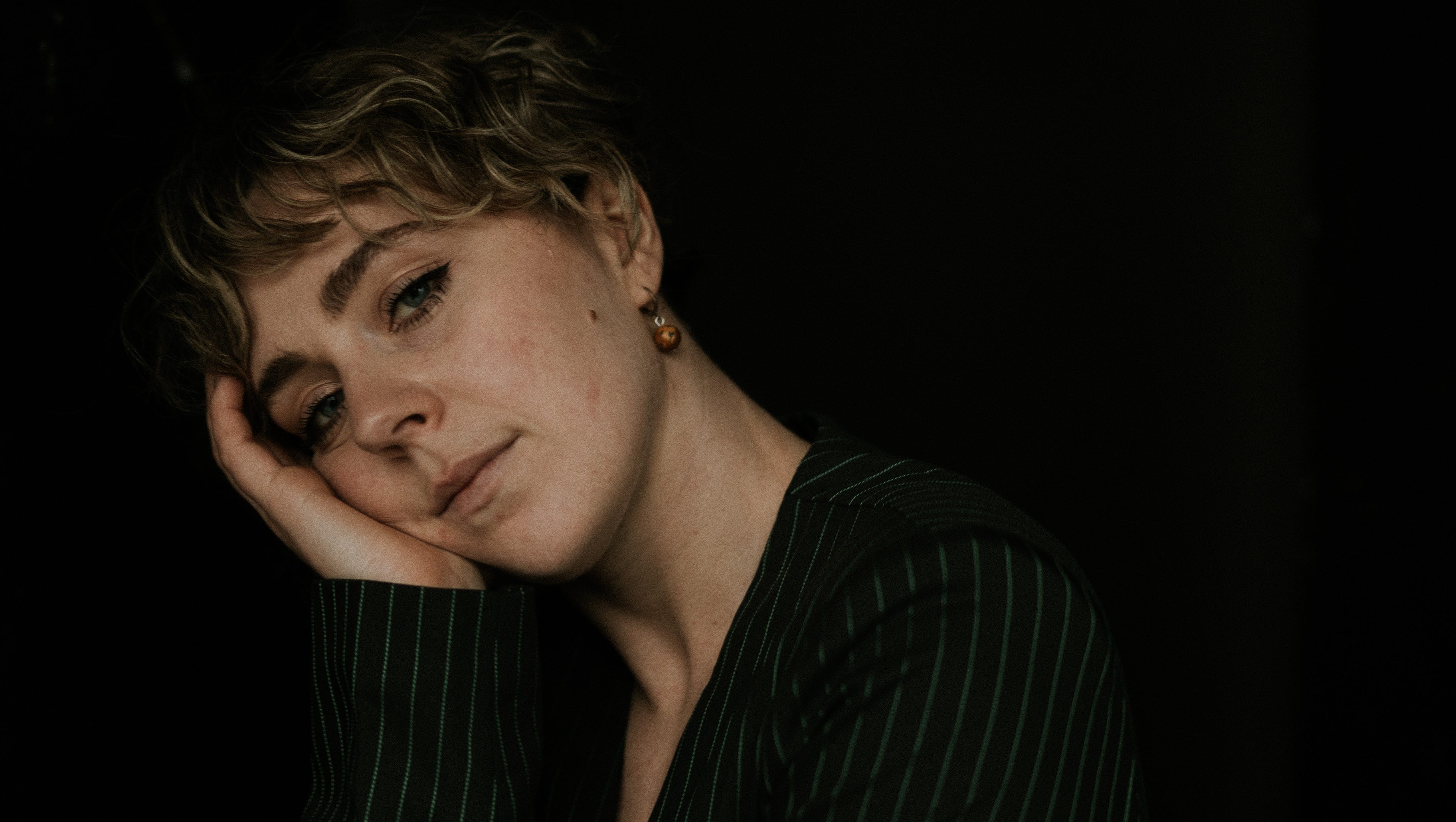
The company brings their latest show across the UK, depicting the trials and tribulations of young men amidst the current mental health crisis. Guillermo Nazara chats with the author, to learn more about the development of this stirring piece shedding some light on the shadows of society.
How did the idea for this show come about?
The idea came from witnessing and then experiencing seasons of anxiety and depression in our inner, local, and later, global circles. Something that we’d recognise as kids, but now understanding as adults was becoming seemingly more prevalent in the world around us, particularly in our surrounding environment. Our local circle, as in the place that I grew up, is a small northern town – now known as the real ‘Happy Valley’. Together, we entered a collective period of grief as our small town faced an epidemic of local men, young and old, who were losing their lives to suicide.
We questioned, and still continue to question why.
Personally, as a child whose family dates back in the valley for generations, it has always been a place of two sides for me. Yes, a creative hippy-dippy town with wacky parades and free hugs, but also a place lidded by thick cloud with a rumbling undertone of claustrophobia, mental health issues and division. I felt that split growing up, the kids that progressed, the kids that remained stuck. The children of the ‘off-cumdems’ and the mill families whose roots span generations. There is a divide, one that I felt even in the landscape. Geographically unusual, the town runs narrowly along the valley floor with the moors above. On the valley bottom, there is no horizon in sight. Depending on where you live, there are those who reside in the shaded side of the valley, and there are those that live on the Sunny Side. This metaphor of dark and light formed the basis of the show and became rooted in a fictional narrative of a local young lad’s struggle with his mental health.

Why do you think men’s mental health is still a topic not openly discussed nowadays?
Fear, in all aspects. Fear to ask the question, fear to get it wrong, fear to acknowledge, fear of being different, of being weak, of being judged, of violence. Of making yourself vulnerable, of opening yourself up to inspection and/or rejection. Of hurting the people you love, of letting people down, of being a burden. Of losing face.
Simply, not having the language – either verbally, emotionally, and physically. We don’t all grow up in situations that allow us to become fully emotionally literate. To recognise the signs of struggle, to know how to hold space.
We held a day of drop-ins for local men to speak about their experience of their mental health, and one man simply said ‘sometimes it’s easier to not have the conversation’.
Have men been let down by society in the last few years?
We cannot recognise the damage of the patriarchal structures that we live in without acknowledging how they harm men. These structures keep us in a certain place – and for men, that is often a place of unwavering strength, minimal comfort, and limited access to gentle platonic touch. Our men become islands; always one step removed from accessing the full scope of their vulnerability.
As boys surpass a certain age, we remove things that we allow to girls. There are limits on vulnerability, on crying, on being held gently and platonically by anyone other than a romantic partner. As a company with gender-balanced direction, we frequently examine our differences. Speaking from my own experience as a 30-year-old woman, softness is in abundance. I still hold my dad’s hand, I still stroke my female friends’ hair and tickle their backs; that gentle comfort is always available to me. For Sam, my male counterpart, it is not.
Masculinity has been thrown recently under the telescope of public discourse. What does it mean to be a man in today’s world? What does it mean to become a man in today’s world? When we come of age, what influence do we follow? What trauma do we inherit? What layers must we shed to survive?
We live in a society that is starving men of touch. Men are physically and emotionally isolated. We believe that this limitation, this man up, toughen up, stiff upper lip culture does our society a disservice. It allows a portion of the population to suppress, to fall through the gap. What is a world where men can freely embrace, cry, and hold space? Would softness be enough to save us?

How would you describe your approach to this topic, both artistically and thematically?
Playing with the light and dark, we looked deeply into how people exist in public and private arenas. Sunny Side is soaked in hidden critical moments that unexpectedly hit the audience; and it is this flitting between versions of self and the sudden revelation of human reaction/interaction that allow this.
This was the basis for the majority of our physical movement tasks led by Company Co-Director, Sam Ford. This juxtaposition between performative and personal movement became the baseline of the physical language. As is typical with our practice, this differs from performer to performer as we interrogate who THEY are in a performative and private movement sense.
The show is an artistic extension of the mental state of the main character, K. The set, created by the incredible Caitlin Mawhinney, is a bedroom torn in half, indicative of a state of decline. The walls are flood stained, K’s bed is beneath the flood line, he sleeps each night drowning. The floor is a jagged edge, the walls are lined with torn metal. The comfort is minimal.
We worked closely with our lighting designer, Barnaby Booth, and digital designer Aaron Howell to elevate this experience. Together they transform the set, entering the world of K. The stage then becomes metaphor. The door is a nightclub, holding the promise of a new world; the walls hold his distorted dreams, memories of his gentle infancy; the entire room becomes the moorland, the fields of wheat that hold the memory of his first love.
The work is entirely scripted and written by myself. At its baseline, my writing is lyrical and poetic – and at the beginning, the decision to write in this way for a working-class man was contested, but I believe, as one of my mentors said, it is a brave political act. K’s inner world is intensely complex, beautiful, layered, meaningful, vulnerable. All of the qualities that we don’t typically expect from a working class man. Again, the juxtaposition.
The soundscape is completed with the genius of Wilfred Kimber, as above another Northern creative. We worked closely together to capture the duality of the work. Of light and dark, of hope and nostalgia, joy and deep grief. The score holds the audience and takes them seamlessly through emotional highs and lows of the show.

What has the development process of this piece been like?
It feels crazy to say that Sunny Side has been developed over 5 years, but such is the funding landscape that we live in… During that time, we’ve been able to dig deep into the subject matter, into the character and movement development, the script, score and visual aesthetic of the work. We’ve been able to work with over 1500 young people on the show, who have attended our workshops, classes and intensives at all stages of the project. What this space has allowed for is deep inspection from its creative team, most of which have worked on the project for at least 3 years, and from the community that it is indicative of. Together, we have created a work that is collectively ours.
Apart from the gravitas of its themes, what other creative challenges have you faced?
We posed this question out to our creative team and this is their responses:
- shifting the show from Act 2 to Act 3 as we leave K’s bedroom and enter a nightclub (including the physical clearing of the set..)
- how to style a wig…
- how to be in the intentional world with a bonkers amount of counts to keep in your head
- how to remember all the subtle changes of Act 1 (once you see it, you’ll get this!)
But truly, perhaps one of the biggest creative challenges or rather, responsibilities, is keeping your team safe in a world that is hard to enter each day. To find the balance of pushing artistically but keeping true to human first, artist second. To keeping that softness and compassion always.

This is a show to raise awareness. But is it also a show to offer some healing in any way?
There’s no denying that Sunny Side is a hard-hitting show. At times, we’ve shied away from this, but we believe that sometimes socially-impactful art has to be. During our preview shows, the audience reaction took us back. Not because it was well-received but when the house lights came on, the audience was embracing.
Sunny Side is a show that will make you go, hold, and check in on your loved ones.
What’s the message behind this show?
Sunny Side shines a light on the people that slip through the cracks. It’s an insight into the private internal world when things go wrong. We hope the show allows the audience to recognise something in themselves, or someone they love, and that instigates an action. The show is a jolt to do better.
Why come see Sunny Side?
Never has it been more prevalent to carve spaces for compassion, vulnerability, and awareness. Particularly, in our young men. We live in a turbulent world that holds us in structures that no longer serve us. Sunny Side hits home the message of the human need to love and be loved is paramount.
Help us continue our work
We count on your support to keep bringing the greatest quality in theatre-related content, from interviews with the biggest names in the industry to reviews of every show in town and beyond.
We appreciate every donation to maintain our high pace and standards and continue to grow.
Thank you for believing in us!
***************************************************
Sunny Side is currently on tour across the UK. Dates, venues and tickets are available on the following link.