
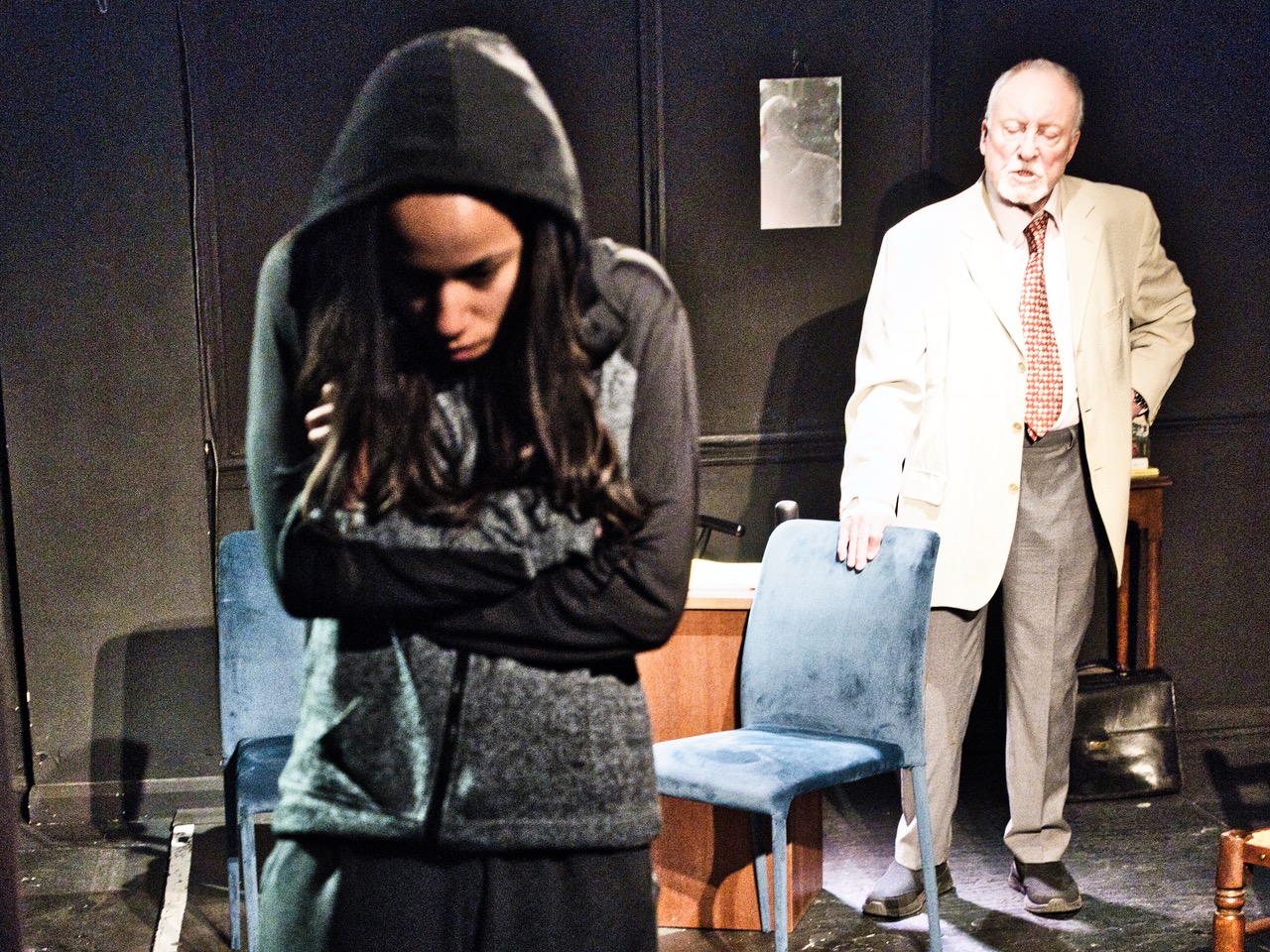
London’s White Bear Theatre hosts the world premiere of Julian Bird’s second play, inspired by his own experiences as a professional mental health therapist. Guillermo Nazara shares his views on the show, to let us know if this mindful dramatic construction ends up feeling unhinged.
To say that we all have a little crazy in us may be the sanest thing to do. For some reason, though, society has taught us exactly the opposite. For centuries, mental health has not been a subject of sympathy, but of judgement. To suffer from psychological issues is to suffer from others’ ostracism – even when those problems are often instigated by the same community that now turns its back on those in need of a helping hand.
Julian Bird’s background as a professional psychologist breathes through the words of his latest play. A simple title gives us a plain look into what we are about to witness. It’s the story of a veteran practitioner, and his struggles to heal not just his patients’ grief, but his very own. It’s a wonderful premise that, beyond adding depth to the character, contributes to breaking the stigma surrounding the troubles of the mind. We all have or will experience symptoms of depression, anxiety, or some other mental disorder at some point in our lives – and that doesn’t make us any less; if anything, more of a human.

Written as a two-hander, with Bird in the lead role and Stephaine Okoye portraying both his patient and his therapist, the script flaunts some sparkle in regards to Bird’s writing skills. The dialogue is well-paced, moves along with flow, and exudes truthfulness in both its style and content. However, the author’s lack of expertise as a dramaturg is noticeable in several excerpts: many lines verge on the line of the cliche, while some scenes push too hard for a cliffhanging ending that ends up compromising the overall rhythm of the piece.
Some of the narrative tools are questionable too. The use of prerecorded tracks to express the protagonist’s inner thoughts creates a disconnection with the audience – depriving them of the verity and intimacy we would have got if those moments were interpreted live. That’s not always the case, as some segments, dealing with the personage’s memories, are performed onstage – but the way they are presented feels slightly phony and overly poetic, focused more on form than substance, and consequently unable to grip the viewer as it should.

Both renditions are enjoyable. While Okoye shows some range in her contrasting approach to the characters of an unstable young woman and the lead’s calm, nurturing colleague, producer Alistair Brown (who stepped in for Bird during his recovery from surgery) deserves the highest praise – for regaling us with a most charming and insightful act despite doing his whole delivery on book.
Though diagnosed with a few problems regarding the plot’s turns and conclusion, the prognosis for The Psychiatrist is still favourable in some terms. Knowledgeable in the reality it presents, and set up in the right direction as for how it intends to do so, the piece just needs to dig deeper into its dramatic possibilities to solidify its interest – and thus, not let its pathos shrink. Giving us an overall entertaining journey, but a rushed conclusion standing on the brink of disappointment, it’s not like you will be mad at its story – but probably, you won’t be mad about it either.
Help us continue our work
We count on your support to keep bringing the greatest quality in theatre-related content, from interviews with the biggest names in the industry to reviews of every show in town and beyond.
We appreciate every donation to maintain our high pace and standards and continue to grow.
Thank you for believing in us!
***************************************************
All pictures credit to Paddy Gormley.
The Psychiatrist plays at London’s White Bear Theatre until 26 April. Tickets are available on the following link.