
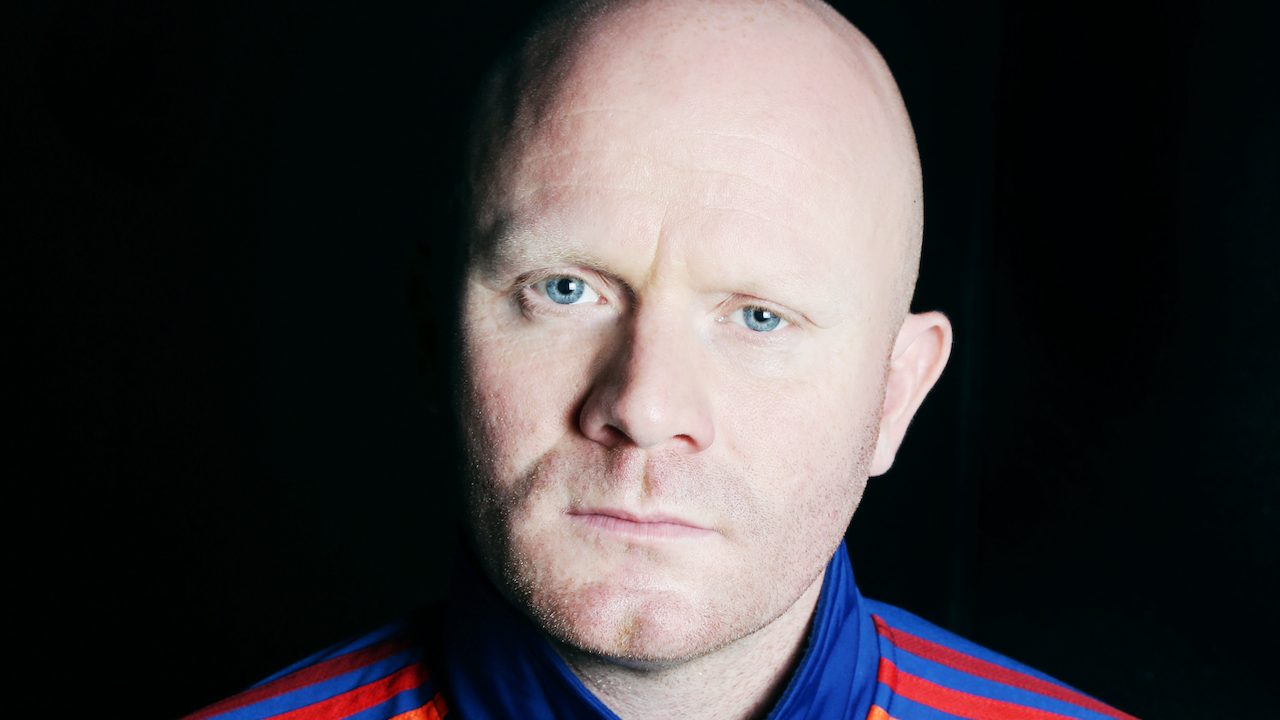
Devised as the last instalment of his ‘Thatcher Trilogy’, Clarke brings this new theatrical experiment to the London scene — blending dance, spoken word, and conceptual video designs to portray the struggles of the LGBT+ community upon the introduction of Section 28. Guillermo Nazara chats with the artist, to learn more about the creation of a show depicting a reality that resonates with today’s world now more than ever.
In a moment where LGBT+ rights are more at stake than they’ve ever been in a long time, it feels like the perfect timing to bring a show about Section 28, don’t you think?
Yes, absolutely, although I would argue that LGBT+ rights are always in the firing line – not just in the UK, but globally. Our audiences have been so fired up because of what is happening in the world today. The fight for civil and human rights is continuous and I hope DETENTION can hold up a mirror to the past so that we see a reflection of the society we live in today – DETENTION is an important work like that.
The most baffling aspect about today’s situation is that some people are using the exact, same rhetoric conservatives did when they introduced this law. Why do you think we’re reliving that history all over again?
Because it works. The exact, same rhetoric and language are good tools when one needs to create fear and control amongst the masses. It is a simple and clever way to create divisions amongst people and will be used in years to come. Homophobia and transphobia have no ‘sell by date’ – like a silent assassin, it can just keep re-inventing itself.
What enticed you to create this piece in the first place?
I am a Thatchers child – born in 1980 into a coal mining family, so I have been politically plugged in since a young age. As a young gay man, I lived all of my childhood, school years, teenage years and early adult life under Section 28 – which was damaging, scary, and bleak. I wanted to create a show that showed another marginalised community suffering at the hands of Thatcherism. I wanted to educate and inform people of such a dangerous and hidden legislation that effected a whole generation of queer people. I also thought dance and movement would be an amazing tool in which to do so. So much of working class social history is told through other artistic mediums (such as film, documentary, art, poetry) but not dance – so I guess I wanted to carve out a new territory in which to tell these stories.

As an artist, how challenging has it been to bring your own personal experiences to the stage?
I see my work as activism, so it is not hard for me to pull on my own experiences, because this is what fuels the work. I have to understand the work in a deep, rooted, connected place in myself so that I have confidence and clarity in what I am delivering. I have to understand it from the inside out. It is important that I feel the work before I see it. It has to make sense emotionally for me. This way of working does have its challenges, and it can be emotionally exhausting – there are moments of upset, anger, joy, and pain, but all of these feelings make the work stronger, more relatable, and more true.
There have been several shows dealing with this subject, whether on stage, film or television. Apart from your personal connection, what makes this one unique in comparison to the others?
DETENTION is unique because it uses dance to tell the story. Dance and movement are amazing tools in which to tell these stories. So much of working class history is told through other artistic mediums (such as film, documentary, art, poetry, theatre) but not dance – so I guess I wanted to carve out a new territory in which to tell these stories.
What has the development process been like?
The process has been life-changing for us all. It was painful at times, liberating, and challenging. We are dealing with real-life subject matters, and we can’t help but be affected by this, but I have an amazing team of dedicated artists, collaborators, producers, and production teams who have helped bring the vision to life.

Have you found any particular creative challenges in this piece?
There have not been many creative challenges to overcome because our thorough and detailed research has provided us with the information we needed on which to create the show. The show has many artistic elements: movement, spoken word, light, costume, textiles, props, film, and community engagement – I had to work hard to see how they all worked together in harmony and that the components compliment each other; this was a slow and detailed process of trial and error.
Are there any highlights in the show you would like to flag?
There are many! The show works on many levels. The protest sections are a real highlight – high energy, vivid, punchy moments of solidarity, energy and togetherness showing the strength and resilience of our LGBT+ community. We have an amazing cast of local people (unique to each area) who join us on stage with lived experience of Section 28.
What would you say to those who oppose queer visibility?
Join us.
Why come see ‘DETENTION’?
It is a great piece of important queer history told through a working class lens with heart, soul and emotional punch.
Read our review of DETENTION here!
Help us continue our work
We count on your support to keep bringing the greatest quality in theatre-related content, from interviews with the biggest names in the industry to reviews of every show in town and beyond.
We appreciate every donation to maintain our high pace and standards and continue to grow.
Thank you for believing in us!
***************************************************
DETENTION plays at London’s The Place until 7 June. Tickets are available on the following link.