
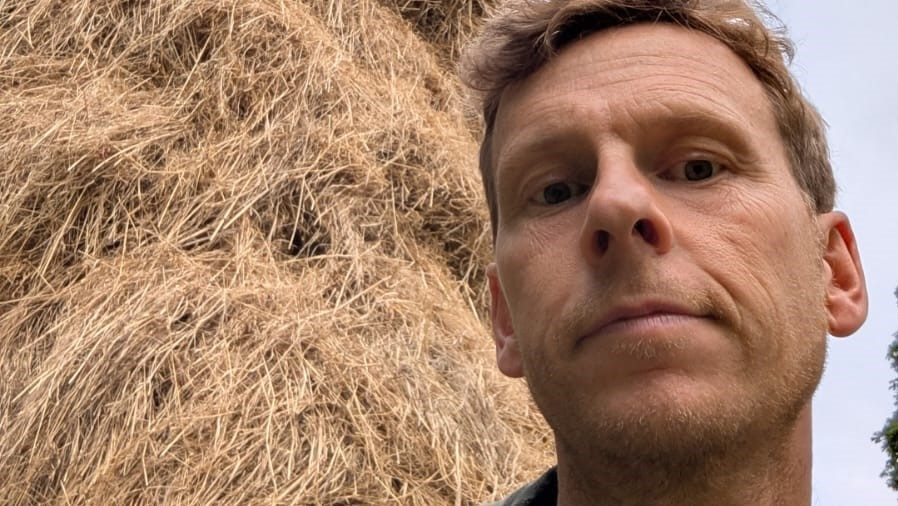
The event celebrated its second edition last week, gathering artists from around the world as they explored the concept of cultural reforesting through a variety of immersive proposals. Guillermo Nazara chats with the man behind the festival’s machinery to learn more about its creation and mission to plant a better future in people’s minds.
How did the idea for this event come about?
Art should be everywhere. Storytelling should be everywhere, it’s an indictment of our society that art, and therefore artists, are not central to our high streets and communities. Art, of all forms, is the soul of a society, the capacity for expression and imagination is what makes you feel alive. As with many aspects of our society, we compartmentalise something that should be everywhere, with everyone. The festival is an attempt at bringing art to all corners of the borough, with people from all over the world – and we want artists to lead us to unexpected places, to reach into the soul of this place and see what emerges.
Richmond had been doing a literature festival for about 30 years. We wanted to open this up to all artforms, and the potential for art everywhere.
The showcase had a first pilot edition a couple of years ago. Has it evolved in any way in this year’s version?
The first was a giant roar of local activity, this one has gone international alongside the local and national. We have artists and communities, with a particular place for indigenous communities, from Brazil, Pakistan, Lebanon, the US and India filling our streets and cultural spaces.
We wanted to test the water with perhaps what you might find at a Folkstone Triennial or another Biennale and put it in public spaces across this part of London.
The pulse of Artistic activity across this borough, which spans the majestic, but culturally complex river Thames, has brought a beat to this moment – a beat which hopefully will remain and support our relationship with nature through the coming years.

This year’s offer is themed after the concept of “cultural reforesting”. What prompted you to decide upon that topic?
If humanity don’t respond to the ecological crisis, now, then over the course of this century, the one our children are living in will become more and more difficult, deadly.
Cultural Reforesting is a provocation with the question – how can we renew our relationship with nature?
It is a decade-long programme supporting artists to respond to this question and create hopeful and meaningful experiences which highlight how people can be part of the ecosystems in which they spend their days. And this is a wonderful, life-affirming thing. It is worth a festival, but one which hopes to make this realisation, and then practice, a way of being in the world.
Are we suffering from some kind of cultural crisis in today’s society?
Tyson Yungaporta writes about the need for a diversity of cultures. Where there is diversity of culture and language there are healthier ecosystems.
Rampant, cynical capitalism has led to the homogenisation of culture, the brutal extraction and monetisation of every aspect of our lives and this planet, it will destroy us – we are living through the film Don’t Look Up – we can see, feel, and read about this moment we are accelerating through, but we seem unable to take the simple actions to make a difference. I recognise that we need political and global will, particularly with around stopping fossil fuel use to truly stop this crisis – but if we don’t change our attitudes and relationships with nature we will just return to the same place in the future. I see this moment as a fascinating opportunity, for all of us, wherever we are. Through the indigenous communities we are engaging with through our programme, we hear about ways to exist harmoniously with nature, can we in London hear this knowledge and think with our own cultural situation to adapt our every day relationships. Everyone can make a difference.
But we can do something, many people are doing something. And I believe that the weight of activity in this direction will get us to the hopeful social tipping point which we need to.
What has the process of selecting this year’s work been like?
Very collaborative there have been artists, scientists, social scientists, communities, and the more-than-human world very much collectively involved in this programme.
Site specificity is vital to a festival such as this, and Richmond is the only London borough which straddles the Thames, this gives us an amazing collaborator, and Raqs Media Collective have a thought-provoking work which involves walking the river.
A range of voices is vital to collective action, so we have programmed artists from many cultures to tell stories of how we might be as part of nature, including indigenous voices, those from the Global South, both of whom are living with the changing climate today, caused by the actions of the Global North. We wanted to represent young voices, as well as intergenerational and the programme reflects this with youth music, spoken word and exhibitions – the energy throughout is truly awe-inspiring.
And about a glimpse of how our culture might exist with nature, caring and recognizing that we would need be alive in a very everyday sense of it we’re not for nature. And that our every day actions, opinions and words perpetuate this destruction. We need to realize our hypocrisy with which we treat all other species, as if we own them, the land and their existence is only allowed if it can be monetized on our extractive terms.

Have you faced any particular challenges during the development of the showcase?
We had to wait until the last minute for the visas of our Pakistani artists, and one wasn’t finally granted until the festival had started, so Nadeem Alkarimi – a wonderful indigenous filmmaker from the Karakoram Mountains was only with us for a few days and later than hoped.
With about 70 events happening across the borough, there are, of course, last minute hurdles to jump, switches in venues that were necessary, and complications from doing things in the public domain, in many instances, for the first time in this part of London. Hopefully, these are all smoothed over for the next festivals.
We would also have loved to have got some more of the empty shops to transform into art spaces across the Borough – with the invisible, distant ownership of these local, community spaces we were unable to do more than paste artworks by Raqs Media Collective on an empty shop. A little piece of public protest as part of the design of the festival.
We are also a small team, and being this ambitious also meant we perhaps spread ourselves a little thinly across the festival – but people have been amazing in their dedication and creativity in creating a quality showcase.
Are there any highlights you’d like to flag?
For this last week, I want to highlight our incredible international artists. We have beautiful and profound films, drawings and photography from artists from Brazil and Pakistan. As well as this we have an experience from RAQS Media Collective along the banks of the River from Richmond to Twickenham, The Tides of Our Tears – which highlights our connections to waters with which we live. The photography by Rafael Vilela, ally artist of the Guarani Mbya in Sao Paulo, is devastating and beautiful, with portraits and cityscapes, exposing the plight of this indigenous community at the heart of a giant colonial city, the stories each photograph contains is expansive and truly human.
I also want to highlight a stunning arts location in Hampton Wick, Rupture Xibit. The team behind this space Kate Howe and Sally Minns have created something special and important – you could be anywhere when you step inside, Venice or Greenwich Village, New York. Also, our home, Orleans House Gallery, London’s wild gallery, London’s contemporary art space which is a home of art and ecology, on the river. The ecosystem is why Cultural Reforesting is happening in this part of London. 18 artists, including the fascinating Monica Alcazar-Duarte, share their responses to the core Cultural Reforesting question, complementing the energizing ecosystem of Orleans House Gallery, indoors and out, with a free exhibition which runs to the end of August. This show includes the unique family experience, Nature Sings by Finn Chatwyn-Ros, a song adventure through our woodland.

Are you already planning on any upcoming editions?
Yes we are, and there are many ideas to work to continue our core values as a festival of being socially engaged, experimental and collaborative – we want our artists, friends and communities to drive where we go next. So many meaningful conversations to have around what we will fill the streets with next time.
Ultimately, this is about demonstrating how vital art in all its forms is to every day life, so bringing art to the streets to leave a vibrant, connected sense of memory and energy with the places the experiences filled, is an important goal for the festival.
Why come to the Richmond Arts and Ideas Festival?
To find artists telling remarkable stories about this , with you. To find surprises and joy, deep connections and ideas for how we might overcome the ecological crisis. To share time with friends in a remarkable place, including the river, and to become part of ecosystems.
We need to understand that we are part of nature, with all the joy and fun and hope that this knowledge brings. The festival is a place to work out what part of the forest you might be, with all of your imagination, humanity, and shared possibility. Essentially be the human animal you are meant to be, take this with you everywhere you go and feel this relationship expand who you are, express this expanding you and we might even be able to do something about the ecological crisis.
Help us continue our work
We count on your support to keep bringing the greatest quality in theatre-related content, from interviews with the biggest names in the industry to reviews of every show in town and beyond.
We appreciate every donation to maintain our high pace and standards and continue to grow.
Thank you for believing in us!
***************************************************
Festival pictures credit to Anne Tezlaff.
Further updates on the Richmond Arts and Ideas Festival are available on the following link.