
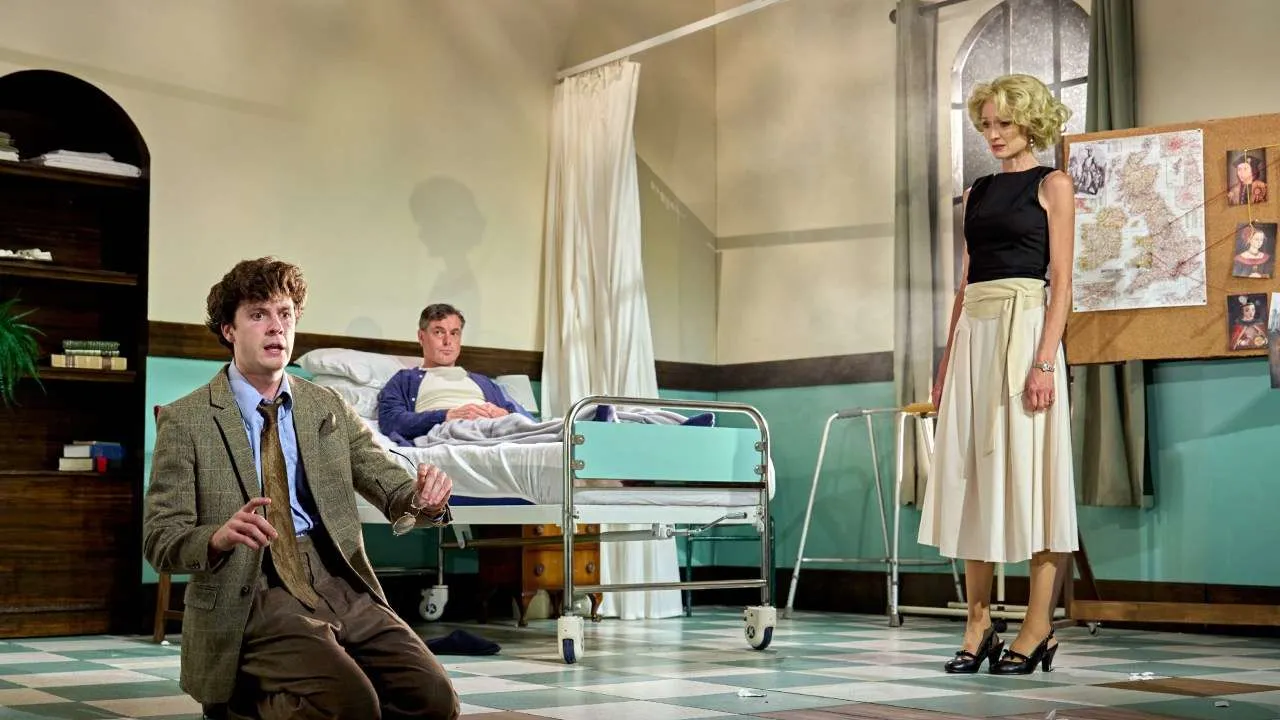
The Charing Cross Theatre hosts the world premiere of Josephine Tey’s detective novel’s stage adaptation. Guillermo Nazara shares his views on the show to let us know if this revision of the infamous king’s legacy heads off a cliff — or tower.
It’s only the greatest that make history — or so they say. For in reality, it’s never what you do but what others think you did that counts. From swifts in the current zeitgeist, which change the way we regard our past and its people, to more elaborate ploys to orchestrate how we’ll remember somebody, the label in which we’re able to persist doesn’t necessarily correspond with the truth.
The concept of misinformation and fake news takes a further leap in The Daughter of Time, which opened last week at London’s Charing Cross Theatre in the world premiere of its stage adaptation. Based on the Josephine Tey novel and with a script by M. Kilburg Reedy, the play attempts to do justice to the memory of the infamous English king Richard III, questioning Shakespeare’s popularised depiction of the monarch by researching the sources his celebrated work fed from.
It’s a premise with massive dramatic potential beyond its educational opportunities. Sadly, it’s just the cultural side of the story that shines. Discovering what occurred during the king’s turbulent reign feels like an exhilarating adventure. Unfortunately, though, much of that excitement is erased by a text that’s as obtuse as it’s uninspired.

Set in the 1950s, the plot revolves around a police investigator recovering from a leg injury at a local hospital. With nothing else to do apart from listening to the constant blabber of his nurses and visitors, his energies will focus on unearthing the facts buried beneath the lore cemented by the Bard and historians of the time. It’s not the most striking setting, but its Rear Window scenario still holds a compelling array of possibilities. Wistfully, none of them come to fruition.
Meandering between the inquiry and the rehearsals of a new fictional production of Shakespeare’s opus, the show attempts to bring back the old-fashioned glamour of a quintessentially English whodunnit. Every imaginable archetype you can think of is featured: a sharp-witted detective; an elegant, slightly camp love interest, who just happens to be a revered stage actress on this occasion; and a goofy but brilliant assistant serving as the comic relief. The problem stems from the writing’s inability to move anywhere else from personages’ basics, ultimately resulting in a sketchy concoction that many times borders (and further on) the cliché.
If the roles are predictable, the dialogue is noticeably mechanical. There is flow despite some not-too-scarce clunky excerpts. But the element of surprise is missing. And many times, it takes the naturalness and depth of the piece away with it. Nobody is expecting a philosophical awakening in a tale that’s essentially a pot-boiler. Yet, the genuineness and introspection any account needs to achieve some resonance should prevail at all costs.

Poorly structured, the entertaining quality of the material begins to fade away once Act One is over. And for the second half, it’s almost completely gone. The whole recount already comes full circle before the interval, brought by a most disappointing show-stopper. By the time the narration resumes, we can hardly care. The script doesn’t make a strong effort to change our minds either — it remains stagnant for most of the part, providing very little amusement through any of its plotlines.
The cast does their best at keeping the flame alive. Regrettably, the writing doesn’t offer them the best fuel. Its over-the-top, slightly farcical direction is no help either — with many renditions lacking sincerity and layering. Rob Pomfret makes the only exception in the lead role of Inspector Alan Grant, oozing extraordinary presence and charisma, despite his character being confined to a bed for most of the evening.
Inviting audiences into a double time capsule by revising the past in both content and form, the play sets up a solid takeoff in terms of themes, but it implodes through a heavy-handed approach that spills all its value off the picture. Even though it sheds light on an absorbing matter, the piece doesn’t come off as a satisfactory act of storytelling — too many blurred arcs and an absence of grip prevent its enjoyment. Some may have found more positive aspects in it, but I am not in the giving vein today.
Help us continue our work
We count on your support to keep bringing the greatest quality in theatre-related content, from interviews with the biggest names in the industry to reviews of every show in town and beyond.
We appreciate every donation to maintain our high pace and standards and continue to grow.
Thank you for believing in us!
***************************************************
Help us continue our work
We count on your support to keep bringing the greatest quality in theatre-related content, from interviews with the biggest names in the industry to reviews of every show in town and beyond.
We appreciate every donation to maintain our high pace and standards and continue to grow.
Thank you for believing in us!
***************************************************
The Daughter of Time plays at London’s Charing Cross Theatre until 13 September. Tickets are available on the following link.