
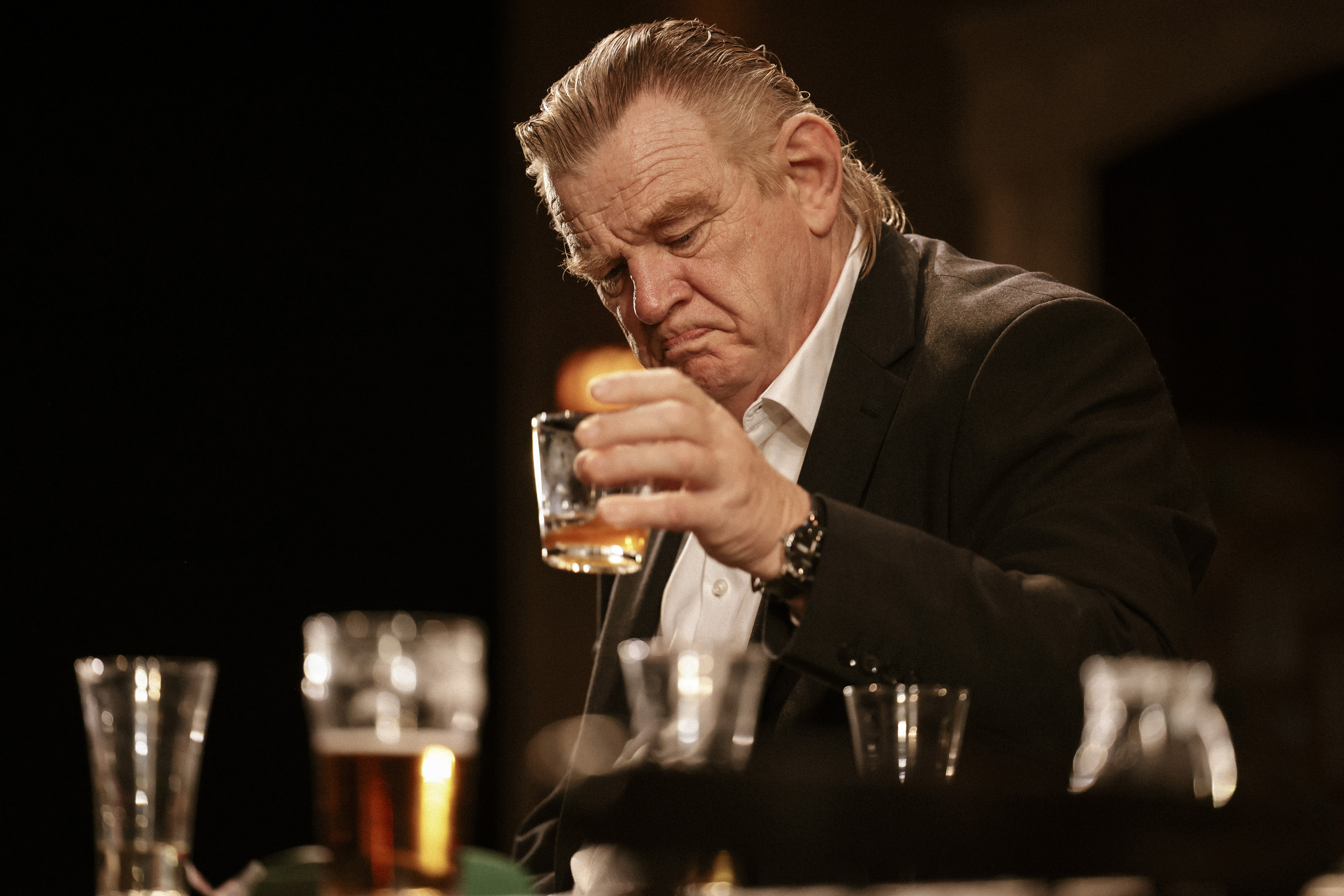
Connor McPherson’s renowned play returns to the London scene in a new star-studded cast production running until the end of December. Guilermo Nazara shares his views on the show to let us know if this cascade of existential observations holds any water.
Everything in life is fleeting, even life itself. Some honour that notion by living each day to the fullest. I, however, take solace in it when dealing with people on a regular basis. But no matter what meaning we give to it, the point is that nothing escapes the unyielding toll of time. It’s up to us to decide how each moment counts: either as a fond memory that guards a piece of our soul or a heart-wrenching ghost of grief, loss, and regret.
Connor McPherson’s spiritual play relives on the London stage in a new production running at the Harold Pinter Theatre for the autumn season. Directed by McPherson and starring film and television institution Brendan Gleeson, this latest revival brings back to the mainstream scene its metaphysical exploration of the human condition — conveyed through the spine-chilling anecdotes of a bunch of friends reunited at their hometown’s local bar.

Tales of the unknown concoct this grounded analysis on the swift essence of our paths, and how our minds cope with their mercurial nature. The story of a purportedly haunted house resets the script’s tone, replacing the casual banter of the beginning with an absorbing aura of somberness. A soft-mannered, middle-aged woman listens quietly in a mixture of awe and discomfort — eager to learn more of the old men’s yarns, even though their words might be painting a bleaker image that hits too close to home.
There’s no question about the material’s emotional pungency — nor is there about its resourcefulness to bring it forward. Waving an allusion to its title, the plot runs at a gentle cadence for most of its first half. Not much happens apart from the characters’ entrances and their subsequent jogs down memory lane. The arrival of Valerie, the newest addition to the village, leads to a sudden shift in its current, as the recount navigates through the uncharted waters of the psyche and religious lore. And as its poignancy splashes across, the calm is restored as the end approaches, conclusive yet ever-flowing.
Structurally sound, the text still displays a few notable flaws, nonetheless. Its reliance on dry humour is appropriate in theory, but many lines don’t feel as sharp and bitter as the author intends to — coming across as insert-joke spaces where we know we are supposed to laugh, but they’re actually not that witty or funny. At the same time, the writing isn’t devoid of some occasional moments of stagnation, where its slow yet ongoing stream suddenly seems to be trapped in its own dam. Regardless, none of this compromises the work’s authenticity, whose highly organic dialogue, truthful both in form and content, is an utmost accomplishment and defining trait of McPherson’s dramatic craftsmanship.

Featuring a figurative design, the staging underpins the characters’ ramshackle yet resilient state through the grim warmth of their environment — dodgy but filled with a sense of togetherness. Some subtle lighting cues accentuate the intimate, almost confessional energy of the piece. And lastly, a discreet, nearly unhearable white noise-sounding underscore catapults its languishing eeriness — softly delving into our unconscious in a manner similar to William Friedkin’s masterful liminal techniques in The Exorcist.
The cast is, by far, the production’s strongest bet — and for the most part, a safe one, too. Brendan Gleeson delivers a magnificent portrayal in the lead role of Jack, brimming with poise and down-to-earth elegance. Simultaneously, Kate Phillips makes another memorable appearance as Valerie, bringing an air of self-contained sorrow that ignites the flame of her piercing rendition. Tom Vaughan-Lawlor makes the only unsatisfactory exception through his unnecessarily over-the-top performance, trying to encapsulate the role’s eccentric personality, but failing to do so through overly exaggerated and hardly credible acting choices that blatantly fall out of place with the rest of the company.
A steady yet turbulent voyage across an ocean of tearing probity, The Weir will regale audiences with a deluge of thought-provoking, existential themes. However, this singular approach to a recurring premise still leaves room for further profundity — certainly, doing much more than just dipping its toes, but still not diving deep enough into its dramatic and philosophical potential. The waters have been tested, and the show is by no means on the rocks — but someone should have shored up the script’s untackled problems.
Help us continue our work
We count on your support to keep bringing the greatest quality in theatre-related content, from interviews with the biggest names in the industry to reviews of every show in town and beyond.
We appreciate every donation to maintain our high pace and standards and continue to grow.
Thank you for believing in us!
***************************************************
Help us continue our work
We count on your support to keep bringing the greatest quality in theatre-related content, from interviews with the biggest names in the industry to reviews of every show in town and beyond.
We appreciate every donation to maintain our high pace and standards and continue to grow.
Thank you for believing in us!
***************************************************
All pictures credit to Rich Gilligan.
The Weir plays at London’s Harold Pinter Theatre until 6 December. Tickets are available on the following link.