
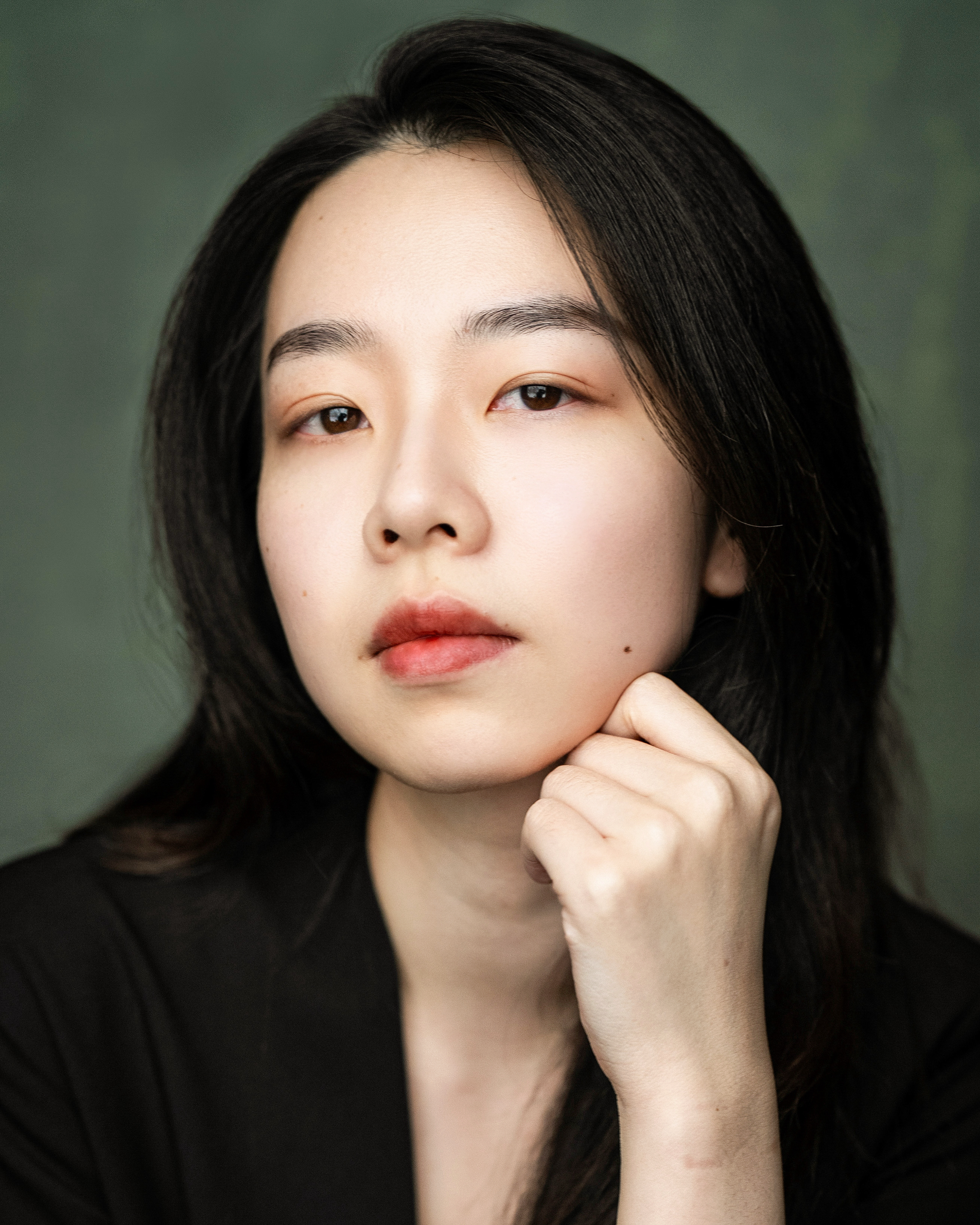
Following a five-year collaboration with director Robert Price, the actress premieres her first solo show inspired by her own experiences in the industry. Guillermo Nazara chats with the artist to learn more about the development of the piece and whether its portrayal of audition processes should be regarded as open call to action.
How does it feel to finally open your debut show?
It feels surprisingly complex. I’ve spent nearly a decade in this field with a quiet hope that I might one day create something of my own. For a long time, though, I felt artistically unfinished, not yet able to bring my ideas into the world.
So opening this show brings excitement and a sense of relief, of course — but also a more serious awareness that this is only the beginning. Now that the piece has taken shape, I’m even more aware of how much there is still to explore.
How did the idea for the piece come about?
The idea came from several different places — loneliness, self-reflection, and a long period of searching for my own artistic voice. I’ve been working with my director, Robert Price, for five years. At one point, he suggested I try creating a one-woman show. I initially wrote a fictional story about a London talent agent, and while it had a plot, Robert felt it lacked truth — that I wasn’t really present in it. He was right. I’d been feeling lost for a long time as an artist, facing constant rejection as an actor, unsure what kind of work might be “acceptable,” and often wondering whether I should reshape myself to please an imagined audience.
At the same time, Robert and I were making short videos about Irish literature, and we spent a lot of time discussing Beckett’s Krapp’s Last Tape — its honesty, its stark confrontation with existence. That conversation stayed with me. I said to Robert, “What if I tried letting go of the fear? What if I made something that simply tells the truth about what it feels like to exist in the world right now?” And he told me, “Even if no one watches it, even if it fails, it will still matter — because it will be meaningful to you.”
So I began with the thing I knew most intimately — the self-tape. The thing that has both broken me and defined me as an actor. The thing I fear, resent, depend upon, and can never quite escape. That’s where the piece started.

The show depicts the frustrating reality actors face nowadays due to the lack of in-person auditions. As a performer, how do you think it’s affected the profession?
It’s complicated. On a practical level, self-tapes have opened certain doors — geography matters less, and the process is cheaper and more efficient for producers. In that sense, there are more chances in theory.
But the cost is a subtle one. Casting has started to feel increasingly like a lottery. And that’s unsettling, because this is art, not grocery shopping. Actors are human beings, not interchangeable products. When everything is filtered through a screen, the sense of encounter –of presence, of energy, of being in the same room– disappears.
In theatre especially, where the form is built on immediacy and shared space, the difference between seeing someone on a screen and meeting them in person is enormous. A self-tape can capture technique, but it cannot hold the texture of a human being. So while the system may be more convenient, something essential has been lost in the process.
The script also serves as an allegory of today’s increasingly dehumanised relationships. What can you tell us about this angle of the narrative?
In many ways, the piece reflects the emotional landscape of our digital age. Algorithms create a kind of informational echo chamber — we’re constantly shown what the system predicts we want, not necessarily what is true. And on social media, the most polished, glamorous, envy-provoking versions of life are the ones rewarded with attention. Over time, that shapes the way we see the world. It reinforces the idea that we must appear stronger, better, more “put together” in order not to feel alone. The result is a strange collective loneliness. People are surrounded by noise and images, yet feel increasingly disconnected — not because we don’t see each other, but because our inner value systems no longer meet in the same place. Quiet, honest, sincere relationships become harder to sustain. Beneath the noise of celebration lies the loneliness of many.
Chloe’s journey in the play mirrors this. She believes she can only be accepted when she is strong, accomplished, impressive. That belief traps her — it stops her from walking out the door and breaking the stasis of her life. Her turning point comes when she realises, through a series of breakdowns, that even in her most fragile, chaotic self, her mother still holds her. She is still loved. She doesn’t need to perform strength in order to belong. And once she lets go of that pressure, something in her finally softens, and she can move again.
Would you say self-tapes are also contributing to a more dehumanised art form?
From my perspective, self-tapes are really a product of the era we’re living in. They feel less like a choice and more like an inevitability — the result of broader shifts in human behaviour and social structures. It’s similar to what happened after the Industrial Revolution here in Britain: society moved from an agrarian, community-based economy into an industrial, efficiency-driven one. The change in economic form inevitably reshaped the way people lived, worked, and related to one another.
In the same way, I don’t think it’s the self-tape itself that “dehumanises” the art. We changed first. Our pace, our expectations, our relationship with technology — all of that evolved, and self-tapes are simply a manifestation of that evolution. They are the symptom, not the cause. And then, of course, once they become the norm, they begin to influence the industry in return.
Have you explored other themes throughout the plot?
Yes. Beyond the questions of existence and identity, one of the most important themes for me lies in the final section of the play — the moment before Chloe regains her courage. That turning point is rooted in her relationship with her mother, which for me carries a very specific cultural resonance. In many Chinese families, the parent–child bond is marked by a quiet form of devotion: love expressed through responsibility, endurance, and an unspoken sense of duty rather than overt emotional language. It’s a structure where care is often shown through presence and sacrifice, not necessarily through verbal affirmation.
I was curious to see whether this nuance could be understood within a UK context — whether an audience raised in a more individualistic and openly expressive culture could connect with a mother–daughter dynamic shaped by silence, obligation and deep, almost instinctive loyalty. From some feedback, it seems that some aspects of it were recognised, while others didn’t fully land. That’s something we’ll keep exploring as we continue developing the piece, especially in terms of how to communicate these cross-cultural emotional codes more clearly on stage.

What has the development process been like?
It’s been shaped largely by my collaboration with Robert Price. We’ve known each other for years, and he has a genuine interest in Chinese culture — he even studied the Book of Changes when he was younger — so the process felt both easy and deeply connected. There was a sense of pure creative joy, and also the rare feeling of being truly understood. It made the development not only productive, but genuinely meaningful.
Have you faced any particular challenges either as a creative or performer of your own material?
Yes. After Robert and I finished developing the script, the emotional weight of the piece could be overwhelming at times when I stepped into the role myself. There were moments when the intensity pushed right up against my limits, and even in the mornings I sometimes felt the same fear and fragility that Chloe carries in the play.
I’m very grateful I wasn’t holding it alone. Robert’s support was absolutely central throughout, and when Jessie (Jie Xu) later joined the production team, her involvement also became an important part of keeping the process grounded.
What are the plans for the show after this initial run?
During the production process we realised that, although the piece centres on self-tapes and the experiences of London actors, parts of Chloe’s journey also resonated with our Chinese audiences. After this run, we’ll continue refining the piece and plan to present it in my hometown in China next year, to see how it lands. We then hope to return to the UK for a longer run.

Are there any highlights in the show you’d like to flag?
Yes , Chloe’s appearance. On screen she looks perfectly composed, wearing a blazer and lipstick. But in the room the audience sees the truth: pyjama bottoms, slippers, and a home that has fallen into chaos. That contrast between the polished image and the hidden reality feels like an important moment in the piece.
Why come see ‘The Last Self-Tape’?
Because it speaks to something many people feel today — the gap between the version of ourselves we present to the world and the reality we live with privately. The show uses the language of self-taping to explore loneliness, image-making, and the quiet courage it takes to be seen without performing.
It’s intimate, raw in places, and unexpectedly relatable, whether you’re an actor or not. If you’re interested in how technology, identity and vulnerability shape the way we connect –or fail to connect– this piece might resonate with you.
This site is proudly sponsored by

Help us continue our work
We count on your support to keep bringing the greatest quality in theatre-related content, from interviews with the biggest names in the industry to reviews of every show in town and beyond.
We appreciate every donation to maintain our high pace and standards and continue to grow.
Thank you for believing in us!
***************************************************
Production pictures credit to Changqing Lin. Headshot credit to Yellow Belly.