
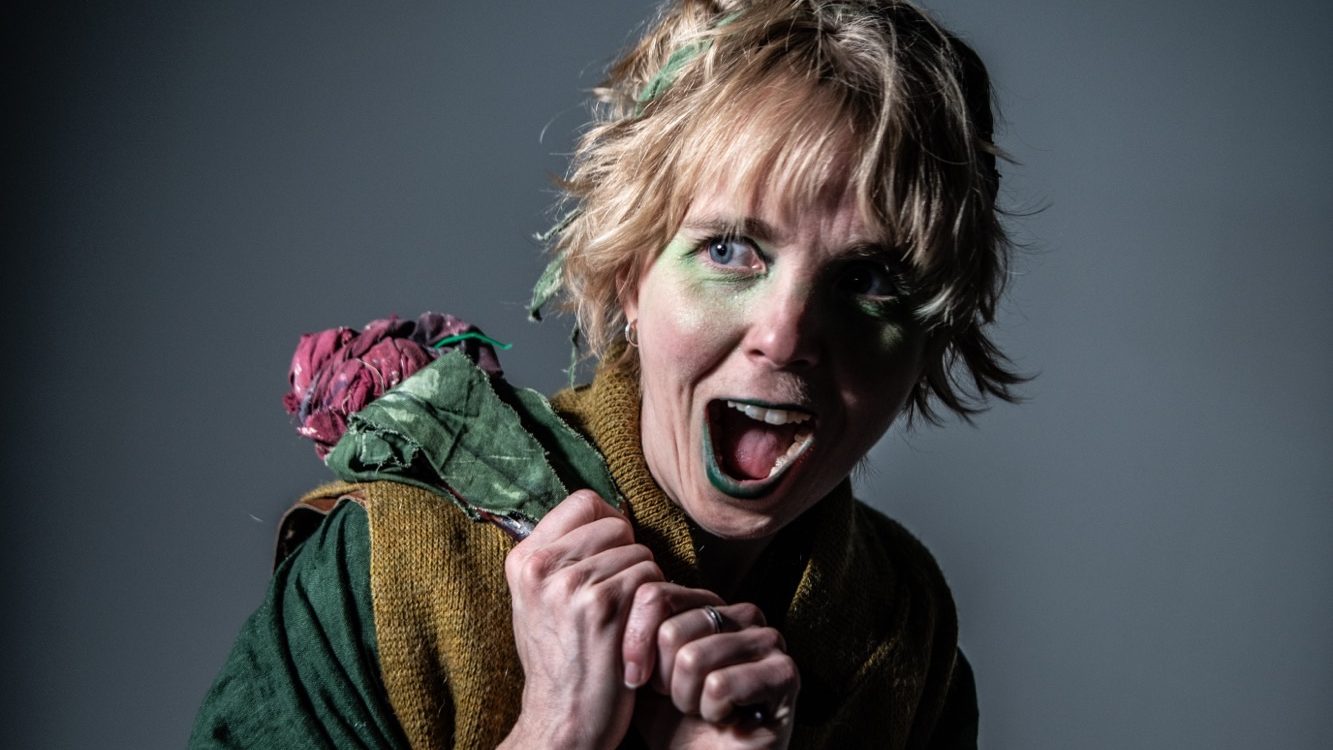
London’s Etcetera Theatre hosts the world premiere of this solo piece merging two of the Bard’s most popular works. Guillermo Nazara chats with its creator to learn more about this dream of a play and if it’ll be done as we like it.
How does it feel to be finally performing your own written solo show?
Oh, it’s wonderful! To have created something and get to perform it is such a gift. I never thought I’d be able to do it, so it’s such a confidence booster for me as a creative. On the other hand, it’s hard not to want to keep changing it every time I perform! (laughs)
How did the idea for the show come about?
I have always had such a love for Puck since I first read Dream when I was about eleven. I wanted to do something that would challenge me and help my career that’s wasn’t constantly looking for jobs on Spotlight.
What made you choose Puck from all the iconic Shakespearean characters?
I’ve always related to Puck on so many levels. The enjoyment takes at messing with the mortals, but also constantly getting into trouble, often for acting on impulse without really thinking about the consequences. As someone who was diagnosed with ADHD at a young age, that’s something I relate to.
There’s also something quite heartbreaking about Puck, because he is alone in a play full of couples and groupings, which I know so many people also relate to — we all have had that feeling of loneliness, especially those in marginalised groups.
The show takes Puck, a character from Midsummer’s Night’s Dream, into the main setting of As You Like It. Apart from both plays taking place in a forest, are there any other connections that led you to blend both universes?
That was my main motivation, as well as having a similar enough plot structure I felt Puck would get on there better than in the plot of something like, for example, Much Ado where there’s nothing familiar. However, the more I dove into the story, the more I found that Puck could learn. The lovers in As You Like It have similar journeys to that of Dream, but they find their way through with no magic, which I felt would be a particularly interesting journey for Puck to witness and try and be a part of.
The plot’s main themes deal with growth and self-discovery after Puck loses his powers. How are those subjects explored throughout the script?
Shakespeare wrote me the perfect moments for this. He watches other characters from As You Like It interacting with each other in a completely different way than what he is used to seeing. Oberon commands him to do things — fetch me this, look for these mortals, and do that. In Arden, the Duke, whom he perceives as the Oberon of this ‘realm’, calls his subjects ‘co-mates’ and ‘brothers’. In Athens or ‘Fairyland’, the mortals are drugged to ensure they end up with the right people, but in Arden, the mortals help themselves
Will the loss of the powers make the character more human and relatable? If so, how?
I think Puck is such a relatable character with or without his powers. I’ve run into so many people while working on this who have told me that Puck is their favourite character. I think it’s just the lessons that he learns that make him more relatable, but we wouldn’t want a human Puck — what fun would that be?
How would you describe your writing stylistically? Have you tried to emulate Shakespeare, or will it be a different approach?
I’m still discovering my style. I think I have tried to pull from the current writers I admire, who have also have woven Shakespeare into their works. I spend a lot of time at The Globe, so I’ve seen it done brilliantly, and aspire to be as good as them one day. I’ve also drawn from other artists who have done solo Shakespeare plays or other one-person shows.
What particular challenges have you found in the creation and development of this piece?
I’ve encountered so many challenges, from the days when I had no idea what to write to days when I had a brilliant idea that I just couldn’t figure out how to incorporate into the play. I think the biggest challenge has been trying to tell the story with no other actors.
Are there any performative challenges as well?
I think the biggest challenge has been telling the story with no one else. I decided to incorporate audience members into the show to help tell the story, which offers me new and delightful challenges each night, as I navigate different personalities on the stage without losing the story or getting lost myself in the chaos.
What are the prospects for the show after this initial run?
I’m going to take January to make some changes. Writing my first play has been such a journey. And it’s been great, but I want to take all that I’ve learned and incorporate it into Puck.
Are there any highlights in the show you’d like to flag?
We do a singalong to the tune of Jingle Bells! And also, Puck doing laps of the theatre trying to get home.
Why come see For Puck’s Sake?
It’s got laughs, it’s got tears, it’s got a Christmas themed singalong — there’s something in it for everyone! If you’ve ever felt lonely or frustrated at people in power or just confused by your fellow humans you will find something in it!
This site is proudly sponsored by

Help us continue our work
We count on your support to keep bringing the greatest quality in theatre-related content, from interviews with the biggest names in the industry to reviews of every show in town and beyond.
We appreciate every donation to maintain our high pace and standards and continue to grow.
Thank you for believing in us!
***************************************************
Picture credit to Rah Petherbridge Photography.
For Puck’s Sake plays at London’s Etcetera Theatre unti 22 December. Tickets are available on the following link.