
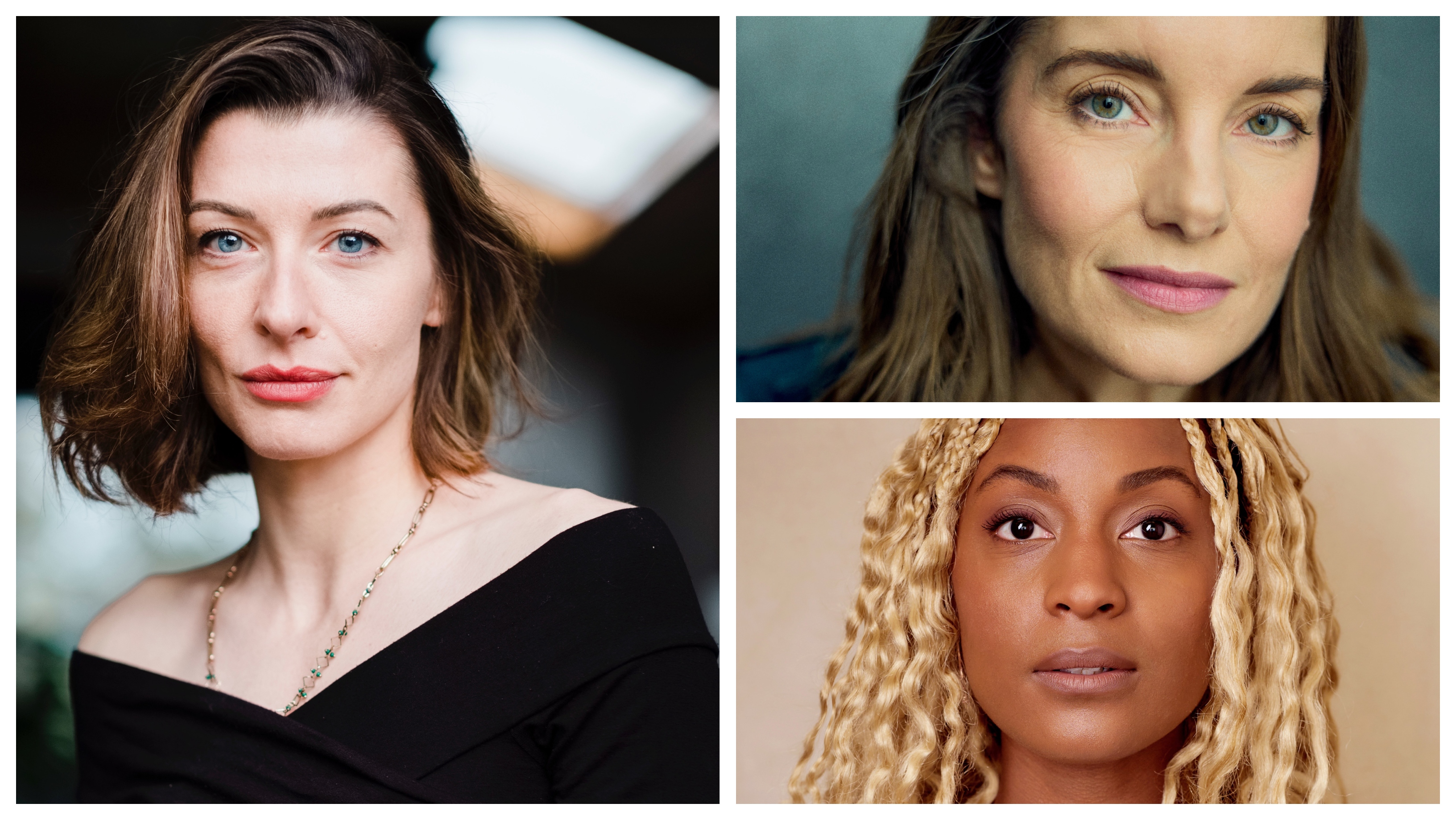
With only a couple of weeks left before its world premiere, we’ve sneaked into the rehearsal room to learn more about this new musical, which explores the meanings and costs of motherhood from different perspectives across history. Join us as we become the first witnesses to some of the show’s principal numbers and chat with the lead cast about birthing an original musical from the get-go.
How does it feel to be finally bringing the show to London?
FM: Truly amazing. It feels like it’s been a long time coming. I was involved in the cast album early last year, and the show itself has been a labour of love since 2019 — possibly even before then. Bringing it to London feels like the natural next phase, and I’ve been looking forward to it for such a long time.
SS: I feel like I’ve joined the journey in this particular moment, and it’s such a privilege to jump on the train and bring it somewhere else. The music is unbelievable, and to get to fill in the gaps between the music and tell the story is just beyond.
RT: It’s such a joy. It’s a show that I find a degree of awareness since 2020. I was also involved in the cast album last year, but to experiencing onstage now is truly special. I do believe it’s a magical show.
Has the show evolved in any way since your involvement in the cast album?
FM: The story arc is generally the same for my character, Sarah. However, it naturally evolves when you get to know your character — you make different choices vocally, for example, and there is new material that isn’t featured in the album. If you liked the recording, you’re in for a few surprises!
RT: Tweaks have been made all the time to the script, which they are still working on. Also, there are new extensions to some numbers, so there have been some small doses of alterations.
What can you tell us about your characters’ journey?
FM: Sarah moved to New York fourteen years ago. She’s originally from West Virginia, which, without generalizing, it’s not the most open-minded place. She has become estranged from her family — particularly her aunt, Betty, who’s played by Rebecca. They have a very fractious relationship with them, and Sarah is running away trying to live her own life. The story is about her confronting what’s she’s been escaping from for so long.
SS: I play Alix, Sarah’s partner. She is an different place in terms of her journey to understanding who she is. She actually knows who she is, and she’s very organised — she knows what her life is gonna look like in five years and what she’ll be doing all the time. That also includes her life alongside Sarah. She wants to support her partner, but she will also find things about her that may be dichotomous to what Alix thought she wanted or the path that they were on. That’s quite tenuous, and her arc explores how you still love someone through those changes when you might not be on the same journey.
One of the main themes explored through the show is the meaning and cost of being a mother. How is that presented through your characters?
FM: There are three different storylines intertwined. Ours takes place in the modern day. We have discussions whether we will be mothers or not. At the same time, we travel back to the 18th century, when Jean becomes pregnant from a sailor after a one-night stand — she doesn’t want to do anything with him, but she does want to keep the baby. And we also have Cait, who lives in 17th-century Scotland and is the wife of a minister. She is pregnant but doesn’t want to be, and she’s wondering what to do about it. It all deal with motherhood thrust upon you, intentionally or not, and the consequences it brings along.
It also explores the idea of queer parenting, and how in this case it really has to be a choice and you need to really want it to make it happen.
SS: I think Alix is embodies the idea of somebody who likes kids and doesn’t mind being an auntie, but she doesn’t see motherhood as part of her journey. What I really appreciate about the way she’s been written and how we’ve decided to tell this story is that this trait doesn’t make her sad. We’ve taken a strong stance to reflect is as just another choice. There’s no judgement. She’s not ostracized and it’s not something she’s fighting to be visible for — it just is. And the fact that she doesn’t want kids of her own doesn’t make her any less of a person with a life or a family. That also aligns with the queer elements of the story. For most queer people in my life, their chosen family is what matters. It’s how they build their family unit, and I think that’s the most powerful trait of their dynamic, and it doesn’t make it any less than a family than anything else.
In regards to the queer themes of the show and the idea of a chosen family, does the narrative also explore LGBT-phobia in any way?
SS: Yes, but in a way that I think it’s honest. I can’t speak for everyone, but I do think that, for many folks that experience marginalization, it’s a part of your daily life. However, it isn’t necessarily a part of your personal life in an active way. If you’ve been able to remove yourself from a homophobic or bigoted environment, you find ways to choose joy in your actual life, apart from visibility and validation from the people that you want to be surrounded by. In the end, it’s a theme that’s talked about in the show, but it’s not a massive shadow in our characters’ relationship.
Does the show tackle any other themes?
FM: Knowing yourself. It’s all about confronting the things that have shaped you, no matter how ugly they feel or how uncomfortable they make you. And of course, the power of music — this is a collection of songs that have survived centuries and traveled throughout continents, and they are still around today. That’s a testament of how humans need that sort of connection through music in their lives.
SS: Family as something as you build and create instead of something that you are obliged to. And also family as a concept of community and village, and being a good villager to it.
What particular challenges have you found in your roles?
FM: You always have sympathy for your character — you can’t judge them. However, when we started this process, there were some things that Sarah did that got me saying: “Oh, really?!” Consequently, you need to find a way to understand her — she didn’t do something because she’s selfish but because this happened, for example.
Are there any highlights in the show that you’d like to flag?
RT: I think my favourite moment in the show is the numbers where all the characters come togethers, and the stories, taking places in centuries apart, intertwine onstage with everybody singing. All those ensemble excerpts are so beautifully designed, and I love the way that traditional folk songs are woven into a contemporary score.
Why come see Ballad Lines?
RT: It’s a great opportunity to support new writing and original stories, which have become unicorns in today’s musical theatre, where we keep getting stage adaptations of films IPs.
This site is proudly sponsored by

Help us continue our work
We count on your support to keep bringing the greatest quality in theatre-related content, from interviews with the biggest names in the industry to reviews of every show in town and beyond.
We appreciate every donation to maintain our high pace and standards and continue to grow.
Thank you for believing in us!
***************************************************
Ballad Lines will play at London’s Southwark Playhouse Elephant from 23 January to 21 March. Tickets are available on the following link.