
I was caught off guard despite its title. I should have known better. The name didn’t smell garlicky, but the reference should have been obvious. Fortunately enough, there’s more to this tale about two teenagers- one of them, a mortal; the other one, a so-called demon of the night -than the brainless prepubescent wet dream young-adult readers were infatuated with back in the early 2010s. At least, we can be grateful that it led to some steamy cinematic shots of Jamie Dornan.
Based on John Ajvide Lindqvist’s horror novel- later turned into the 2008 film -, the story takes us into the gloominess of a marginalised neighbourhood in 1980s Stockholm. Contrary to the movie, where the protagonist is barely twelve, this adaptation presents Oskar as an older adolescent. Not much else has changed regarding his portrayal. He still lives with his mother in a ramshackled apartment block. And he still has no friends and is mercilessly bullied every single day of his life.
One day, another student roaming in the woods comes across a mysterious middle-aged man, who casually asks him for the time, only to slit the poor child’s throat to collect his blood. When his upside-down body is discovered by some locals, the authorities raise the alarm. Students are advised not to enter the forest and stay home except for school. Little does Oskar know that the threat has just settled right next door. And that same threat will soon become his salvation.

Lindqvist’s original creation is imbued with poignancy and insightfulness. There’s much more to it than an easy tweak on the classic vampire lore. And its complexities go beyond the idea of two outcasts from different worlds, united by their shared understanding and sense of isolation. And so, the subjects of guilt, survival, and identity become the core of a supernatural yet still highly resonant plot, where the fantastic elements serve as a metaphor for the reality so many viewers could see themselves reflected in.
The same applies to the film, which explores these themes adequately. But it’s hardly the case for its stage counterpart. And that’s not the first time that Jack Thorne’s writing has left us with such a vapid impression. If you’ve ever attended the long-running (and soon-to-be-abridged) Harry Potter play, you’d probably be aware of how the pathos shily permeates the narrative. Ultimately, though, it struggles to solidify. And when it comes to handling more sensitive topics like the main characters’ implied romantic connection, the approach is cowardly. Someone else might be responsible for that, though. And you know who I’m talking about.
It’s a similar problem here. Only worse. One of the most stirring parts of both the novel and film is Eli’s (Oskar’s new and only pal) non-defined gender. In the book, Eli is a castrated boy from centuries ago who later became a vampire. The screen version makes an extremely bold move when Oskar, along with the audience, accidentally finds out Eli has no genitalia. That issue becomes one of the story’s greatest drivers. And its influence pervades even the character’s clothing, whose soft pastel blues and pinks discreetly evoke a trans flag.

Eli’s regrets for killing and their desire not to be what they are are the other cornerstone of the tale. Similarly to the gender aspects, Thorne’s exploration is vacuous at best and ignorant at worst. Everything comes off incredibly shallow. While all these concepts are introduced, the script makes little to no effort to delve into them. Consequently, we are offered zero opportunities to get closer to the personage. And to find the human beneath the monster.
The constant abuse Oskar is subjected to is depicted more deftly. To some extent, we root for the character. Yet, although the brutality he’s exposed to is harrowing at the very least, his arc isn’t that well-defined in that regard. We see the action, but we are not given the introspection. On and on, we witness what happens to him, but the narrative rarely pauses to explore how all this affects him. As a result, his sentiments of injustice, fear, and frustration do not hit as hard as they should. And neither is his craving for revenge.
Another key problem is the script’s excessively fast pacing. Although the rhythm is overall engaging, many scenes feel rushed and underdeveloped. There’s no real sense of conclusiveness in many of them. And for the most part, they come across as exceedingly abrupt — often cut before saying what they need to say.

There’s praise to be given, in any case. But that entails the production and its cast exclusively. The Underbelly Soho’s intimate space is brilliantly exploited by Jonathan Fensom’s design, whose highly evocative, dynamic essence is underpinned by Matt Haskin’s uncomplicated yet precise lighting. Oxidised scaffolding bars on a white-powdered surface concoct a simple but remarkably suggestive set. Not only does it brim with adaptability, but its figurative and literal meanings are also seamlessly intertwined.
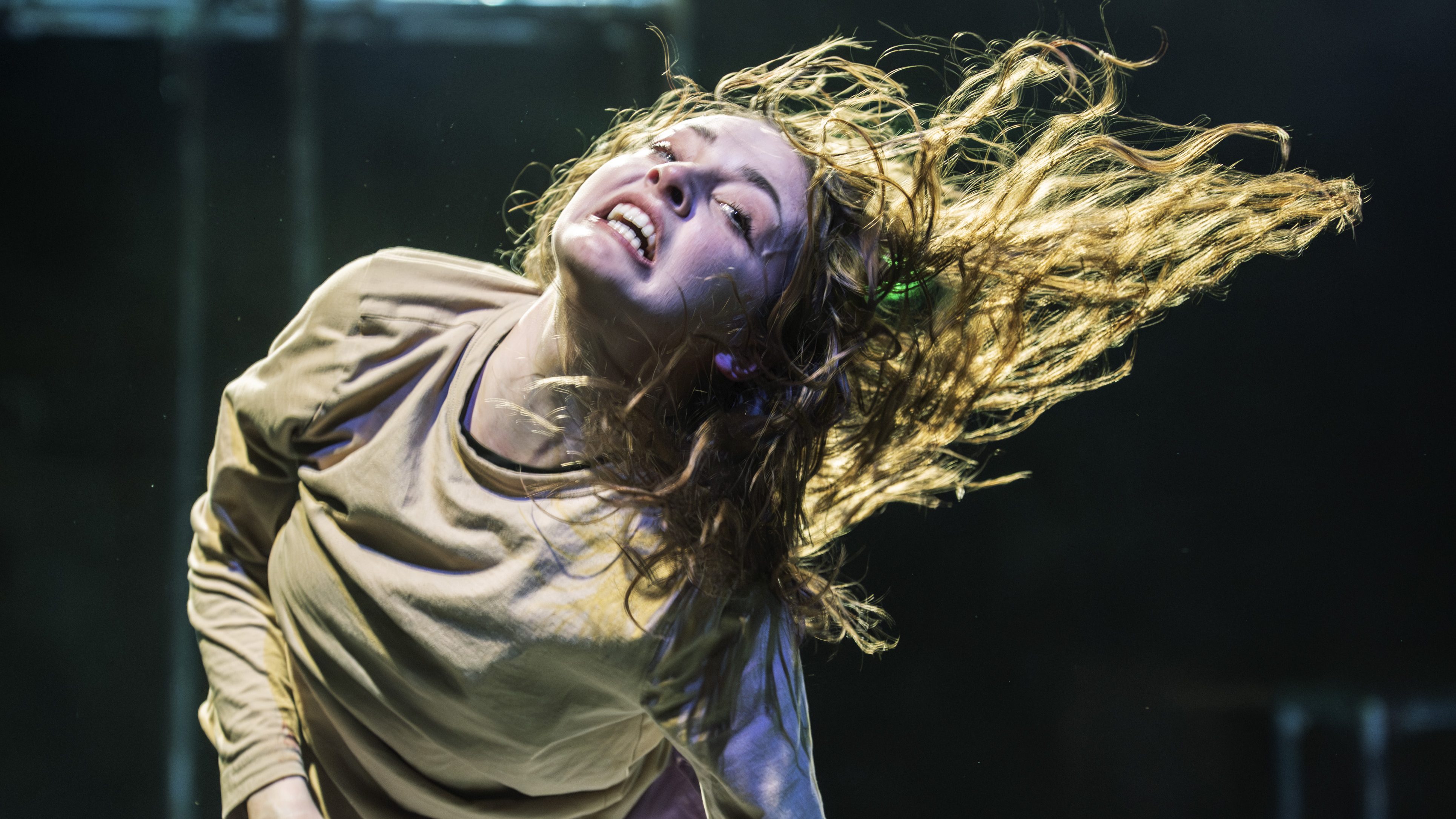
Presented by the National Youth Theatre, the company overflows with genuinely some of the best new talent in the country. Their renditions generally demonstrate exceptional aptitudes, performing with flair, depth, and naturalness. The highest mention goes to Rachael Dowsett in the role of Eli, who, despite not conveying the fragility and nuance of the original character, still delivers a competent portrayal full of magnetism.
This might be a perfect example of a faulty product given to far more qualified hands. Jack Thorne’s writing has turned a potentially more stirring recount into an entertaining but superficial piece of theatre. And it’s only thanks to that it doesn’t fall into the B-horror classification. Anyone acquainted with its former incarnations will probably agree its stage incursion looks pale in comparison. And they won’t be sanguine about it.
Help us continue our work
We count on your support to keep bringing the greatest quality in theatre-related content, from interviews with the biggest names in the industry to reviews of every show in town and beyond.
We appreciate every donation to maintain our high pace and standards and continue to grow.
Thank you for believing in us!
***************************************************
All pictures credit to Johan Persson.
Let The Right One In plays at London’s Underbelly Soho until 23 May. Tickets are available on the following link.