
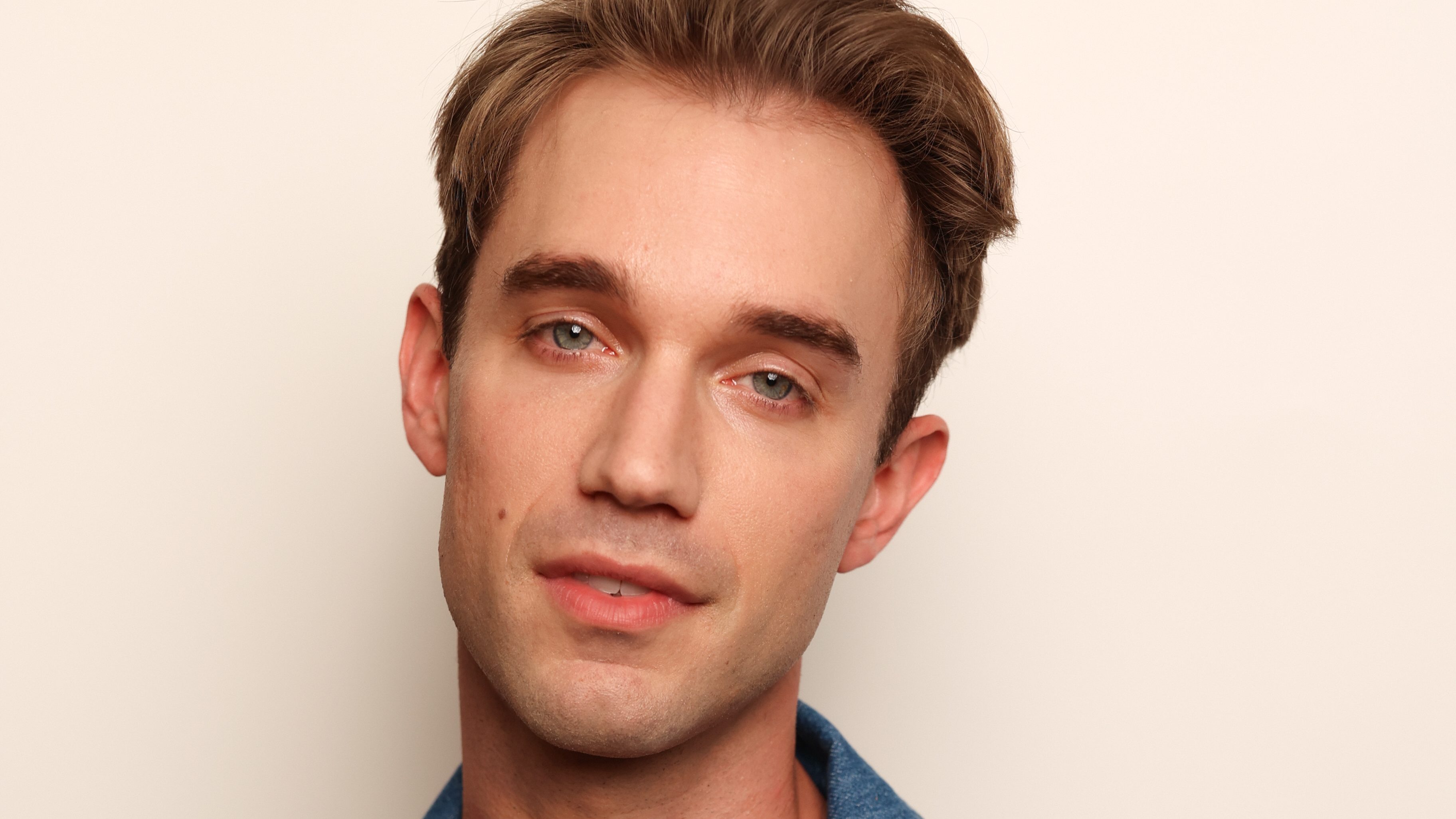
The American comedian lands on the Ed Fringe stage with a bold, lively, and deeply personal show exploring the struggles of growing up queer in an unaccepting world. Guillermo Nazara chats with the performer to learn more about the piece’s development and how a story about creating the first gay superhero clashes with the kryptonite of reality.
How does it feel to be presenting your personal coming-of-age story at the Ed Fringe?
It feels a little surreal. I was eighteen, the first time I was at the Fringe, performing in a production of Spring Awakening with my high school (God Help Us All). I was deeply closeted, secretly in love with the guy this show is based on, and walking around Edinburgh convinced everyone could somehow tell.
I remember thinking if I ever came back, I wanted to do it as myself. So coming back now with a show about all of it feels strangely emotional. Nostalgia is going to hit me like a truck. More than anything, I want to honour the kid who spent that Fringe believing he was fundamentally wrong. I also think he’d be thrilled to learn he eventually monetised his homosexuality.
What motivated you to tell this story?
I’ve spent a lot of my career making things other people wanted me to make. This is the first thing I’ve made because I genuinely needed to understand something.

The show deals with the struggles of a gay boy growing up in an unsupportive environment. Do you think this reality is still as prominent as during the time you grew up?
Unfortunately, yes. I think queer kids are still forced to become little psychologists far earlier than straight kids. When you’re constantly trying to figure out whether you’re safe, you get very good at reading people and very bad at relaxing.
Has society moved backwards regarding LGBT acceptance and rights?
Progress has never felt linear to me. It feels more like a drunk person trying to parallel park. What gives me hope is that younger generations are identifying as queer at rates that feel genuinely irreversible.

How far do you think we’ve got in terms of representation and what do you think needs to be done next?
I don’t know. One step forward, two steps back, one step right into a hate crime.
My favorite thing about the version of ‘Drew’ in Friendliest isn’t that he’s a gay guy. The thing I love about him is that he’s a disaster.
I’d love more queer characters who are allowed to be messy and human. Not role models, or sassy gay best friends, or complete and utter tragedies from a writer/director who saw RENT once. Just fully realized people making terrible decisions for reasons that make perfect sense to them. Then maybe having a laugh!
Is the show intended as a call to action?
God, no. I wrote a show that’s a version of myself. He’s horny, and sad, and occasionally, an asshole. I hope people see themselves in him. Maybe. it’ll make them want to call their gay uncle and ask how he is, but I certainly didn’t write this to advance a national conversation. Although as every gay person knows, if we put ourselves out there, it’s inherently political!

The show also brings up the idea of being the villain in someone else’s story while being the hero of our own. How is that concept explored throughout the script?
The show starts as a superhero origin story and slowly turns into a cross-examination. Drew arrives convinced he knows exactly who the villains are. And to be fair, some genuinely terrible things happened to him. The complication is that the deeper he digs into the story, the harder it becomes to avoid the possibility that somebody else’s worst memory might involve him.
That’s where the superhero fantasy starts to break down. Fagman sees the world in heroes and villains. Drew keeps discovering he’s been both, which is a very annoying realization to have. And unfortunately, that’s the entire point of the show!
Should the story be interpreted as one where there are no real villains or heroes?
I don’t know. I’m not super interested if someone is a hero or a villain. Or if they’re good or bad. More so if someone is capable of change with the extent of baggage they’re often carrying around. Oftentimes they’re not, which is, well, spooky.

Another key subject is responsibility. In which way is it presented and how is it explored?
I absolutely adore playing the victim. It’s really fun and everyone feels bad for you and wants to make sure you’re ok. We, as human beings, are often incredible at painting a narrative where we’re the victim. Drew spends about 50 minutes grappling with this question and finds he doesn’t always love the answer.
What creative and performative challenges have you found in this show in particular?
The show being semi-autobiographical creates a weird problem: sometimes the writing drifts too far from reality and I start worrying I’m being dishonest; sometimes it gets too close to reality and my director Jenny Leon has to remind me that we’re making theatre — then give me a hug and a sip of tequila. The challenge has been figuring out how honest I can be without completely ruining my own day.

Are there any highlights you’d like to flag?
The illustration of Fagman is genuinely incredible. As is his catch phrase, “Fist This!” There is also a sequence involving a thumb, an abortion celebration, and a Bath & Body Works lotion that I genuinely don’t know how to market. But the thing I’m most proud of is that people keep telling me they came for the superhero and stayed because they recognized themselves in the mess.
How would you summarise the show’s message, if there’s any?
Friendliest feels a little like listening to Ethel Cain two drinks deep and accidentally remembering every mistake you’ve ever made. You start crying. Then your best friend tells you to shut the fuck up and smoke a cigarette. Suddenly, you’re laughing again.
The show is about that feeling. The realization that being a mess and being loved aren’t mutually exclusive conditions, which is fortunate! Otherwise, most of my friends would be absolutely screwed.
Why come see Friendliest?
Come if you’ve ever been the victim in one story and the villain in another. Come if you’ve ever wanted a second chance. Come if you’ve ever thought, “Thank God nobody knows that about me.” I promise I’ll go first! Also, I’d strongly recommend seeing it before I sell the television rights and become completely unbearable.
Help us continue our work
We count on your support to keep bringing the greatest quality in theatre-related content, from interviews with the biggest names in the industry to reviews of every show in town and beyond.
We appreciate every donation to maintain our high pace and standards and continue to grow.
Thank you for believing in us!
***************************************************
Friendlist will play at the Edinburgh Fringe from 5 to 31 August. Tickets are available on the following link.