
I commend art that challenges its audience. But that shouldn’t mean trying their patience. Sadly, that’s all you get after sitting through a two-and-a-half-hour Japanese-spoken performance — with no available break and a persistently obstructed screen as the only means to understand what the actors are saying. Considering that the story isn’t too strong either, and some renditions’ hyperbolism overcomes any language barrier, even Frank Wildhorn has a better chance of claiming a melody as his own than this show has of succeeding. Or even please.
Beyond its positive message of diversity and inclusivity, there isn’t much that’s compelling about this tale. Several scenes come off either as pointless or plainly confusing. The tension is heavy-handed at best and nonexistent at worst. The characters are sketchy and have no resonance. And for the most part, the recount is poorly structured and, above all, repetitive — extremely repetitive.
It’s a confusing plot to follow. Magic bones that connect people with their ancestors’ memories, angels suffering from some strange congenital disease, and a scientist impregnated with one of Cleopatra’s eggs. There is more, but there’s as much gibberish as you can process over the course of the evening. And although I think I did, I wouldn’t wish that on anyone else.

The script makes virtually no effort to generate engagement. Not only are its science-fiction elements unimaginative and lazy, but they also insult the audience’s intelligence.
The long-debunked myth of humans using barely ten per cent of their brains’ potential- which, for some strange reason, is reduced to two per cent here -serves as the basis on which the entire narrative stands. That concept might have worked a few decades ago, but we’ve come a long way ever since. Even as a fantasy, it sounds ridiculous to the modern viewer — simply because it is. Seeing its protagonist, an allegedly world-renowned researcher, defend that idea- only to finally realise she’d been tricked -makes it more off-putting. And regardless of how we decide to interpret it- clumsy drama, dull comedy, or oblivious farce -it still is a hard watch.
Many other aspects of the plot endure the same level of negligence. In particular, its pathos, as there is none — at least, not the effective kind. The attempts are numerous, however, but they respond to formula rather than instinct.

As such, all we are given are easy melodramatic tools that are supposed to be touching, without actually understanding what makes them that way — especially, within their own story. Suffice it to say that such a clunky approach struggles to have the intended result. And even when one of the leads lies motionless on a hospital bed at the brink of death, our natural response as spectators doesn’t go much higher than apathetic.
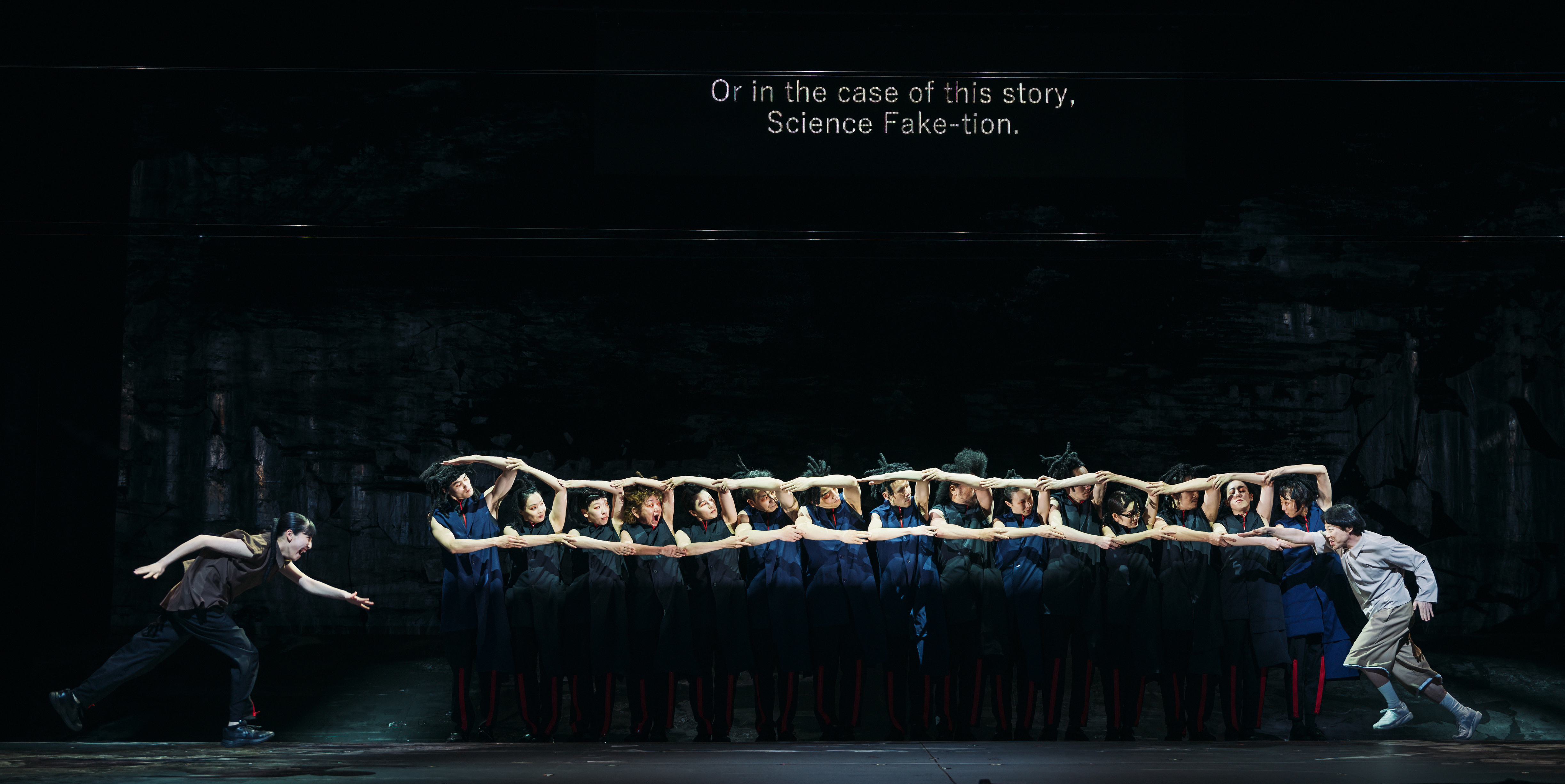
The staging deserves some acknowledgement. Although not impressive, it still demonstrates a certain level of resourcefulness. Some sections brim with theatricality, notably through the use of body propping. And overall, there’s a strong visual language that confers unity and an identity to the whole design.
I might have penned some of these words in the heart of the moment, but even with that mind, it’s only fair to say that –360ºF represents a drop in the degree of quality London attendees are likely to expect. From its indecisive tone to its messy narrative and unremarkable portrayals, there are just too many problems to fix and too little to redeem itself with. It doesn’t come across as false advertising, though, as audiences will probably be left as cold as the title suggests.
Help us continue our work
We count on your support to keep bringing the greatest quality in theatre-related content, from interviews with the biggest names in the industry to reviews of every show in town and beyond.
We appreciate every donation to maintain our high pace and standards and continue to grow.
Thank you for believing in us!
***************************************************
All pictures credit to Alex Brenner.