
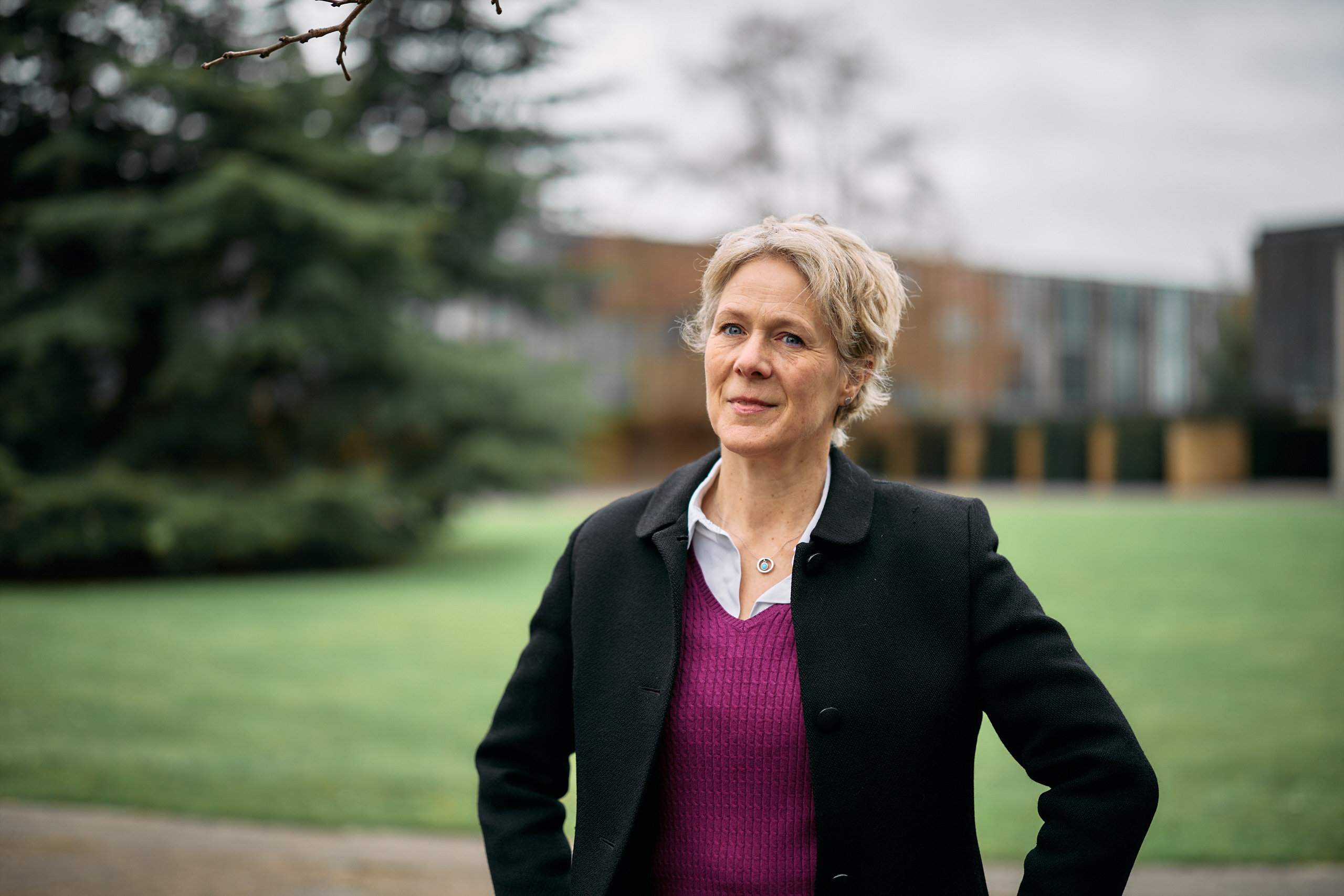
The real story behind Ibsen’s magnum opus comes to life in Breach Theatre’s newest historical play. Guillermo Nazara chats with the show’s lead consultant about her research breakthroughs, the piece’s development and how it explores Laura Kieler’s devastating public exposure.
What prompted you to research the real-life story of Laura Kieler?
She’s always been in the footnotes and margins of Ibsen scholarship and biographies, yet she had such an influence, unwittingly generating the plot and themes of A Doll’s House. I was curious to know more about her and what happened to her after the play.
What has the research process been like and what new findings has it led to?
It’s been fascinating to research her, but also a challenge because there’s relatively little published on her, and almost nothing in English. There is one biography of her by Inger-Margrethe Lunde, and it is in Norwegian, which fortunately all of us on the research and translation side of the project read (as well as Danish, her other main language).
This biography has been an important resource for us. We have also consulted Kieler’s own publications (many novels, stories, articles, and letters in the press), and read unpublished materials—letters, journals, memorabilia, memoirs—in archives in Copenhagen and Norway.
It’s been very exciting to make discoveries. For example, Tzen finding Laura’s ‘patient journal’ from when she was confined to a mental asylum by her husband when he found out about her debt from saving his life. Perhaps our most exciting moment was reading her play, Men of Honour, in Dano-Norwegian and seeing how it directly responded to A Doll’s House.
Kieler sent a manuscript to Ibsen in hopes he sent it to his publisher, and she could repay her debt. He refused to help, alleging its quality was poor, but he turned her personal hell into a stage drama. How do you explain his questionable morals and lack of empathy?
I think you’ve summarized so well what happened. However, I think we’re just interested in telling the story itself—the circumstances behind A Doll’s House, that happened to a real woman, and one who was a writer at a time when that was particularly challenging for women. It’s up to the audience to decide what they feel about Ibsen’s role in all of it. That seems consistent with how he wrote plays, too: he presented serious social problems in many of his plays, yet stopped short of providing answers or telling audiences what to think. In a similar way, this story hopefully speaks for itself and raises questions for the audience.
The play ruined Kieler’s personal reputation, and despite their friendship, Ibsen refused to call the story fictional. Why do you think he refused to protect her?
That’s one way of looking at it, but I think that may distort the situation. Through sheer grit and perseverance, Laura did keep going and continue writing and publishing; she established a successful literary career, though never to the same degree as Ibsen, whose international fame was rare for most Scandinavian writers at the time.
She also paid off her debt from the loans she had taken out, without her husband contributing anything, which took 12 years. She saw Ibsen one last time, in 1891, when she arranged a meeting with him in Christiania (the old name for Oslo), which apparently lasted for 4 hours and left her quite shaken and Ibsen very emotional — evidently it was a reckoning of sorts about his use of her life situation for A Doll’s House and how the fallout from that impacted her.
For the rest of her life, she made attempts to get Ibsen to declare publicly that ‘I am not Nora’—he refused. One of our most interesting findings through our research was that her objection to his use of her life to make his play was first and foremost his treatment of her character: she felt that Nora was flighty, irresponsible, and vain, and not the serious person that Laura really was. This raised interesting questions for us around appropriation and what precisely are the boundaries here in this story, and how these two people could have such different ‘takes’ on those boundaries in making use of real-life material.
There’s no doubt of Ibsen’s superb literary skills. However, how do you find him on a personal level upon your research?
I try to focus on what he wrote, rather than on him as a person. It’s much more interesting to me to think about his plays and their genesis, performance, and reception than Ibsen as a person. It’s amazing to me that we still keep finding so much to think about in his writings, and new ways to stage his plays, especially as he continues to become more and more performed beyond Western theatres. On the cusp of his 200th birthday (in 2028), Ibsen is getting more and more attention, it seems, and in really refreshing ways — especially through translation and adaptation.

How closely have you collaborated with the creative team during the development of this play?
We worked really closely for the first half of the collaboration (from 2022-2024), when Breach would come to Oxford for research discussions and analysis of our findings and we would go to London for workshops with actors where we watched as they explored how to work with the material, and then discussed and fed back.
It was a very exciting period of development, and all the time we were all doing many other things as well (holding down our regular jobs, which also included Breach’s successful production, After the Act, at the Royal Court last year). So, from 2024 to 2026, we essentially handed over to them to continue finishing the process of writing the show. It’s still been a working collaboration, but with less input from us as naturally the creative side took over.
Our collaboration with Breach has been one of the most brilliant, stimulating interactions of my career, and especially being able to bring in Tzen Sam and Gaye Kynoch on the academic side for the in-depth research and translation aspects. We even had an unexpected and hugely productive period working with students at the Liverpool Institute of Performing Arts in 2023, where they worked experimentally with the Laura Kieler and Ibsen story we were researching and created a show for their final assessment.
This kind of serendipity has played a big role in our collaboration, starting with the moment in 2021 when I approached Breach after watching a seminar they gave about their work. I’m glad they said yes to the Laura Kieler idea!
How challenging has it been to conduct your research and why?
There are a lot of challenges along the way in any research project, not least the financial ones of needing to find funding to support things like workshops, research assistance, travel to key archives, and commissioning translations.
I applied for funding from TORCH (The Oxford Research Centre in the Humanities), and fortunately got a small initial pot of money to get the project off the ground, and then a slightly larger amount in the form of a Knowledge Exchange Fellowship. We couldn’t have done the project without TORCH.
The main challenge has been trying to find the materials and also not having enough time to fully explore archives and other writings by Laura; we’d like to continue to read all her works that are available, but there has only been limited capacity and availability of her work. Maybe a next project…!
Are there are any upcoming projects you’d like to tell us about?
We’re hoping that there’s going to be further potential to showcase Burning Down the House on tour in the UK, perhaps also the USA, Norway, and elsewhere; we’ll just have to see. A big dream of mine would be to take it to China, where Ibsen’s A Doll’s House is extremely well-known and often performed. That could be great for Ibsen 2028.
I also have a project in the works called Ibsen’s Avalanches, hoping to bring to life on stage the catastrophic, spectacular avalanches that conclude two of his plays: Brand (1865) and When We Dead Awaken (1899). It would be fun to do that and also would accentuate the fact that Ibsen was a playwright of nature and the outdoors, even though he’s often thought of as depicting intense family discussions in oppressive and claustrophobic interiors.
Help us continue our work
We count on your support to keep bringing the greatest quality in theatre-related content, from interviews with the biggest names in the industry to reviews of every show in town and beyond.
We appreciate every donation to maintain our high pace and standards and continue to grow.
Thank you for believing in us!
***************************************************
Burning Down The House plays at Oxford’s Schwarzman Centre for Humanites until 10 October. Tickets are available on the following link.