
If there’s a beacon of hope in the current London scene, part of it comes from Jordan Langford and his brilliance as a director. And trust me when I say I don’t use that term lightly. In the end, nobody knows crap better than a theatre critic. And lately, my work has coerced me into torturous acts of coprophagy.
Scatological references aside, it’s refreshing to see a play that, while suffering from the usual flaws of a first work, speaks strongly enough to leave an imprint on its audience. Its premise is far from unprecedented, but it has all the elements for an engaging drama. And with the right treatment, a distinctive one as well.

Neophyte writer Mark Harrington is some steps away from that goal, but the path is set, and the journey is clearly in motion. The result is an imperfect but somewhat resonant narrative, created by an author who’s just begun to stretch his muscles and is unable to unleash his full strength. There are a few flashes, however: the character building is traditional but effective, and, albeit soft, some sections of the script evidence an individual voice.
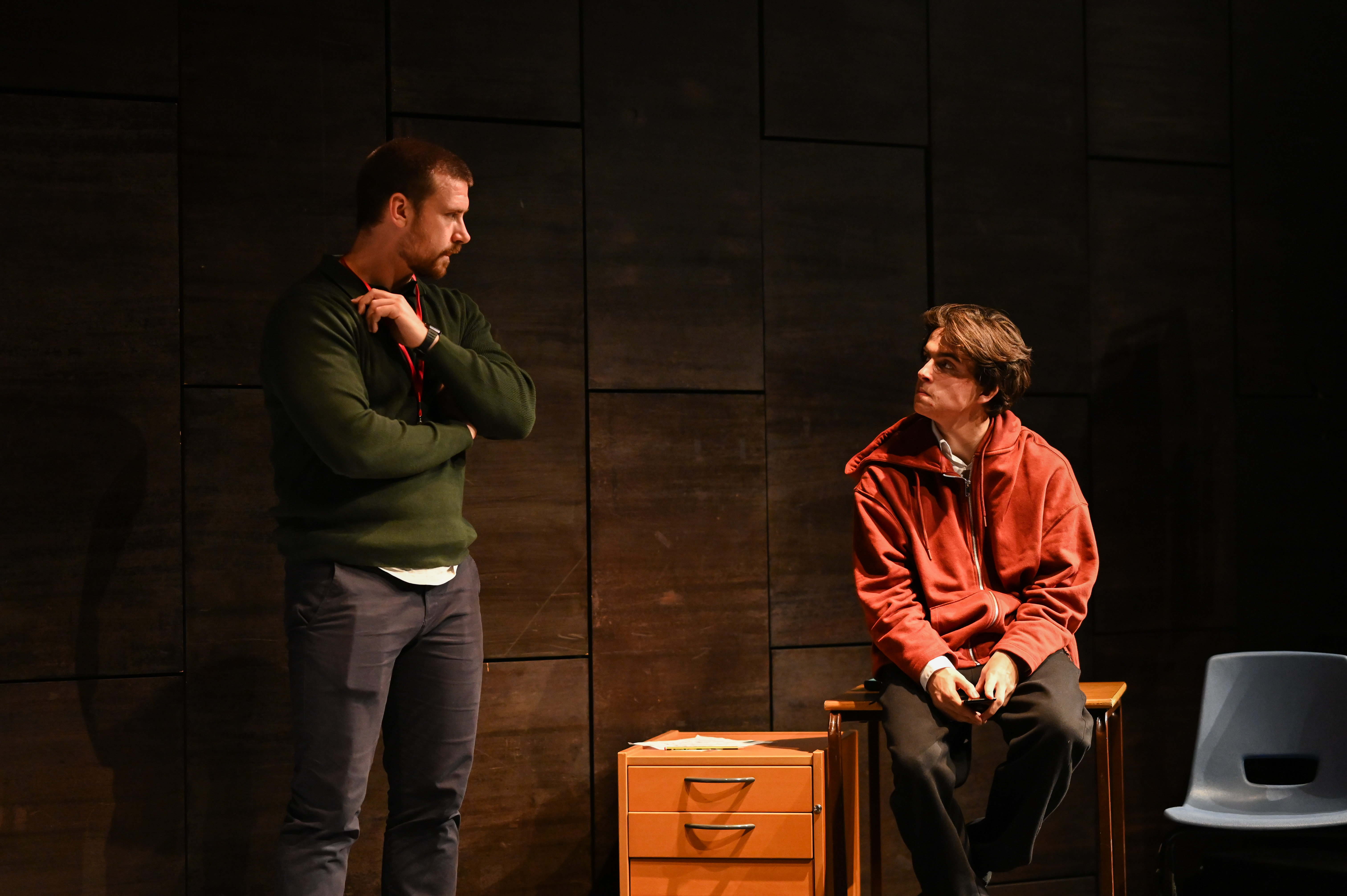
The story takes us through the trials and tribulations of a combative teenage student and the caring teacher who wouldn’t give up on him. It’s been done to death — and probably purgatory, too. Yet, the recount presents audiences with a gripping sequence of events. Therefore, its interest never runs out. And for the most part, it stays in crescendo. At the same time, there are a few hints of societal commentary by denouncing its double standards, as the young protagonist is a victim of physical and psychological violence within a straight relationship.
Despite its intensity, Harrington adeptly avoids slipping into melodrama, which is promising given his inexperience. His lack of expertise still shows, nonetheless. Consequently, some crucial aspects, particularly the pathos, are overlooked. The play tries to pull at the heartstrings, but it fails by relying too much on the recount’s pre-existing emotional nature and refusing to do the groundwork. As such, the characters aren’t sufficiently introspective, and their bond grows in a sketchy, slightly superficial way.
Director Jordan Langford does an excellent job of leveraging the script’s possibilities and enhancing them through his impeccable understanding of pacing and blocking, which shape his compelling visual brand. Accordingly, the performance flows seamlessly while brimming with dynamism, versatility, and, above all, theatricality.

Both portrayals are equally notable. Although the text doesn’t delve into their connection as deeply as it should, the chemistry shared by Moses Azadeh and James Crouch is fairly palpable. So are the realism and intricacy of their execution — especially Azadeh, whose carefully delivered mannerisms and generally precise acting earn him the highest praise.
It’s a troubled play about a troubled child. But just like its plot’s resolution, all those issues can be mended. Big Man. Little Man is therefore a big little play just waiting for its growth spurt, which will happen as soon as its creator unlocks the tools he can’t access yet. Ultimately, all this coming-of-age story needs is an extra dose of maturity.
Help us continue our work
We count on your support to keep bringing the greatest quality in theatre-related content, from interviews with the biggest names in the industry to reviews of every show in town and beyond.
We appreciate every donation to maintain our high pace and standards and continue to grow.
Thank you for believing in us!
***************************************************
All pictures credit to Mollie Proctor.