
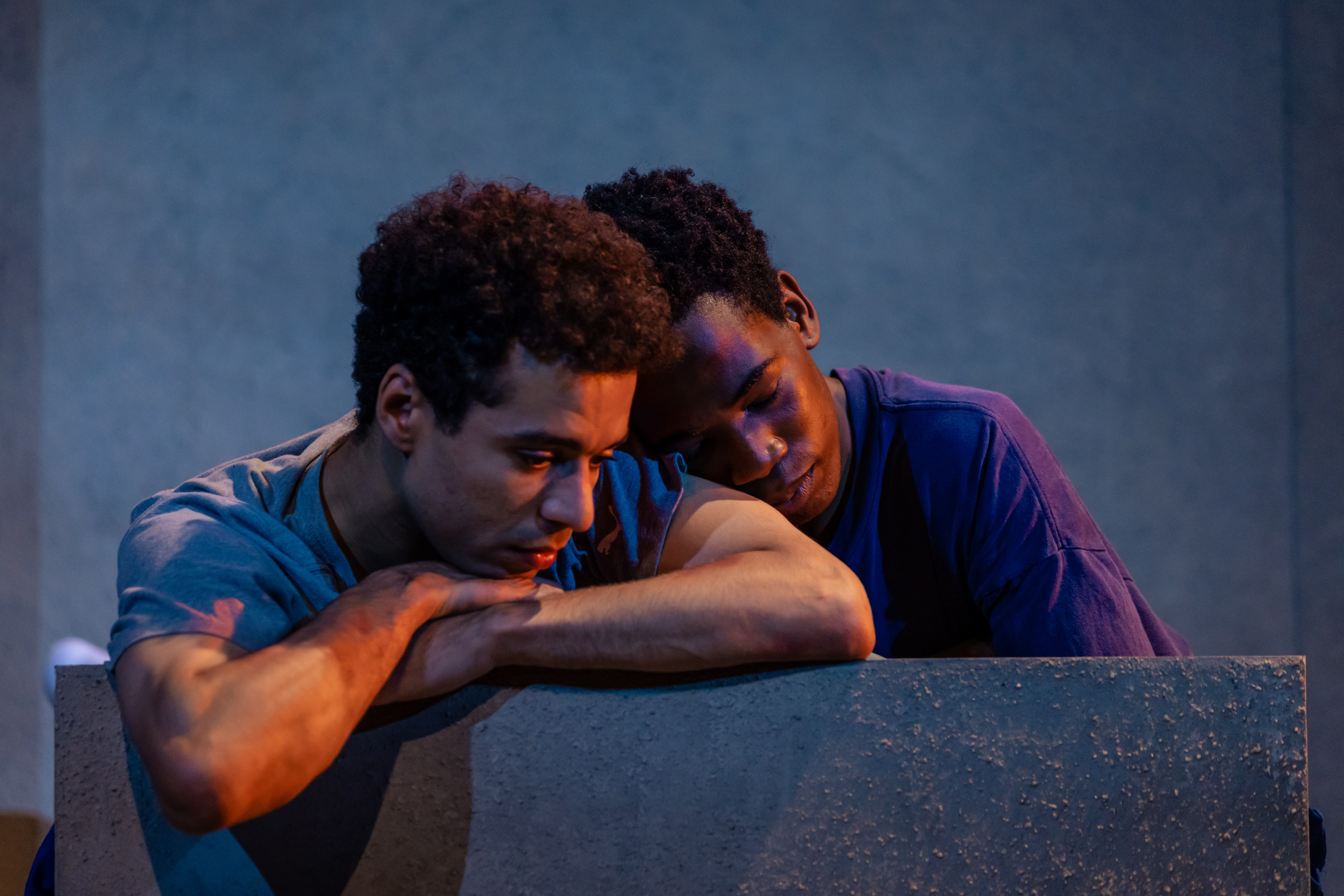
Jonathan Harvey’s stage classic returns to the London scene 30 years after its world premiere, in a new production soon to be performed in other parts of the UK. Guillermo Nazara shares his views on the show, to let us know more about this story of love imprisoned by hate.
Some things just never change. We’ve come a long way from the times when abuse and discrimination was the norm, while accepting people regardless of their sexuality was, in every sense, the queer thing to do. And yet, it seems as if we’re stuck in some way. Maybe it’s the fact that regardless of how far you think you’ve moved on, there’s still a haunting past scarring you from within: the laughs, the mockery, the blind eye turned by those who call themselves family.
They say words have the power to do justice, but also to do just the opposite. Those are to some point the themes that, 30 years ago, Jonathan Harvey intended to cover in his, by then transgressive, play. First performed at the Bush Theatre, followed by an Olivier nominated run, Beautiful Thing has now travelled from West to East, as the Theatre Royal Stratford hosts its revival as the starter of its autumn season.

A tale of two boys coming from a similar unprivileged background, the piece explores how their paths cross together into a stronger bond, as what first began as a friendly relationship gradually evolves into something more pure and intimate. A touching and still much necessary premise to work with, its development is however flawed by an unrealised delivery. There’s too much space given to the setting, featuring too many (sometimes unrequired) scenes with the supporting characters, while the core element of the plot is presented scarcely and with quite an abrupt progression.
Penned in a time of revolution as for what concerns LGBT rights, the depiction the text makes of society (though accurate) looks nonetheless dated in style, in some way condoling what it’s trying to criticize. Some jokes haven’t aged too well, while the victory the leads are supposed to achieve at the end tastes a little too insipid – perhaps because the character construction, despite being taken from reality, feels empty and slightly unfulfilled.

The cast, on their side, does bring out some additional sentiment to the material, and their commitment to the piece is blatantly obvious. However, some of the renditions seem constrained at several moments, while in others the vibe is that they’re too exaggerated. Anyway, some praise can still be given to actors such as Shvorne Marks in the role of the temperamental and dysfunctional mother Sandra, particularly thanks to her infectious stamina – moderately shared too by Scarlett Rayner in the edgy part of Leah.
So many things have happened since Beautiful Thing first opened in London, in a time where basic human rights like gay marriage were a fantasy at most (it’s still a nightmare for some, but that’s the fun side of it). The point, however, is that we’ve walked forward, while some elements of this piece seem to remain at exactly the same spot where they were 30 years ago. The understanding for what we have accomplished as a community, added to the obstacles we’ve jumped over (and crushed), need to be the key component to make of the text a speech of today. The play has an essence that can speak to all those souls society once tore apart, it just needs to do it in a way it allows them to soar higher than all those than tried to ground them. And that would be, in fact, a truly beautiful thing.
All pictures credit to The Other Richard.
Beautiful Thing plays at Stratford East until 7 October, followed by a run at Leeds Playhouse from 18 – 28 October and HOME Manchester from 31 October 11 November.