
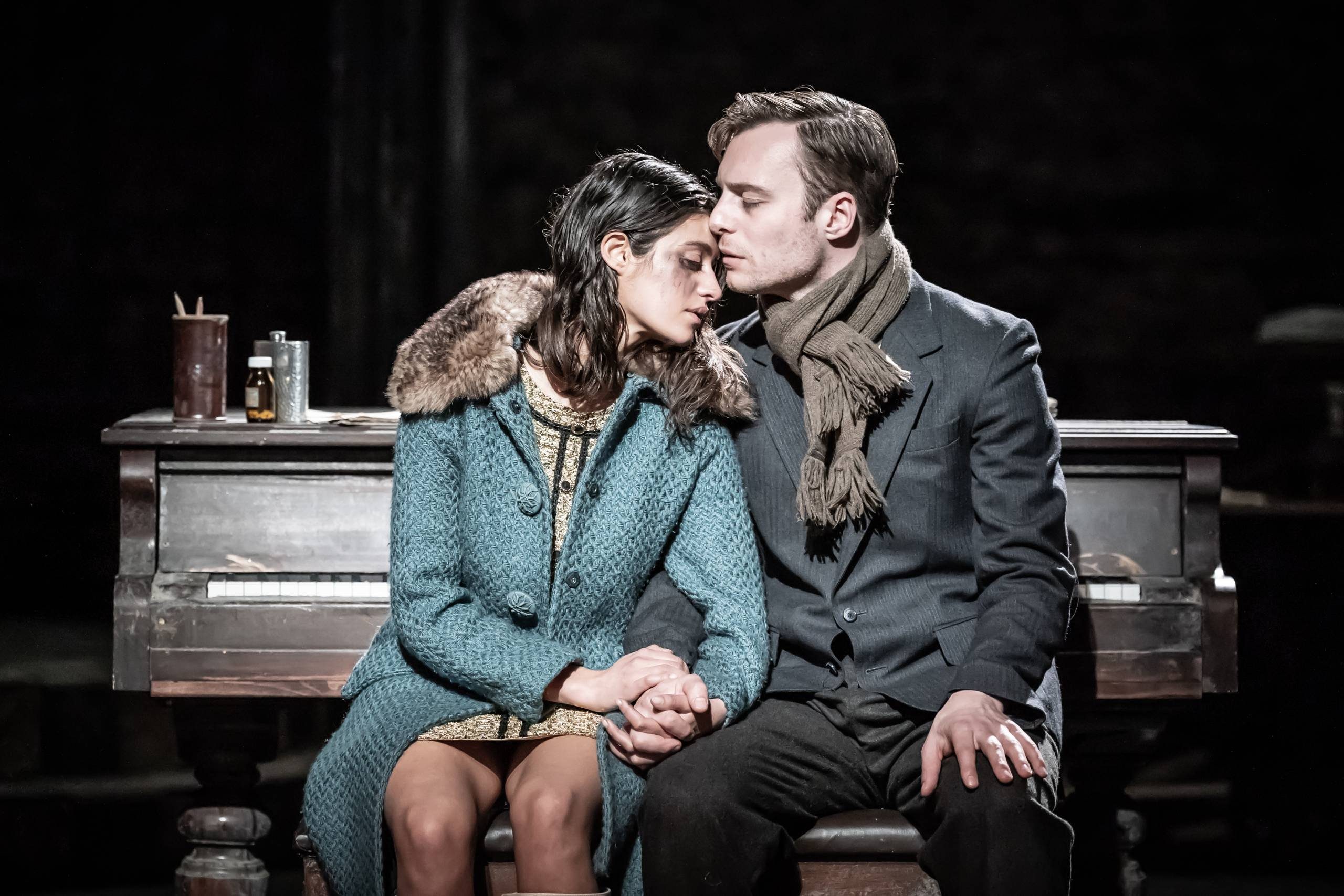
Paweł Pawlikowski’s acclaimed film comes to the stage through this brand new musical adaptation playing at the Almeida Theatre until the end of the month. Guillermo Nazara shares his views on the show, to let us know if this jump from the screen to the stage managed to dodge the bullet.
Love is the only power that can save and break us at the same time – either if it’s for someone, or even somewhere. The horrors of World War II and the tumultuous fate that followed, in particular, the history of Eastern Europe are still to blow its latest flame – unless, when it comes to art. Both stage and film have regaled us (for lack of a better word) with countless hours of the most harrowing recounts of the tragic events that haunted the lives of millions of innocent people – people punished for the unfortunate crime of being born at the wrong time and place.
Polish pride has poured down several great examples of storytelling over the past years. From classics like Polanski’s The Pianist to new additions like Paweł Pawlikowski’s source material movie, the trials and tribulations of a society condemned by the outsider’s greed has been explored in many forms and angles – one of the latest, landing on the highly-trodded boards of the Almeida theatre.

Cold War brings out the seasonal chills with its heart-wrenching plot, dealing with the struggles of the victims of Communism and their quest for survival. Set during the country’s annexation to the Soviet group, the show revolves around a young, talented composer-pianist and his romance with a promising performer – and how their paths twist and turn (sometimes together, sometimes completely apart) as their pursue a sole, simple goal: to live a dignified life. A gripping conflict between the imposed morals of a brainwashed population and the natural human wish to escape from the gloomy clutches of undesired fate, the premise is as enticing as it’s insightful. But the delivery doesn’t seem to have fully solved its own combat.
Directed by Rupert Goold, the production is, by all means, a visual treat – featuring remarkably well-executed blocking, backed up too by Jon Bausor’s figurative yet strikingly dynamic, suggestive set design and Paul Constable’s extremely expressive lighting. On the other hand, Elvis Costello’s score, combined with traditional folklore pieces, and all of them shrewdly arranged by Simon Hale, gives the final touch to a fully realized atmosphere – strong enough to transport us and hold us for the whole evening into another universe of past and melancholy.
But that doesn’t convert altogether when it comes the writing, which in spite of its entertainment qualities, doesn’t manage to provide much of a compelling analysis of its characters and arcs. There’s evolution in the action, but not that much of a pace when it comes with the personages’ psychology – perhaps due to the fact that, since so many things happen throughout the narrative’s course, there’s not too much space left for the protagonists to halt and reflect on the progress they’re supposed to experience.

With a book written by Connor McPherson, the dialogue exudes flow and spontaneity, but the script’s structure still feels unrefined as for the approach the show is trying to go for – mainly, because it doesn’t entirely make up its mind about its genre. Sometimes closer to a play with songs (with the score used as either a diegetic or transitional device), on others, going with the tide of a musical, the constant change in its shape prevents the work from fully flourishing – not allowing it to take a whole advantage of all the possibilities each style could offer, and instead, coming up with an outline that, though packed with melodically beautiful tunes, lacks the introspective component that would endow it with more depth.
In any case, the montage does beguile us with more than a few praiseworthy renditions. With an artistically secure yet much satisfying ensemble, Jordan Metcalfe stands out in the double supporting role of Michel and Minister, carrying out two acutely differentiated portrayals (the first, playful and endearing; the second, soberly menacing), all of his appearances are as memorable as they are captivating. On the other hand, Anya Chalotra also gives a lasting impression as co-lead Zula, enabling her character with force and temper. Yet, the biggest mention is undoubtedly deserved by Luke Thallon, for his incredibly realistic, charismatic and, above all, charming depiction of the tale’s wrecked hero, Wiktor.

Built up with technical flawlessness and held by an almost equally impeccable troupe, Cold War follows a successful strategy when it comes to its aesthetic impact, but continues to battle when looking for the emotion and solidity it’s bound to exude, yet haven’t found the proper way to. Fewer elements in the action and a clearer decision about the show’s identity are, in fact, the arrows in the quiver to make the whole thing come to peace with itself – and ultimately, cry victory.
All pictures credit to Marc Brenner.
Cold War plays at London’s Almeida Theatre until 27 January. Tickets are available on the following link.