
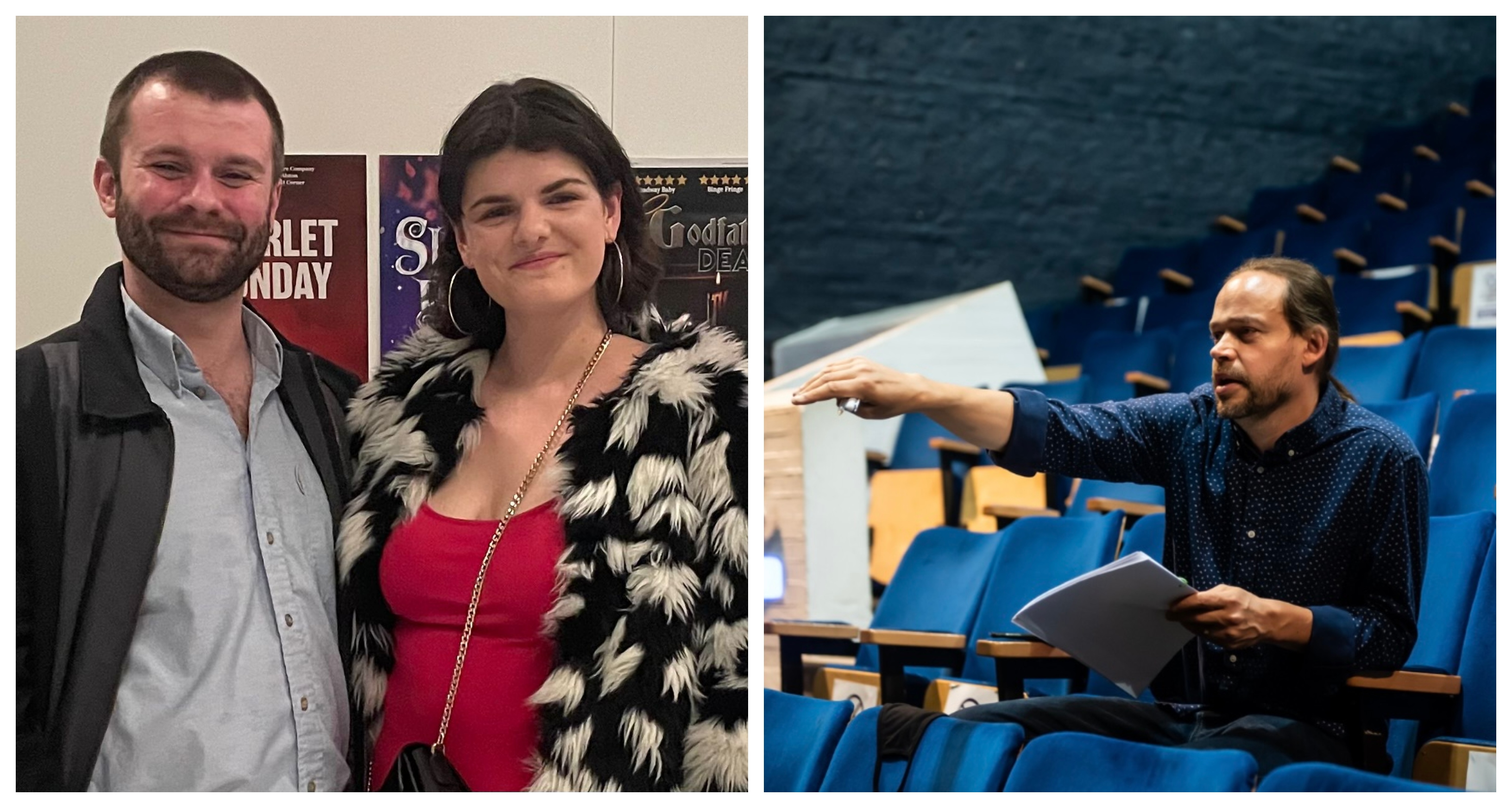
The classic fairy tale gets twisted, turned and relived in this original musical adaptation coming to the Greenwich Theatre for the whole month of August. Guillermo Nazara chats with the lead creative team, to learn all the fun facts about the development of this family piece, where children and adults alike are welcome to be their guest.
How did the idea for this show come about?
JH: For several years at Greenwich Theatre we’ve been producing a stage version of a well-known family story – from Pinocchio and The Jungle Book to The Wolves of Willoughby Chase – always using play scripts that had been tried and tested elsewhere. We have such a strong family audience at other times of year, and particularly at Christmas, that it seemed daft not to offer something big in the long school summer holidays. Last year we shifted the vision slightly to an actor-musician aesthetic, reviving Sally Cookson and Adam Peck’s version of Cinderella. This year, though, we decided the time had come to commission a new script of our own, again based on a well-known tale – and so with writers Sidonie Welton and Brad Tutt we settled on Beauty and the Beast as our tale.
A tale that’s been told in so many ways, with the Disney film and stage musical being such a massive reference. Why bringing it again in a different form?
SW: Without being too cheesy, it’s a tale as old as time. Literally. We’re living through an era of soft reboots: Star Wars, Harry Potter, and not forgetting the endless live action versions of the Disney classics! Why not bring back this great story, especially with a quirky, contemporary take?
BT: Finding new ways to tell recognisable stories is what makes live performance so exciting, really playing on the fact that what you’re seeing will only happen then and there (in that exact way!). It makes the experience feel special and more directly meaningful.

Does the popularity of the story’s previous versions pose as an additional challenge?
SW: It’s as scary as retelling a version of any story, but you just gotta stick to your guns! There are people that only know the version they grew up listening to but the brilliance of folk stories is that they’re meant to be changed and adapted to suit the teller.
BT: It’s hard tackling people’s preconceived ideas of what stories are for and how they should be told – maybe this version even confronts that?
JH: When we have presented new or alternative versions of known stories before, we’ve found that children have a strong capacity to take on a new narrative, to understand it as a new story rather than a story that’s gone wrong. There’s always a moment of recalibration, when the first new character or song appears, but then I’m confident that people will love this version no matter how much they enjoy the Disney cartoon.
What is your particular vision of this story? Will the tale deviate much from the original plot?
SW: Beauty and the Beast is a folk story! Not a single version is the same. Brad and I had great fun researching and reading different versions, finding the elements in each that we enjoyed and wanted to tell through ours. There will be things you recognise and things you don’t. The ending is definitely new!
BT: Versions of the story go back to ancient Rome, with the Beast taking many different animal forms (snake, bear, horse!) – we’ve included some elements from some modern retellings but also heavily inspired by a few of the older ones too…

What’s the development process of this show been like? Have you faced any further challenges?
JH: It’s always exciting to work with a new script – with nothing having been tried out before, there is huge scope for the actors to develop their dialogue, for the composer to twist a scene or turn it upside-down with the songs or the music. We’ve had the rare opportunity to spend time with the writers and the composer David Haller in the room (who has been able to compose with an understanding of who plays what), and then for our musical director Michaela Murphy to pick up the baton in teaching and developing the music. I love the way that a company of actor-musicians have to find their way around the presence of their instruments – children might very quickly overlook a Beast who is carry a bouzouki or a company waltz while holding guitars, but for us it always adds a new level of direction to the show. For this one, there are certainly challenging moments to stage – though I won’t give them away here – but the answer is almost always musical, one way or another.
What makes this version unique in comparison to others?
SW: A big thing for me was promoting the neutrality of a ‘happy ending’. Some folk stories can end in despair and doom, some end too perfect, I wanted to show that life isn’t so black and white and when I was growing up, these stories were few. There was even a philosophy of what a ‘Disney princess’ was or even a theatrical leading lady – which for me is so much more than a damsel in distress or love interest. Louise Cielecki, was who I wanted to see playing a leading lady when I was young. Feisty, strong and an absolute laugh.
Why come see Beauty and the Beast?
BT: I hope audiences will be taken to a magical world through the talent and energy of our band of players. Folksy, enchanting, sing-songy and silly, the show has truly something for everyone!
Beauty and the Beast will play at London’s Greenwich Theatre from 2 to 25 August. Tickets are available on the following link.
One response to “Director James Haddrell and writers Sidonie Welton and Brad Tutt talk new upcoming musical ‘Beauty and the Beast’: “A big thing for me was promoting the neutrality of a ‘happy ending’””
absolutely disgusting production of Beauty and the Beast. No scenery, costumes and many disappointments for the little girls who attended this show!!!!!