
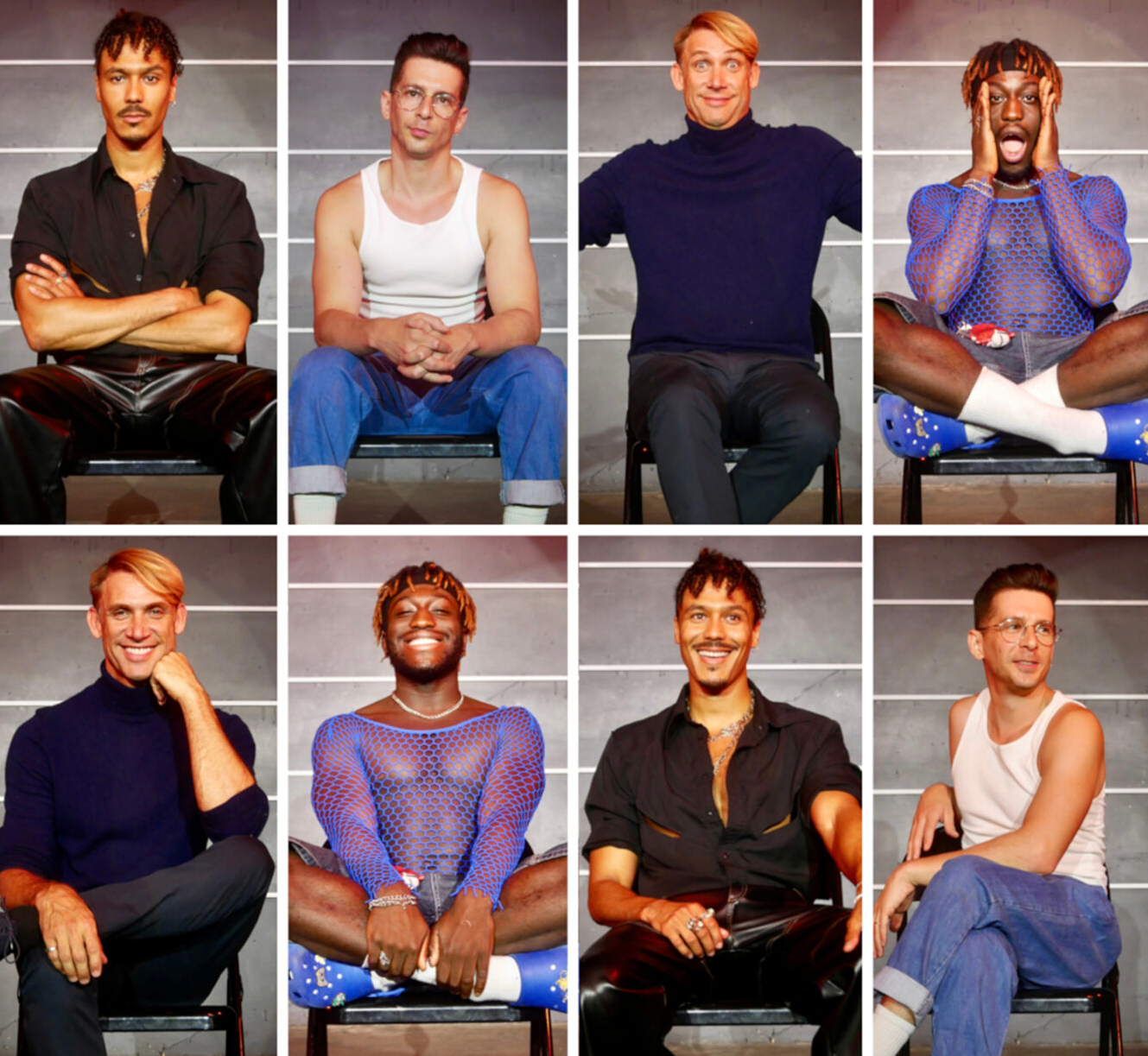
The Divine Theatre hosts the London premiere of this new queer-themed play, depicting the struggles of love relationships. Guillermo Nazara shares his views on the show, to let us know if its biting concept managed to pump something palatable.
On my own – pretending he’s behind me… I mean, beside me. Well, now that I think of it, Eponine was a tomboy, so maybe that’s actually what she meant when dreaming (a dream in time gone by) about having fun with Marius. All additional connotations are just a product of your dirty mind, so please shut your hole. That one, too… Anyway, what’s the point of quoting a West End musical when reviewing a small fringe play that literally has nothing to do with angry revolutionaires (that’s just me trying to sound cultural)? The answer is very simple: two characters sh*g each other as Frances Ruffelle’s (recorded) voice pours her heart out – and they do the same, but with more… fluidity, I should say.
Welcome to Earworm – I’ve already told you what it is literally one line ago, so quit your overworking impositions (and by the way, this is a device-responsive website, so don’t embarrass yourself). There is, however, an element missing in my description: “into rich subs” (there, profile on SugarDaddy.com, completed). But also, regarding what I’ve said about the piece. Written by Gur Arie Piepskovitz, the work is, in fact, a self-appointed anti romantic comedy. A nice hook that instantly promises more substance than the overformulated (picture this in the most excruciatingly candy-flavoured tone you can imagine) “oh, I didn’t expect to fall in love ever again but here we are”, followed by “I hate you, I hate you too, fighting turns me on – let’s get back together, and inside each other”, the understandable presumption is for a show packed with bitterness, and which repeatedly makes parody of the amorous goals this genre has bombarded us with for years, only for reality to remind you that that fairy tale is not for you – at least not in the common sense of the term…
Yet, despite its intentions of developing something more meaningful (one would assume), or at least potentially antinormative, there’s not much that we can find pertaining to those traits in any part of the recount. Yes, it’s not a plot about ponies and unicorns (I’m not talking about a furry party, just to be clear…), but there’s not that much poignancy floating around either. Depicting a burnt-out gay couple inviting two friends over for dinner (you can already imagine what’s coming next – and who, too…), the only specks of sharpness are displayed at the beginning, as the conflict is established through a rather astute, perceptive dialogue. After that, all that follows seems to lack the brightness and perspicacity a script of this type requires – presenting us with what, all in all, feels like a rushed and underdone delivery, two aspects that hardly ever go well with bed-related issues.
As a consequence, we don’t get to connect with the personages enough – and though, to some extent, we may end up caring for the protagonist’s journey, most of it is so abrupt that its resonance, engagement and memorability are significantly compromised. In addition, though flaunting some quite amusing bits, too many jokes are deprived of a proper build-up that allows them to land more effectively – often feeling as if pushing too hard to unload its humour, and forgetting that foreplaying is actually the most crucial part for the opening of any act, and its subsequent ability to penetrate into the viewer.
In any case, the portrayals are able to make up for the writing’s flaws in some level – and though we may not find the highest degree of chemistry, there’s still sufficient strength to celebrate their performances above and underneath the sheets – don’t worry it’s not what you’re thinking, I’m just talking about sex, not monsters below your mattress… Among them, the highest praise goes to Avihud Tidhar as Guy, giving a heartfelt and generally well-timed rendition in the lead role of Guy, as well as Andro through his inviting and much entertaining interpretation of Tyler.
There’s nothing new about tales of idyllic relationships soon becoming a disappointment beyond Miranda Priestly’s standards. It’s happened before and it will happen to you again tomorrow (the kind of roast that you like only takes place on Saturdays, darling). However, we can demand more of a piece that’s intended to give a good shake to the love-story status quo. Laying the ground for that, Earworm manages to craft an enticing premise, but fails to provide its audience with anything else than a few extra chuckles and some rather unhinged turns that basically go nowhere. With a rather inconclusive closing, it is time for the creators to give the entire jaunt a few more flips before it’s put back in the game. And let it play when it’s ready to protect something that’s primarily more absorbing.
Picture credit to Adrian Whittle.
Earworm plays at London’s The Divine until 23rd October. Tickets are available on the following link.
Help us continue our work
We count on your support to keep bringing the greatest quality in theatre-related content, from interviews with the biggest names in the industry to reviews of every show in town and beyond.
We appreciate every donation to maintain our high pace and standards and continue to grow.
Thank you for believing in us!
***************************************************