
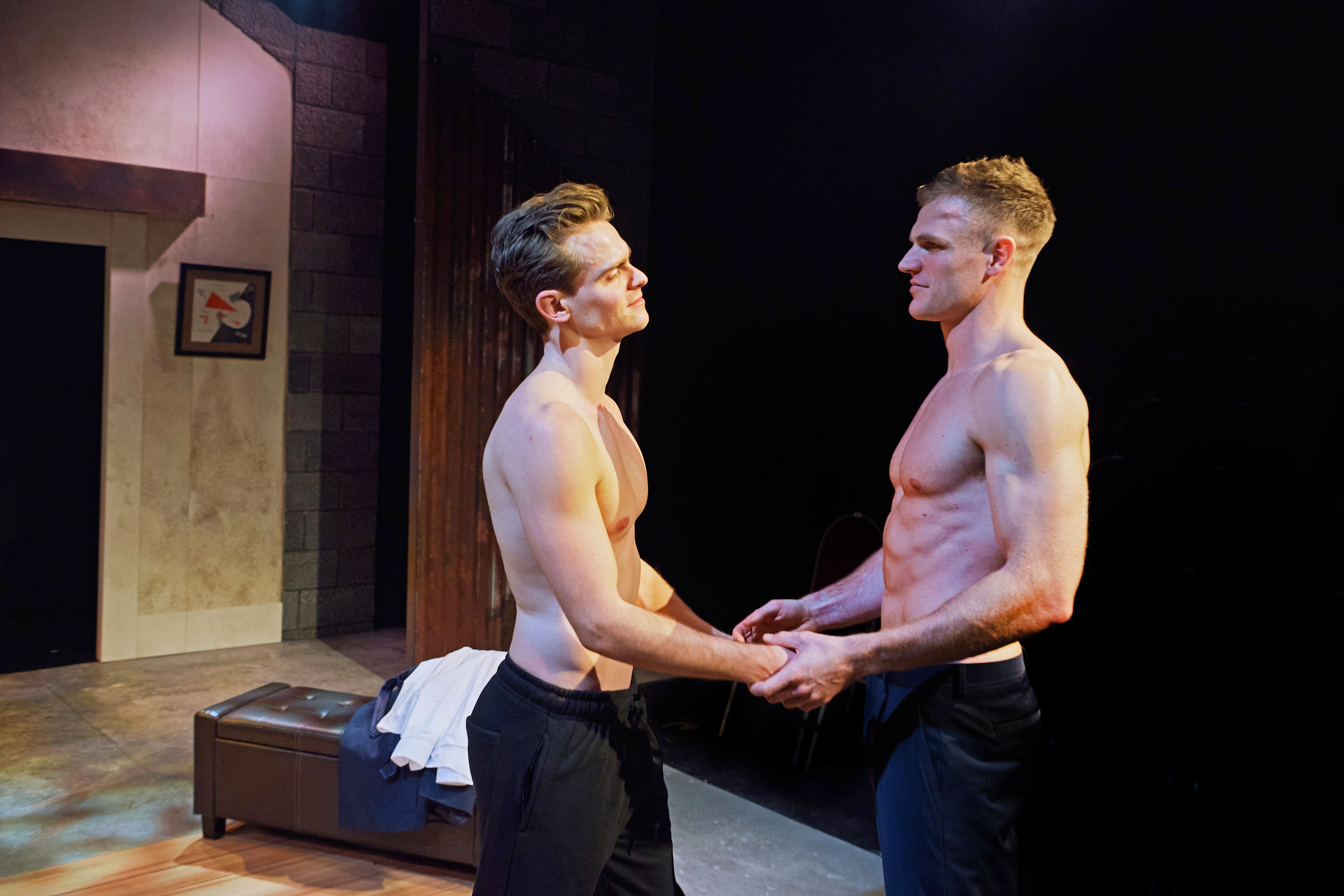
Sergey Fetisov’s autobiographical novel communes onstage with the world premiere of its first theatrical adaptation. Guillermo Nazara shares his views on the show, to let us know if this real-life romance set during the Cold War is in need of a Perestroika.
Every gay story is just the same. It’s a disgustingly heternormative comment to make, but it’s true. The evidence lies within each one of us. We all can relate to a tale of injustice when it comes to love between two men. It was not that very long ago that most part of our society would condemn it. We were raised to hate ourselves for just wanting the same things that, for centuries, straight people had been taking for granted. We were denied the family support, the parental guidance, the respect, and the protection. And as much as a great deal of it may have withered away today, the tears from the past have still not fully dried in our present.
Last night, London’s King’s Head Theatre opened its doors to a double celebration. On the one hand, the venue was completing its first year since the inauguration of their brand new space. On the other, their latest press performance was taking place – at an almost packed house filled with electrified viewers, eager to see how Sergey Fetison’s true account of secret, forbidden romance had been translated onto the stage.

A plot of the Cold War with the potential of becoming the hottest show during the January season, the expectation is more than justified. The success of its film predecessor confirms the solidity of the material. And, to some extent, playwright Richard Hough makes a good effort at exploiting the key themes that bring significance to the recount. The problem, however, is that it doesn’t feel like that’s enough.
Two military men take the highest risk by coming to terms with their hearts. They have fallen for each other, and if they go along with those emotions, their actions could (and will) be severely punished. But their sentiments are too strong to be buried, and their relationship will continue. They must be a secret, but they are willing to accept the sacrifice. For they don’t care if they live in the shadows, as long as they live together.

An excellent premise that’s strengthened by its true-event origin, the play is able to convey a decent, enjoyable structure from a narrative perspective. It’s fast-moving and direct to the point. But perhaps that’s precisely the issue. We’re not given enough time to get properly acquainted with the characters and their journeys. We know what they want. We know what they go through. But we struggle to connect with their experiences at a more fulfilling level – simply because there’s not sufficient room for them to build that bond with us. And as such, we care about what they represent; but sadly, not that much about the individuals.
The cast does counterbalance those absences to a compelling degree, nonetheless. There’s honesty in their delivery – and, all in all, their performances are robust and engaging. Among them, Nigel Hastings makes a memorable appearance as Alexei Kuznetsov – boasting presence and magnetism in his portrayal of the politically zealous Colonel. As for the leads, both Robert Eades and Theo Walker exude a competent degree of rapport in their renditions – able to build an aura of intimate chemistry that’s quite graspable to the audience, despite the script not putting enough emphasis on the introspective angle this kind of narrative is expected to lean towards.

Another acknowledgement is earned through the production’s elaborate values – all of them put together with flawless skill. Directed by Owen Lewis, its immersive blocking helps boost the account’s dynamism, while also enhancing its proximity to the viewer – an accomplishment made in tandem with Gregor Donnelly’s simple but highly adaptable and efficient set design. Yet, the highest praise in this department goes to Clancy Flynn’s genuinely superb lighting – displayed with such refreshing attention to detail, it makes every scene buzz through its atmospheric force and visual draw.
Every gay story is just the same. So is anything that appeals to and deals with the human soul. Firebird is obviously far from burning into oblivion as another one in the bunch, but it’s still a few rewrites away from rising above the ashes of other works and achieving immortality. With a generally adequate structure but unable to extract enough pathos from it, the final thought on the piece is of an entertaining jaunt that, however, strives to bring much uniqueness and endurance into it. Their time together may have been truncated by fate, but fiction should restore those shortages in terms of pacing.
Help us continue our work
We count on your support to keep bringing the greatest quality in theatre-related content, from interviews with the biggest names in the industry to reviews of every show in town and beyond.
We appreciate every donation to maintain our high pace and standards and continue to grow.
Thank you for believing in us!
***************************************************
All pictures credit to Geraint Lewis.
Firebird plays at London’s King’s Head Theatre until 9 February. Tickets are available on the following link.