
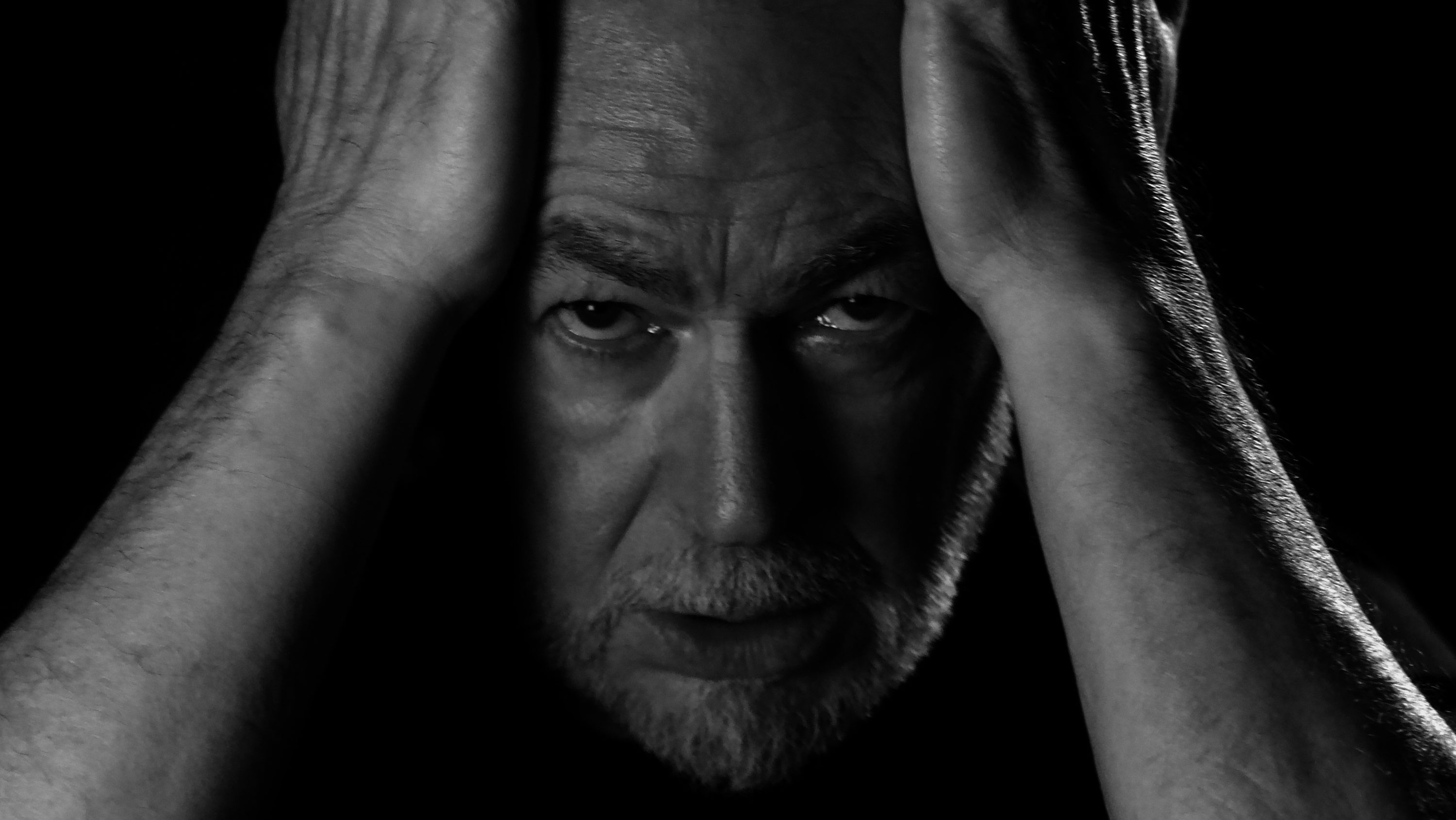
The Bard’s bewitching play returns to the London scene through this new one-hander version running next week as part of the Camden Fringe Festival. Guillermo Nazara chats with the artiste behind and in front of this banquet of creativity – to learn more about the development of the piece, its toil, and trouble.
How did the idea for a one-man version of ‘Macbeth’ come about?
The idea had been there for a long time — years. But the motivation, the kick-start, was the war in Ukraine. Because of it, all my teaching work in Moscow disappeared. I needed to make something with the resources at hand, which was myself.
The play is admittedly one of Shakespeare’s shortest works. Yet, its psychological exploration is extremely thorough. How did you manage to cut it down to an hour without the character’s arc suffering?
I always start with the five-act structure, I want to make sure that everything that Shakespeare puts in the play is still present in my edit. That may sound like a contradiction, as I cut a lot, but as well as a great poetic dramatist, he is a brilliant structural dramatist and if you keep that as a guide, then it’s a good start. But the editing process wasn’t dry… it was guided by “how can I get from one thought to the next thought in a logical and psychologically believable way?” Feedback from people who have seen it leads me to believe that this distillation tightens and illuminates the arc of the play, and within that, the arc of the main character.

This production is also said to bring psychological depth to the material. How is that achieved?
At the beginning of the rehearsal process, my movement consultant, Cheska Bridge, whose mother is a psychiatrist, brought me three papers in which the play, particularly the relationship between Macbeth and Lady Macbeth, was subjected to modern psychoanalysis. I was also aware that Freud had written a paper in which he described Macbeth and Lady Macbeth as being complementary aspects of a single psyche, and this was my starting point for the edit and subsequent rehearsals.
The production opens with a man lying on a bed in a spartan room, who over the course of the evening becomes almost infected with Shakespeare’s Macbeth — it might almost be that the trauma at the heart of the play is his trauma which he plays out.
What has the process of concocting this adaptation been like?
It has been like an action research project; a version is worked on, presented to an audience, and the learning from that experience informs the next version, and so on. If I were to look at the first version and at the version I will be presenting at Old Red Lion as part of Camden Fringe, so much has changed, but the process has been organic, and I have had the gift of time and varied audiences. Some of those audiences had English as a second language, and that has helped me to ensure that the action, the intention, is clear.
How do the rest of the characters come into the narrative? Do you swap roles or is everything told through Macbeth’s eyes?
One character embodies Shakespeare’s Macbeth with all its twists and turns and relationships. Everything is in his head, and he works it through and works it out. All the other main characters are present in his mind, aspects of himself or projections of relationships. I don’t swap roles, I don’t do voices, but nevertheless the other characters are present. He voices them, hears them, reacts to them, and is affected by them.

How faithful is your text to the Bard’s original wording?
A rigorous approach to Shakespeare’s language is the cornerstone of the company’s work, so although I don’t say every word of the play, every word is from the play. I honour the music in the text, and, to the best of my knowledge and understanding, deliver the intention of the line. As the late Cicely Berry would say, “there is something in the movement and sound of the language that has a meaning beyond the literal meaning.” Heightened poetic drama has potency and vigour, and when it really comes alive in the space between the performer and the audience, it can be a profound experience.
Apart from the time limitations, what other creative challenges have you faced?
My biggest creative challenge has been how to incorporate Lady Macbeth. I had started the process to create a Macbeth monologue and decided not to worry about Lady Macbeth. After the first performance in Italy, a friend suggested that I try and find a little bit of the Lady Macbeth in myself, and that thought changed everything. I realised that Lady Macbeth needed to be at the centre, certainly in the first two acts, as without her, Macbeth would not have had the resource to make this grab for power. Finding that drama, portraying that relationship, which is so clear in the play, has been and continues to be my greatest challenge.
What about the show’s challenges as a performer?
Up until now I have only had one-off performances, which means that you go on stage having spent the day sorting lights, sound, tech, then a dress rehearsal — and then, it’s the show. After that, you have to clear away. So, the hardest thing by far in being a solo performer is that I don’t get the chance to just be the performer.
The main acting challenges has been trusting that I know the text and not worrying; staying in the moment and in the thought, not getting ahead of myself and panicking, and having the courage to remain open, authentic, and vulnerable in front of an audience and to share the story with them.

Beyond its monologic approach, what do you think makes this adaptation of ‘Macbeth’ stand out from the others?
Anybody staging Macbeth faces a series of challenges. Who or what are the witches? What is the relationship with Lady Macbeth? How do you stage the murders, Banquo’s ghost, the witches’ cavern, the battles, the death of Macbeth, the hope of Malcolm at the end?
Staging Macbeth as a monodrama presents the same challenges, with the added ingredient of a single actor. So this particular set of circumstances has led me to create something where everything is in his mind; he hears voices, has visions, the cavern is a cavern of the mind, the death of Macbeth is a psychic death. This idea of Macbeth as a thing within brings an added intensity to a play that is already intense.
Why come see this version of Macbeth?
Come and see this version of Macbeth if you like your Shakespeare classical with a contemporary twist. If you like language that is spoken with skill and vigour, with an embodied and believable psychology, and acting that is alive physically. As an audience member in NYC said to me, “Of course we see good Shakespeare, but to actually “hear” a play – that is a rare treat.”
Help us continue our work
We count on your support to keep bringing the greatest quality in theatre-related content, from interviews with the biggest names in the industry to reviews of every show in town and beyond.
We appreciate every donation to maintain our high pace and standards and continue to grow.
Thank you for believing in us!
***************************************************
All pictures credit to Mark Duffield.
Macbeth will play at London’s Old Red Lion Theatre from 15 to 17 August. Tickets are available on the following link.