
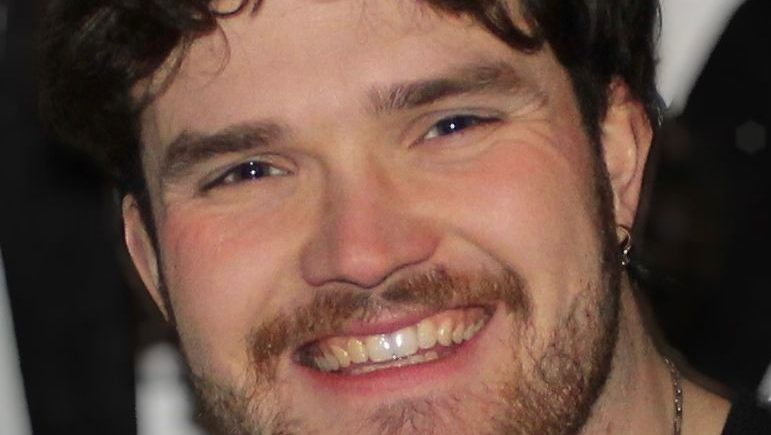
Following his victory in the inaugural edition of Ambassador Cruises and PEEL Entertainment Playwrighting Challenge, the author begins the New Year with the initial production of his recently awarded piece — a classic murder mystery with a critical eye on true-crime consumption. Guillermo Nazara chats with the artist to learn more about his process and the criminal situation emerging artists face nowadays.
How does it feel to be the first-ever winner of this new competition?
It is an incredible feeling to have been chosen as the first-ever winner of the Ambassador PEEL Playwriting Challenge. Given the calibre of the other shortlisted entries, I know that it must have been a tough choice for the judges, and to have my work selected by industry professionals from such a competitive pool is a huge honour.
What are the current challenges for emerging writers?
I think funding and costs are always a challenge for emerging writers, but particularly now, with self-producing becoming the norm and Fringe festival costs being higher, there is a definite financial barrier for writers who are trying to get new work staged. Add to this the fact that there are fewer support or development opportunities than there are artists who need them, the closing of most theatres’ literary departments, as well as the often-mystified processes of getting work produced/commissioned, and it is clear that the path for emerging writers is not straightforward.
Why do you think the support for up-and-coming artists has become so scarce in recent years?
I think the reason is largely financial. With austerity and the devaluing of the arts in Britain, there is less money in theatre generally, both in private and public spheres, and this lack of funding means that there are fewer schemes and support systems for new and emerging artists. It also means that as theatres are under financial strain, they are less able to take risks on new artists. It is a real shame, as I know so many up-and-coming artists making really exciting work who would benefit from more of these schemes. I am very fortunate to have an opportunity to develop through the Ambassador PEEL Playwriting Challenge, and I hope that this award will continue for years to come, and that more like it will be established so that other artists can receive a similar benefit.

How did the idea for the show come about?
There is a moment in the show where one of the characters, Dan, discusses how his partner, Max, listens to true crime podcasts to fall asleep, complaining that he wakes up in the middle of the night to someone describing axe murder in graphic detail. This moment was actually inspired by a time when I fell asleep listening to a true crime podcast and later awoke from a nightmare to discover that my subconscious was being fuelled by the podcast’s rather graphic description of a real murder. Suffice to say, I no longer listen to true crime podcasts before bed, and the event made me introspectively consider my own consumption of true crime as entertainment. Questioning my own fascination also made me consider the growing trend of true crime in entertainment, noticeable in the popularity of the Netflix “Monster” series on Ed Gein and Dahmer, and I decided that I wanted to write a play that might raise similar questions for audiences. I think there are many ethical questions around true crime as entertainment. I don’t think I, or Venison, have the answers, but I do hope that the play will give the audience a pause for thought.
As you just mentioned, the show satirizes society’s current fascination with true crime while questioning its ethics. How are those themes explored throughout the script?
I don’t want to give too much away about the plot, but these themes are explored in a few different ways through both the form and the content. Firstly, the dinner party setting allows for the bringing together of characters with contrasting views, one of whom is a self-confessed true crime buff, and the subject of indulgence (in true crime and other things) features as a topic of dinner party conversation. True crime obsession is also a driving force behind the play’s farcical narrative progression as well as the black comic tone of the piece. Furthermore, by utilising the murder mystery genre, the audience are also placed in a position of indulgence in crime media, a position they will hopefully come to consider more critically by the play’s close.
Has society lost its humanity towards those issues, at least partly?
I wouldn’t say that society has entirely lost its humanity, but I certainly think we are desensitized to these issues to a certain degree. I also don’t think that enjoying true crime is indicative of a lack of humanity, but I think it speaks to the kind of macabre fascination that has existed throughout the course of human history, and the fact that we now have an immense capitalist entertainment system seeking to profit from this fascination. If you look for it, there is plenty of discourse around the topic that shows people do explore and reflect on the ethical questions around these issues, but this critical reflection is much less prominent in the cultural landscape than true crime dramas and documentaries themselves. I think that there needs to be a level of self-awareness and introspection when we indulge in crime media as a form of entertainment, and I think that, as creatives, this is something that we can and should explore in media in order to encourage more critical reflection.
Your play has been praised for its originality and innovation. What aspects of it showcase those traits, in your opinion?
I’ve always been a fan of murder mystery fiction, particularly the cosy whodunits of Agatha Christie. In Venison, I wanted to create a murder mystery about murder mystery. As such, I play with this genre and its conventions in various ways, and I think that it is this playfulness and subversion of genre that brings those traits to the fore.

What has the development process been like?
The development process thus far with Ambassador and PEEL Entertainment has been spectacular. As a part of the competition, all the shortlisted writers enjoyed rehearsed readings of parts of their plays aboard the Ambassador Ambition, and myself and runner-up Bryan Moriarty received a second reading at the final event. As a writer, seeing your work up on its feet is always invaluable, and it was a joy to see the work performed and directed by the talented team assembled by PEEL Entertainment. I am looking forward to the continuation of the development process when rehearsals for Venison begin now in 2026.
Have you faced any particular creative challenges?
The biggest challenge when working on a murder mystery style play is always the flow of information. Of course, you don’t want the audience to figure it out too soon, but you also don’t want them to feel completely cheated by a surprise twist. Finding the balance can be tricky, and I hope that I have struck that balance well with Venison.
Are there any highlights in the show you’d like to flag?
I think for me the highlights of the show come from its colourful cast of characters. Murder mysteries traditionally always feature eclectic and vibrant characters, which is something I have aimed to emulate in Venison. I think it is a real ensemble piece, and I’m so excited to see what the actors bring to Dan, Bill, Max, and Jerry!

What are the plans for Venison after this first run?
I don’t currently have any concrete plans for Venison after it’s time aboard the Ambassador Ambition, but I do hope that the presentation of the play aboard the ship will be a springboard for the piece to be performed more widely — on land and at sea! For now, I am simply thrilled that the show has a life with Ambassador and PEEL Entertainment.
Are you currently working on any new pieces?
I am currently working on a couple of new projects. I have recently formed SlashHouse Theatre Company with fellow Edinburgh based creatives Minnie Cross and Fiona Forster. Under SlashHouse, we are currently working to put on a new black comedy I have written entitled Peaked, which sees a group of former child actors reuniting to deal with the consequences of their early fame, and the pressures of “peaking early”. Peaked will be performed on the 31st of January as part of Bedfest, and on the 8th of May at the Duns Playfest. As a Welshman, the other project that I am very excited about is my play Bread of Heaven, a drama exploring Welsh rugby club culture, masculinity, and community in South Wales, which is currently in development for ‘Flesh & Blood Stories’ with Nearside Productions.
Why come see Venison?
You should come see Venison if you like murder mysteries, if you want to laugh, and if you’ve ever wondered about the ethics of enjoying true crime. If you’ve ever thought that the works of Agatha Christie would be better if they featured a comedic dance number and a chef going through a breakup, Venison is the play for you!
This site is proudly sponsored by

Help us continue our work
We count on your support to keep bringing the greatest quality in theatre-related content, from interviews with the biggest names in the industry to reviews of every show in town and beyond.
We appreciate every donation to maintain our high pace and standards and continue to grow.
Thank you for believing in us!
***************************************************
Event pictures credit to Reece Owens.
Further information about the show is available on the following link.