
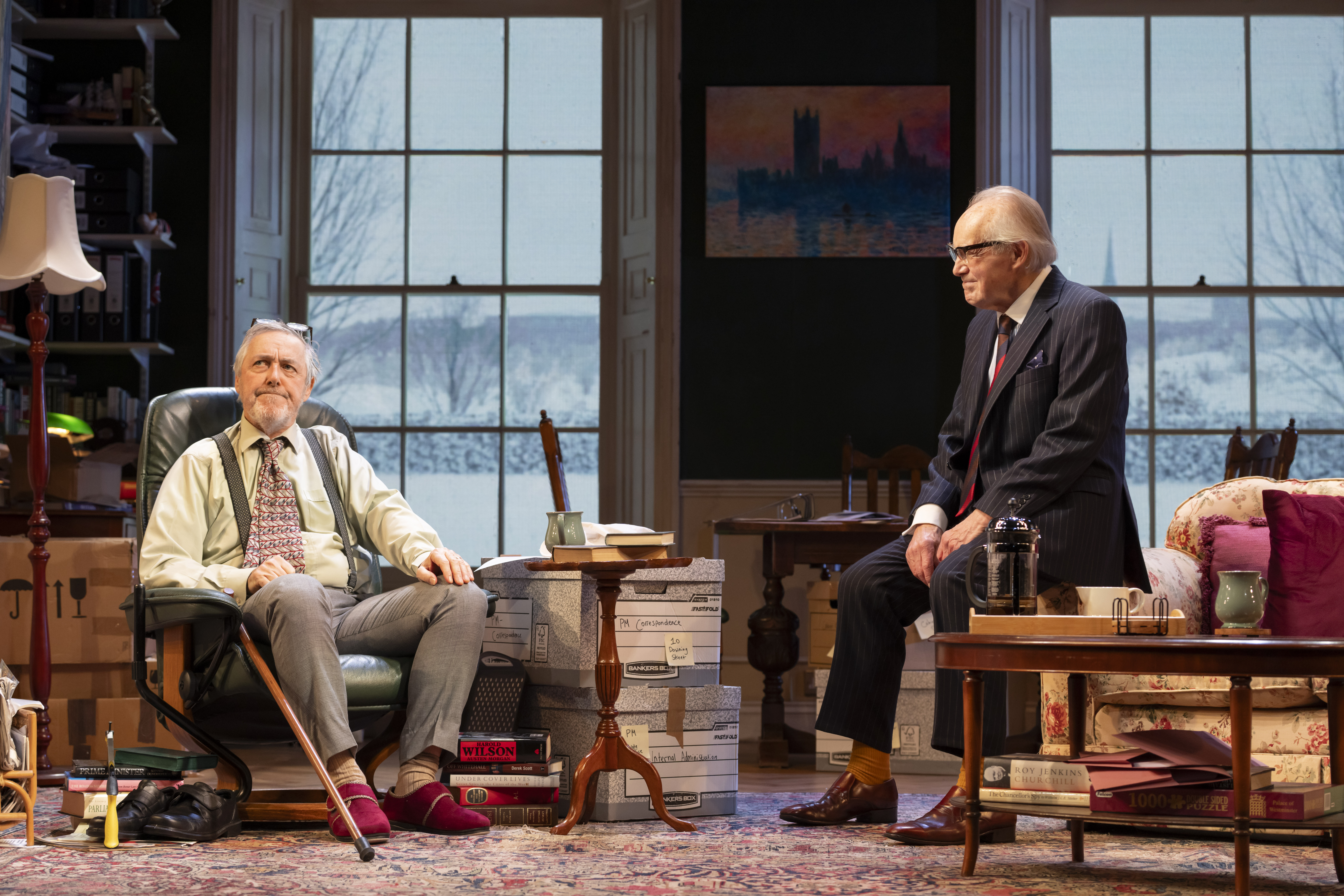
London’s Apollo Theatre welcomes the final instalment of the classic BBC comedy series. Guillermo Nazara shares his views on the show to let us know if this cabinet reunion calls for a reshuffle.
Yes, you’ve read right. Jim Hacker is back. He’s no longer in charge, however. We could literally say that he’s passed his prime. It doesn’t matter, though. He still is the oblivious leader we all grew to love. Not me, though. Not because I didn’t enjoy his theatrical comeback, but because up until yesterday’s opening night, I had not even the slightest idea of who this man or his legacy were. Now I do. And let me tell you, his party may have gained a new sympathiser.
It’s been ages since Hacker has been making decisions for the sake of the country — and for its inhabitants’ sins. He hasn’t lost his wits, though. And that’s because he never had them in the first place — but that’s what makes him so terribly amusing, even more than the original.
The purists may disagree on that remark. That’s the danger of delivering something new from a product that’s deeply rooted in nostalgia. It’s not exactly the same style of humour. It’s similar, but it’s clearly adapted to the flow of time. It isn’t as dry, although its sourness persists. And the farcical side is a little more elevated. Overall, it works beautifully, injecting fresh energy while preserving its authenticity.

You will still recognise many of the elements that made the show popular. And I know that because I binge-watched the BBC classic in the early morning to prepare for this review. All the traits that made the characters so lovable are there, from Hacker’s well-intended hopelessness to Sir Humphrey’s self-appointed sense of superiority and pompously vacuous speech, which, in all honesty, and in all truth, speaking with sincerity on the matter, I shall say truthfully, and cross my heart, that I’ve lost my train of thought.
At the risk of adding a few extra enemies to my one-hundred-page list (really small font), I must confess I didn’t find the source material even half as entertaining. You can appreciate the quality, but on the whole, the jokes come out predictable and formulaic to a contemporary viewer.
Although there are a few occasional examples of this in the stage sequel, Jonathan Lynn’s writing flaunts sharpness and inventiveness. It doesn’t pull any punches back either. And we should be extremely grateful for it. It says what it wants to say. And for the most part, how it wants to say it, too.
The script teems with intelligence and offers audiences the opportunity to engage in a stimulating, thought-provoking debate. After spending several years as a university lecturer, Hackney is about to be terminated for some comments that some people consider insensitive. He defends his right to free speech and argues that students should be aware of the words that late authors used in their time. His careworker -a queer black woman- has different views on the matter.

The best aspect of it is that the show doesn’t take sides. At least, not disproportionately. It introduces both opinions fairly. And, to some extent, it makes an equal effort to present both their strengths and their flaws.
The characters display depth and complexity despite their droll nature. There is a decent degree of pathos, just the necessary dose to avoid one-dimensionality and to let them resonate on some level. At the same time, the conflict is engaging, and it’s generally well-structured.
We do encounter a few problems in Act Two, which is still comically effective but whose pacing isn’t as faultless and upbeat as the first half. The conclusion requires editing, too. There’s too much rambling about the same subject, giving us the impression of coming to an end three times before it does, and not doing so robustly enough.
The performances brim with chemistry and excellent timing. Griff Rhys Jones earns the highest praise as Jim Hacker, filling Paul Eddington’s large shoes through his comedic virtuosity, magnetic presence, and ample command of the role. On the other hand, Clive Francis’s rendition of Sir Humphrey is adequate, but his excessive soft-spokenness and somewhat lethargic energy collide with the personage’s domineering essence.
He was a disaster back at Downing Street. Yet, he got away with it back in the 80s. And he will definitely do it again upon his return. Despite some minor issues, I’m Sorry, Prime Minister is bound for a successful tenure in the West End. Lively, scintillating, and deliciously sarcastic, this so-called last chapter may just be the start to a long series of reruns. And it certainly has my vote for that.
This site is proudly sponsored by

Help us continue our work
We count on your support to keep bringing the greatest quality in theatre-related content, from interviews with the biggest names in the industry to reviews of every show in town and beyond.
We appreciate every donation to maintain our high pace and standards and continue to grow.
Thank you for believing in us!
***************************************************
All pictures credit to Johan Persson.
I’m Sorry, Prime Minister plays at London’s Apollo Theatre until 9 May. Tickets are available on the following link.