
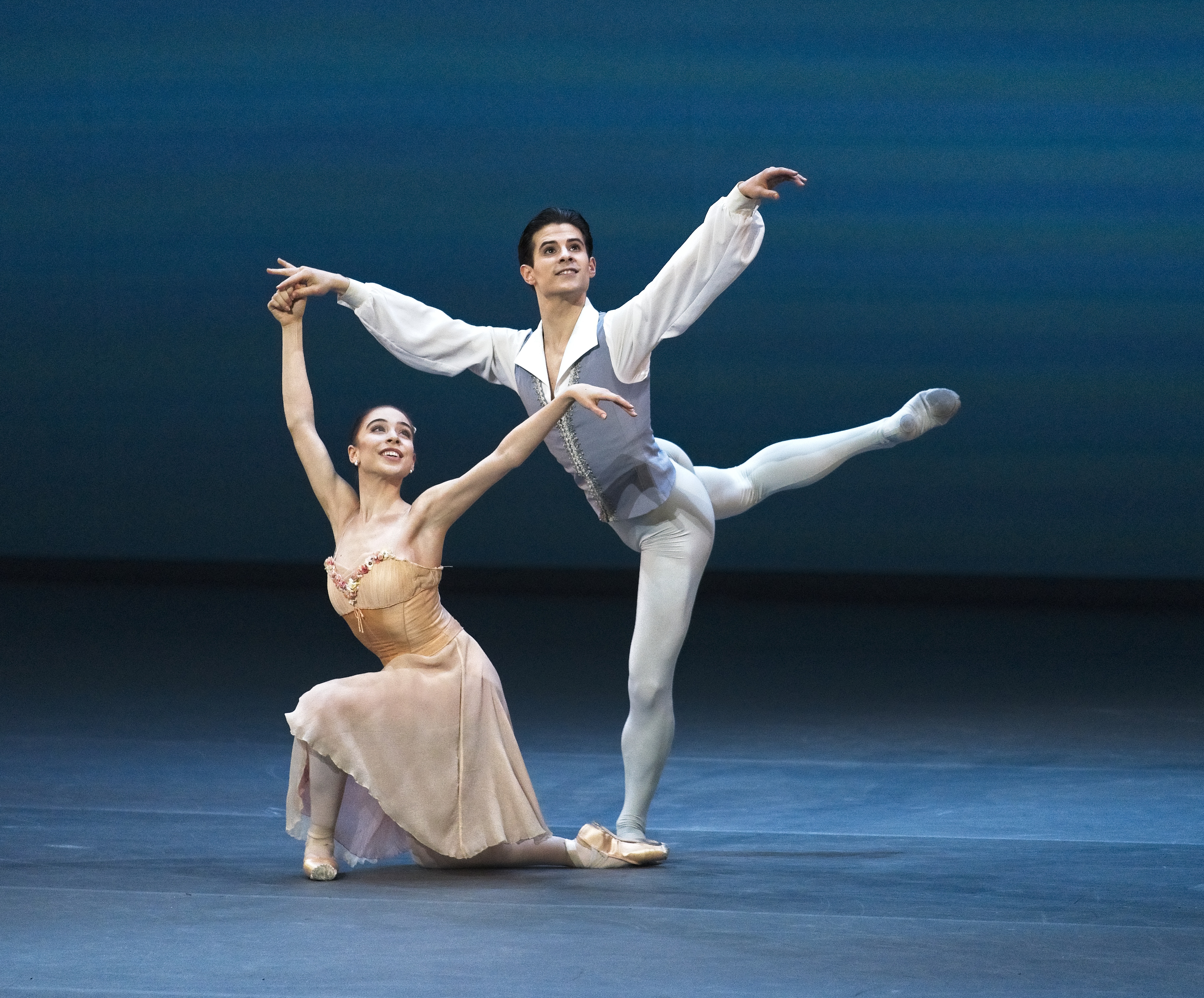
The venue hosted this annual event featuring globally revered performers. Guillermo Nazara shares his views on the show to let us know if its eclectic array was delivered on pointe.
They promised us quality. And above all, they promised us art. They didn’t forsake their vow, for the most part. Last Sunday’s 20th anniversary gala of Ballet Icons offered attendees an opulent display of craftsmanship, versatility, and compelling beauty. Advertised as a gathering of the world’s ballet creme de la creme, the event congregated a rousing mix of established and emerging talent, where technical prowess was the guest of honour, with a few flashes of virtuosity standing right behind.
Some viewers might have left awe-stricken by an incomparable experience. Some others may have been bothered by the occasional yet prominent flaws. I am right in the middle. I don’t demand perfection from a performative work. It’s nice to witness it, but imprecision can sometimes elevate the value of a piece. Soullessness or a lack of panache usually would. And the evening wasn’t devoid of a few yet noticeable examples.

There is no question about the dancers’ overall competence. Yet, while some flaunted exceptional flair, several sections were blemished by a disproportionate sense of safety, which occasionally overtook entire numbers.
The gala opened with Iana Salenko and Daniil Simkin’s duet interpretation of Le Corsaire. Simkin’s ease of movement, brimming with vigour and spectacularity, supplied the gleam of the rendition. Despite a couple of debatable choices, tarnished by an unpleasant feeling of cluelessness, his execution teemed with effortlessness and bravura. Sadly, the same can’t be said about Salenko, whose performance exuded robustness but also rigidness.
The night continued with the UK premiere of Asylum, a minimalist piece that boasted viscerality and sensuality through a well-balanced blend of contemporary and classical elements. Edward Watson’s delivery is visually captivating — raw but curated, and on top of it, pulsating. Some excerpts of the choreography are still not fully resolved, acting like fillers that vaguely match the narrative cadence.
Act One’s true exquisiteness materialised through Spring Waters and Diana and Acteon, both of which presented audiences with two impeccably assembled segments defined by rapport, mastery, and resourcefulness. The biggest praise goes to Francesco Gabriele Frola, whose splendid solos were an unequivocal highlight of the whole evening.
Some other numbers showed aptitude without exploiting their full potential. Uhuro, another contemporary concoction celebrating its world premiere, demonstrated adequacy, but a sense of incompletion pervaded throughout. Le Parc, a passionate portrayal of two lovers merging, was delicate and stylish, but a few choreography decisions felt closer to a gimmick than a solid aesthetic choice.

Some other proposals were more honed. Postscript, another world premiere that provided most of the sparkle of Act Two, was a sumptuous assortment of poignant romance, depicting love, grief, and loss in their direst form through the support of piercing operatic aria, which complemented an unresolved but nonetheless haunting concept.
Similarly, Chroma infused the night with stamina through an upbeat rendition where old and new values converge in harmony — both in terms of genre and gender. Marcelino Sambe made another standout appearance through a faultless interpretation that overflows with exactitude, character, and playfulness.
On the whole, the score was conducted appropriately under Maria Seletskaja’s guidance. Some moments, however, were spoiled by a lack of cohesion between the woodwinds and the rest of the orchestra, particularly during the opening. The pieces’ emotiveness was markedly accentuated, if not owned, by the strings, despite a severely out-of-tune lead violin during the conclusion of Act One.
With similar notes to be made for the remaining performances, Ballet Icons 2026 brought intermittent excellence to the London Coliseum stage. Yet, the remarkable aspects of a fairly memorable night do not entirely counterbalance its weaknesses, which may not be major, but are nonetheless indelible. It wasn’t bland or ordinary by any means, but they could have leapt a little higher into the opportunity for finesse.
This site is proudly sponsored by

Help us continue our work
We count on your support to keep bringing the greatest quality in theatre-related content, from interviews with the biggest names in the industry to reviews of every show in town and beyond.
We appreciate every donation to maintain our high pace and standards and continue to grow.
Thank you for believing in us!
***************************************************
All pictures credit to Jack Devant.
Ballet Icons 2026 played on Sunday 15th February for one night only. Upcoming shows and tickets are available on the following link.