
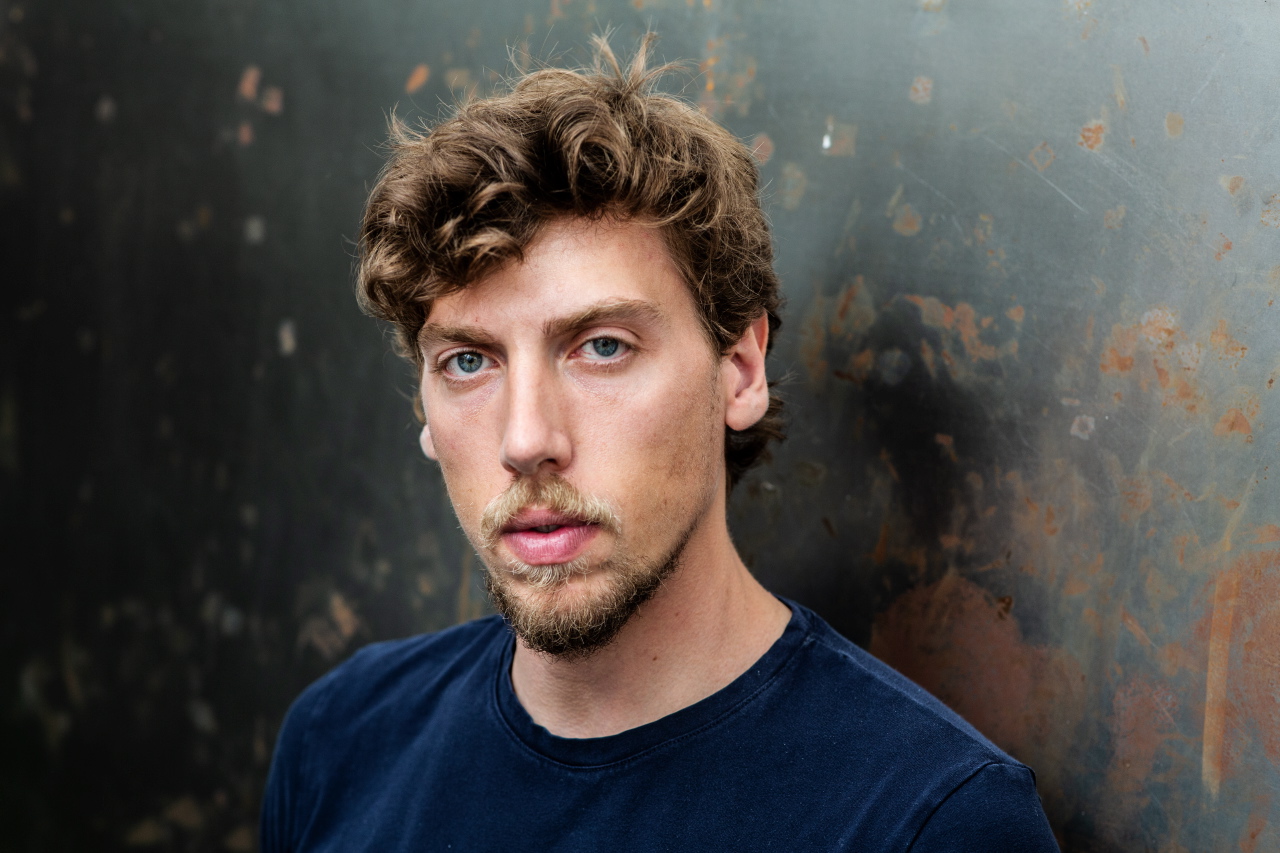
Following a complete sellout during its latest London stay, the show returns to the Peacock Theatre for the autumn season, where it will play a two-week run before embarking on a national tour. Guillermo Nazara chats with the piece’s composer, director, and choreographer to learn more about the piece’s development and what makes it a golden opportunity to experience silver-screen magic in a different way.
How did the idea for the show come about?
I wanted to use cinema as a symbolic topic. The show plays on a duality. For the main character, there is real life and there’s what happens in the movies. As such, different aspects of his life explored from both perspectives. I was really interested in bringing that on and off screen idea to a show. It’s also a a way to pay homage to different films, as each scene takes inspiration from a different one.

How is that duality explored?
I don’t want to say too much, because I’d like audiences to get their own idea. However, I can tell that one of the main drivers is the relationship between the protagonist and the director, which is difficult. The struggle that he finds with this director mirrors, in some way, his own personal struggle. However, I don’t want people to necessarily agree with a concept. I want them to build their own plot.
What has the development process being like?
It took two years just process the germinal idea. When it was fully in place, I started working on the script, which was the same as in a film. Then came staging and set design, followed by writing the music. When all those elements were in place, I went into the studio to bring movement to all of that. Everything came together quite organically, though. When I’m writing music, I’m thinking of what I want to tell and how I want the number to look onstage. However, movement is the last piece of the puzzle, as I want to make sure first that the score is serving the narrative.

As a choreographer, do you allow dancers to experiment or do you keep full creative control?
For this show, it was all my idea. I came up with the choreography, and I changed it many times. It wasn’t a collaborative process.
Has the show evolved in any way between its last and upcoming London runs?
There are changes. I make adjustment all the time, which are partly determined by the venue where we’re performing. That affects movement, form, even lighting.

Have you faced any particular creative challenges?
It is the first time that I’ve written music for a show. At first, I wanted people guiding me through that process and singing the score. That didn’t work, so I ended up writing the whole thing — even the lyrics. That was a daunting task, and I had to trust myself in taking it.
Are there any highlights in the show that you’d like to flag?
Without doing any spoilers, there are several high-energy moments. And it’s always the same moments that stun audiences. There are a few surprises, but that as much as I can tell!

What are the prospect for the show after the UK tour?
It will go to Germany in December. We are also working on a new European tour and Canada afterwards. Who knows? It might also come back to France for its 10th anniversary…
Why come see STORIES?
To fill yourself with high energy.
Help us continue our work
We count on your support to keep bringing the greatest quality in theatre-related content, from interviews with the biggest names in the industry to reviews of every show in town and beyond.
We appreciate every donation to maintain our high pace and standards and continue to grow.
Thank you for believing in us!
***************************************************
Headshot credit to Jean-Marie Marion. Production pictures credit to Aline Gérard.
STORIES – The Tap Dance Sensation will play at London’s Peacock Theatre from 14 to 31 October. Tickets are available on the following link.