
Known for its visually arresting puppet-based productions such as Moby Dick (Barbican), the company heads to this year’s Edinburgh Fringe festival with this new proposal based on Stoker’s classic novel. Guillermo Nazara chats with the show’s director to learn more about its development and their decision to sink their teeth in this subject.
How does it feel to present this new adaptation of one of the most popular horror classics ever written?
I’m interested in stories that survives their own time, and how old stories- retold with the lens of today -can carry the knowledge of the past and be a premonition of the future. Stories that transcend time are also good material for puppets — since a puppet is literally a dead object coming to life, it becomes a sort of medium that connects the past with the future, the dead with the living. And this is, of course, a good when you are dealing with the undead and waking a vampire…
How did the idea for the show come about?
I’m fascinated by myths and how stories about the same kind of unhuman creatures appear in different forms all over the world: how our fascination for monsters may be what keeps us human and how tales dealing with death makes us feel very alive. I wanted to dig into the very human — that very recognizable grey zone of desire and doubt, fear and fury, attraction and addiction that the vampire evokes.

The novel offers all of its main characters’ perspectives through its epistolary first-person style. What are the reasons to choose only this character’s?
Lucy’s character was the most interesting to me, because she doesn’t remain only “good” and “strong” and “noble”. She goes into the darkness, into the ugly and monstrous — and that makes her more real and more human to me. More than the epic fight between good and evil, I was interested in how the story reveals the complexity of being human.
How much do the story’s themes vary by focusing one single character’s vision?
To tell the story from Lucy´s perspective allows me to shift her role from victim and secondary character into a real person fighting for her life.

Have any elements of the original story been changed in this version? If so, why?
For me, the story is a frame that allows me to enter the theme right into Lucy’s head and give her the power to take responsibility on her own life. So unlike in Stoker’s story, Lucy’s friends do not get to put a stake through her heart or cut off her head.
Some of your company’s most recent offers feature large-scale staging, such as last year’s production of Moby Dick at the Barbican. How challenging has it been to cater to the needs and limitations of the fringe scene?
We are touring a lot internationally and are used to having to adapt and find solutions in order to be able to perform the show.

Are there any highlights in this show that you’d like to flag?
Blood, babies, and broken mirrors – and beautiful music.
Why come see ‘Dracula – Lucy’s Dream’?
It is a visual feast, unlike anything else, with images you will remember and possibly haunt you.
Help us continue our work
We count on your support to keep bringing the greatest quality in theatre-related content, from interviews with the biggest names in the industry to reviews of every show in town and beyond.
We appreciate every donation to maintain our high pace and standards and continue to grow.
Thank you for believing in us!
***************************************************
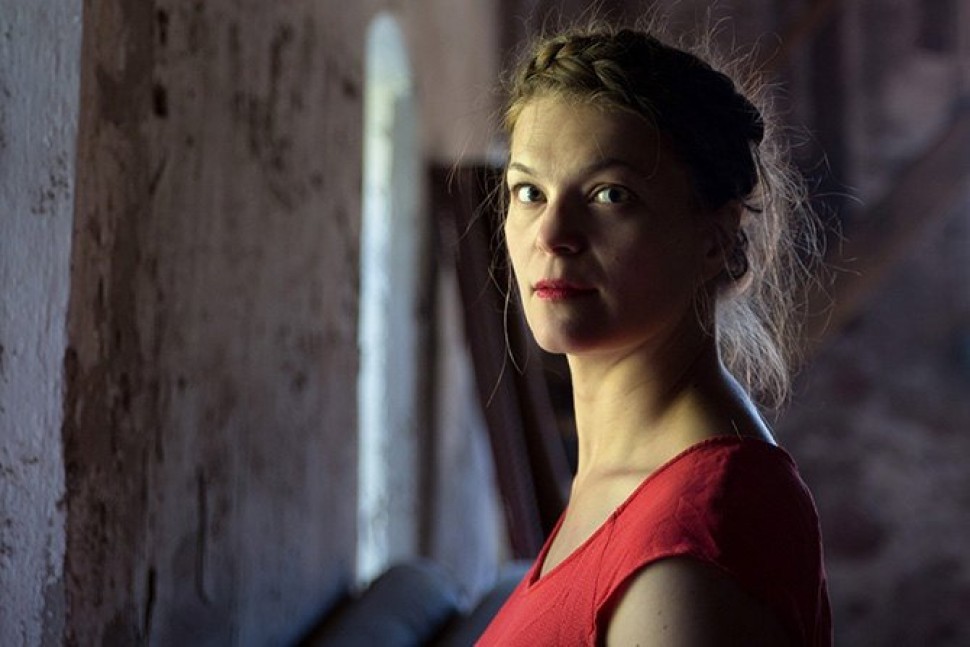
Headshot credit to Kristin Aafløy Opdan. Production pictures credit to Christophe Raynaud de Lage.
Dracula – Lucy’s Dream will run at the Edinburgh Fringe from 6 to 29 August. Tickets are available on the following link.