
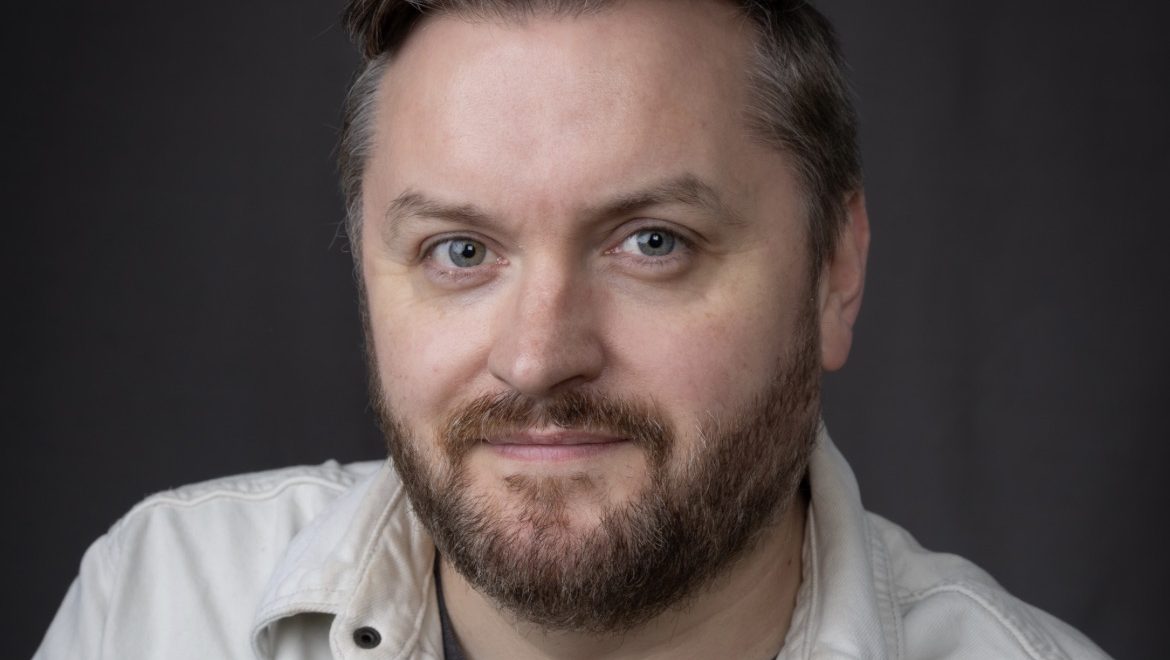
Following a two-year research process featuring numerous conversations with its real-life protagonists, Upstairs at the Gatehouse welcomes this new play celebrating the lives, friendship, and resilience of Irish LGBT immigrants living in London during the AIDS crisis. Guillermo Nazara chats with its creator to learn more about the piece’s development and its uncanny resonance with today’s world.
How does it feel to bring this story to the London stage?
Like closing a loop, in many ways. This is a story about Irish LGBTQ+ people who came to London looking for a sense of freedom they could never have at home, and now it gets to live on a London stage, in the city where so much of it happened. And knowing that people like Bernárd and Joseph, who lived through the reality of it and gave us so much of their time and trust, will be sitting in the theatre seeing reflections of their experience treated with the care and dignity they were so rarely given at the time, that’s truly humbling. During the crisis itself, these communities faced blame, fear and ignorance so the idea that their stories are now being staged and, hopefully, embraced by an audience feels like a genuine full circle moment, for them as much as for Derek and me.
What prompted you to write this piece?
It came from wanting to tell a story that hadn’t really been told yet outside of anecdotes and a few online talks. There’s been more space recently for AIDS crisis stories, and rightly so, but the specifically Irish experience of it in London felt neglected. I didn’t want to write a play that used the AIDS crisis as a backdrop for an Irish story, or an Irish backdrop for an AIDS crisis story. I wanted the two to be genuinely inseparable, because for the people living through it, they were. Growing up in West Cork, I’d always been aware of how much shame shaped a certain generation of Irish life, and the more I learned about the queer Irish diaspora who left for London in the eighties, the more I realised how much of that history had gone completely undocumented. It felt like something that needed preserving before it was lost entirely, and worth telling with the honesty, humour and humanity those people actually lived with, rather than reducing them to a footnote in someone else’s history.
The AIDS crisis seems to have garnered new attention across the media recently, with hit TV shows such as It’s A Sin or new musicals like Pride. Why do you think this topic is still relevant?
I think we’re only just starting to properly reckon with how much of this history was left undocumented, and shows like It’s a Sin have opened the door for more of these stories to come through. The London Irish LGBTQ+ community played a real part in queer history, but it’s largely gone unrecorded, even though its effects are still being felt generations later. What strikes me is how much the pattern hasn’t changed. Fleeing home for somewhere with more lenient laws, building a chosen family, finally feeling like you belong: that’s still a lifeline for people navigating displacement today, whether they’re escaping countries that criminalise homosexuality, womanhood, or both. So it’s not just about looking back. Preserving these stories means the people we lost to stigma, shame, and neglect are properly honoured, and it means recognising the Irish queer diaspora as a fundamental part of both Irish and British history.

Are LGBT stories under threat at the moment, given the current zeitgeist?
I think they’re always under some degree of threat, and it’s precisely in the moments we start to feel comfortable that the pushback tends to arrive. Very few LGBTQ+ stories reach a stage or a screen without some resistance along the way, and that’s exactly why Pride began as a protest and, in many ways, still functions as one. It means we can’t afford to be complacent, because history shows a pattern: opposition rarely stays contained to one group. It tends to start with whichever part of the community is easiest to isolate at the time, and if that succeeds, it doesn’t stop there.
What strikes me most about the current rhetoric around trans people is how familiar it feels. A lot of the same language and the same fears that were directed at gay men during the AIDS crisis have simply been repurposed and pointed at the trans community. There’s something telling in that repetition. If the people being targeted were genuinely as dangerous as they’re made out to be, we’d probably see far more narratives reflecting that. Instead, what is erased are the stories about people being decent to one another, because there’s an assumption that kindness doesn’t make for compelling drama. Given that queer communities are, on the whole, built around exactly that kind of support and solidarity, I think that’s often reason enough for those stories to be overlooked.
The show revolves around a group of Irish LGBT people trying to find acceptance, freedom, and themselves by moving to London. Does their Irish background make any difference in comparison to other similar queer experiences (people having to move out of their house and go somewhere else, etc.)?
It does, and it’s a more complicated picture than people might expect. Irish people in London at that time faced real suspicion and exclusion, a lot of it fuelled by the political tension around the IRA. Pubs barred them, landlords turned them away, employers were wary the second they heard the accent. But queer Irish people often had a unique experience within that. Gay bars and queer spaces tended to be more welcoming, because they were built on solidarity in the first place, offering somewhere safe to exist regardless of where you were from. That dual identity, Irish and queer, is an undercurrent to the play, shaping how these characters see the world and how they support each other.
Does the show explore the subject of Catholic guilt?
Very much so. It became one of the threads I kept pulling on once I’d sat with enough of the interviews, because it was there in almost every account in some form. For gay men raised Catholic and told their whole lives that they’d be punished for who they were, a crisis like this inevitably raised the question of whether this was that punishment finally made real. And it wasn’t only the men living with HIV who had to sit with that. Their families were often confronted not just with a diagnosis, but with the confirmation, sometimes for the first time, that their son was gay too. That’s an enormous amount to process at once, and it forces a genuinely difficult question: do you set your faith aside to care for your dying child, or does the fear of shame in front of your church and community win out? That tension, between love and doctrine, is something I wanted to address within the play, because it’s not something that was resolved easily for the people who battled with it at the time.

What other themes have you intended to explore and why?
Chosen family is probably the biggest one, which is part of why the play is set inside a house rather than a hospital ward or a bar. It’s an intimate space, and it allows us to show what these characters carry home with them, how they process the world once the door is shut, and how they look after each other when the crisis stops being something happening “out there” and becomes personal. Alongside that, I wanted to explore a quieter, parallel story about the policing of women in the same era. Gay men were criminalised outright, but Irish women were facing their own version of trial by community: raised to obey, to sacrifice, and to never take their own desires seriously, yet judged the moment they did, or worse – we’re all now horribly aware of the Magdalene Laundries and Mother and Baby Homes and what happened to women there. For me, that’s not a separate story from the one at the centre of the play, it feeds into the same architecture of control, just applied along a different axis. And running underneath both of those is the thread of activism and how change actually happens, because none of the progress Ireland eventually made was won without people tirelessly fighting for it.
The show has been under development for over two years. What can you tell us about this process and the research you’ve done?
It’s been a long process, and rightly so. Derek and I spent a lot of that time in conversation with people who lived through the period, including the activist Bernárd J. Lynch and historian Dr Joseph Healy, and what struck me almost immediately was how personal every single story was. It’s easy for a crisis of that scale to become numbers and generalisations. But listening to Bernárd, Joseph, and everyone else we spoke to brought the humanity of it sharply back into focus, even in the lighter or funnier stories they told. By the time we’d done half a dozen interviews, it was already obvious there was more here than any one-man show (which was the original intention) could do justice to. So a lot of the work became about sifting through everything we’d gathered and following the threads that went beyond the AIDS crisis itself, things like Catholic guilt, family denial, and what it meant to build a home with people who understood you when your own family often couldn’t. I wanted the characters to represent a blend of people we heard about rather than any one person specifically.
How much have you drawn from your own personal experiences?
A fair amount around the internal battles the characters face with shame, guilt, and finding the courage to actually be who they are. I was only a baby in the mid-eighties, so I don’t have any living memory of the crisis itself. But in nineties Ireland, going to Catholic school, homophobia was still very present, even if by then it was mostly teasing and mockery rather than anything more overt. I was ten years old when homosexuality was finally decriminalised in Ireland so for people like Derek, it was something he was still very much wrestling with growing up, and that’s the thing people forget: a law changing overnight doesn’t mean minds change with it. That takes a lot longer. We also didn’t have the language back then that exists now – for instance, by the time bisexual as an identity entered my vocabulary, it was simultaneously being dismissed and erased as quickly as it arrived.

What message have you tried to convey through this show?
That chosen family can be just as real and sustaining, oftentimes more so, than the one you’re born into. So many of the people whose stories helped shape this play were let down or outright abandoned by their biological families, and yet they built something with each other that held firm through the worst circumstances imaginable.
I want audiences to leave with a sense of how much strength there is in that, and with a deeper understanding of a history that’s largely gone untold. It sits at the intersection of Irish history, queer history and British history, and I think it deserves to be recognised as part of all three. Ultimately, the message is simply that the people behind this history were fully realised human beings, with humour, flaws, ambitions, and hopes. They’re not just statistics attached to a crisis. If people leave genuinely caring about who these characters are, I think we’ll have done right by the real people they’re drawn from.
Are there any highlights you would like to flag?
Definitely to say that there is humour in the play, because I don’t think people will expect it going in. Given the subject matter, there’s an assumption the whole two hours are going to be heavy, and while there’s absolutely weight and loss in there, the humour is also at the heart of it because gallows humour is baked into the Irish psyche, especially in a crisis. If you’ve ever been to an Irish funeral, you’ll know exactly what I mean. People turn up however they please, a wake becomes a celebration of the life remembered, and there’s as much gossip and joking in the reposing queue to pay respects as there is grief. That instinct follows these characters wherever they go, and it’s what makes the piece feel true to the Irish culture at the heart of it.
Why come see Mammy’s House?
This story isn’t just about the AIDS crisis, or even about being queer and Irish specifically. Underneath it is a question about who got to own their sexuality in Ireland at all, and who didn’t. That question doesn’t belong to one group, it was just experienced differently depending on who you were, and in this play, those experiences get a rare chance to co-exist as part of the same generational trauma.
But it’s also funny, tender, thoughtful, and set in an intimate enough space that you’re not watching from a distance, you feel like you’re sitting right in the room with these characters. Whether you’re Irish, queer, both or neither, the themes at the heart of it are ones most people will recognise something of themselves in. And there’s a real weight to knowing the people whose stories shaped this play will be in the audience, watching pieces of their own history treated with the care it was denied at the time. That feels like reason enough to come and be part of it with them.
Help us continue our work
We count on your support to keep bringing the greatest quality in theatre-related content, from interviews with the biggest names in the industry to reviews of every show in town and beyond.
We appreciate every donation to maintain our high pace and standards and continue to grow.
Thank you for believing in us!
***************************************************
Mammy’s House plays at London’s Upstairs at the Gatehouse until 13 September. Tickets are available on the following link.