
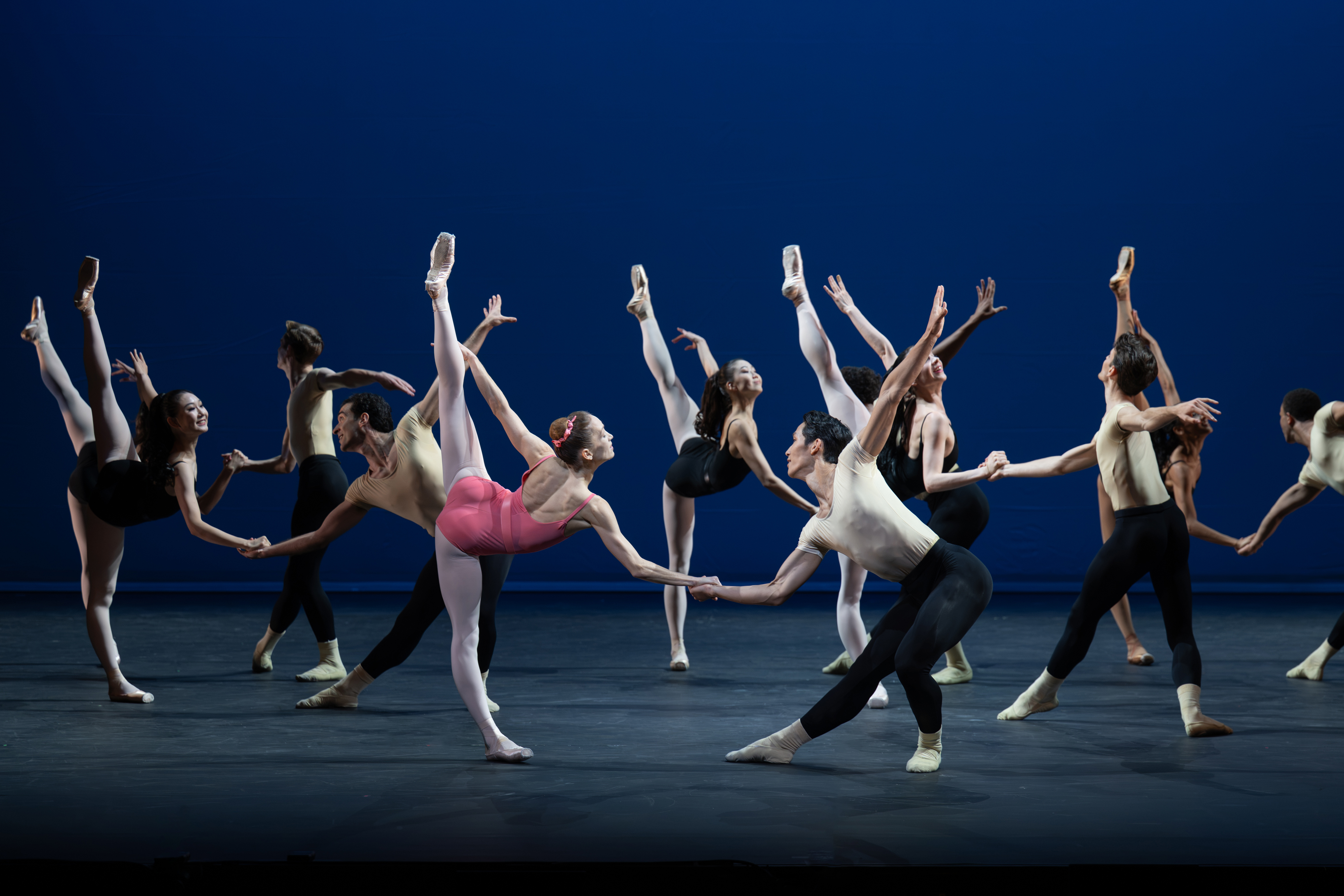
This is the kind of show that proves how important it is to return after the interval. It’s not that Act One was appalling. But it wasn’t awe-striking either. Not by the standards of what the English National Ballet has offered us in the past. You can breathe a sigh of relief, however. This is a good show. In fact, if not for its unfulfilling opening, we’d be talking about probably the best thing September has blessed the London scene with. Yet, despite a slightly flawed first hour, I’m fully prepared to give this rendition a glowing review.
Three separate dance compositions. Three separate musical pieces. And three separate creative teams. The company performs all of them with flair and precision. But the lack of communication between the score and the choreography during the initial number is what bugs me.

Stravinsky’s Symphony in Three Movements is rightly honoured by conductor Maria Seletskaja, whose intricate execution teems with colour, melodic sensitivity, and verve. But the same doesn’t apply to George Balanchine’s movements, which come across as too stiff and academic and often fail to serve the emotion of Stravinsky’s sound. It is adequate, but it isn’t stirring. Eventually, it leaves audiences where they started without taking them on a palpable artistic journey.
These feelings are indeed reinforced during the second act. Not because they exhibit similar shortcomings, but because of its absolute brilliance. The exact opposite happens. Micaela Taylor’s Hollywood Golden Age-inspired choreography is an electrifying explosion of pizzazz and bravura imbued with visual potency. Masterfully delivered and beautifully staged à la Fred Astaire, every element in this galvanising concoction comes together seamlessly while simultaneously standing out. Philip Patrick Harper Bucknor’s jazz-infused music shines as much as Candice Mac’s elegant design. And ultimately, the whole thing is a pulsating, spirited triumph.

The show takes a darker turn with Auguries of Innocence, a bleakly sensual interpretation of Pēteris Vasks’s Musica Dolorosa and Musica Serena, where Jae Man Joo’s sultry choreography builds a world of somberly captivating stories. It’s not as riveting as its predecessor. And some sections do come off a little flat. But overall, it’s a haunting, stirring jaunt audiences will have a hard time detaching themselves from.
I expected more in some segments, but those blemishes are minuscule compared to the sparkle the show generally flaunts. After passing the test and sitting through a not-too-arresting opening, the real spectacle begins. And once it unfurls, it’s truly unstoppable. And a fair reminder of why the English National Ballet should remain in high regard.
Help us continue our work
We count on your support to keep bringing the greatest quality in theatre-related content, from interviews with the biggest names in the industry to reviews of every show in town and beyond.
We appreciate every donation to maintain our high pace and standards and continue to grow.
Thank you for believing in us!
***************************************************
All pictures credit to ASH.
Rhythm Riot plays at London’s Sadler’s Wells until 3 October. Tickets are available on the following link.